Spoilers for “The Lowdown” Season 2 finale follow below.
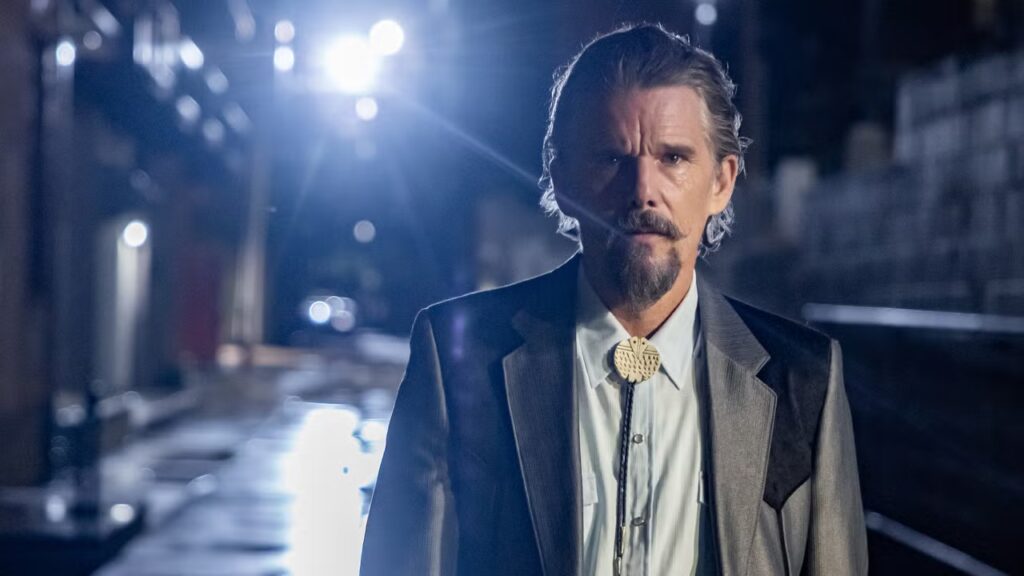
Truth’s easy? Anything but, as Ethan Hawke’s Lee Raybon learned throughout “The Lowdown” Season 2. But just because his path was hard doesn’t mean he’s giving up, as the Season 2 finale left the excellent Tulsa-set FX noir comedy series with plenty of threads left to untangle in a potential Season 3.
That was the point, creator Sterlin Harjo explained to TheWrap in an interview tied to the finale. While Lee doesn’t get the girl and doesn’t get to write his story, he learns how much he is loved, finds some solace in his relationship with his father and, of course, keeps raging against the dying light as the episode concludes with him continuing his investigation into John Hawkes’ Judge Jed.
“The Lowdown” is one of the best shows on all of television, somehow growing in esteem in Season 2 with one of Tommy Lee Jones’ best performances ever (the season has a 100% on Rotten Tomatoes). Surely that’d be enough for an automatic Season 3 greenlight, right? While Harjo said he has lots of ideas for a third season (and even knows how it opens), he cautioned that an awards boost would significantly help the show’s chances.
So consider this your clarion call, voters. Do the right thing.
In the meantime, read on as Harjo unpacks that Season 2 ending, explains why we may not have seen the last of Betty Gilpin’s Ginger, talks about leaning into the “No Country for Old Men” similarities with Jones’ final monologue and more.
Tell me what you wanted to get across in the ending of the season, because you get to the end and Lee feels like he lost. He didn’t get the girl. He didn’t write the story he wanted. But it feels like the arc of Lee this season was far more personal than professional. What did you want to leave people with at the end?
I think the irony of the season is he gets a mug that says “Truth’s Easy” and it’s anything but. I think everyone’s sort of expressing this throughout the show, even Frog to Francis. People have different truths, and I think that Lee’s idea of the truth and what he wants is challenged through the whole thing, and him having to go to these other journalists in town — that was the first thing that I thought of. Giving a speech that’s a crazy speech where you just trash everyone, and then having to, by the end, go hat in hand to them and say, “I need your help.” That was sort of the point of the season to me.
But also, you have this whole thing with his father. I think that Lee has been running away from who he really is and his relationship with his father. It’s an interesting thing to make a show about someone who is obsessed with the truth but wants to hide where they come from and who they come from. That dynamic is really interesting to me. I think him coming to terms with his father and his relationship with his father helps make this decision that “Oh, the truth is way more complicated. My father was actually in Vietnam, but he’s also a liar, and I can’t do this alone, and I need help from other people.” I think all of that is just personal growth from Lee, but also extends to his professional life.
I told you the last time we spoke that a lot of noir feels like karaoke but “The Lowdown” feels like the real deal, and I think you did the non-karaoke version of the father-son story here. There was no big fight in the rain or airing of grievances. That relationship played out far more subtly.
I think real life is not told in these big sweeping monologues. It’s actually told through glances and asides, especially from someone like his father, and this complicated relationship they had with each other where they can’t communicate. The other side to not being able to communicate with someone is that expression is very slight and small, but it’s actually really big between them. So your father putting his hand on your back, who you hadn’t talked with in a long time, all of a sudden that’s really big. I think of it as like the love story with Dawn and Tim in the UK “Office.” Other than when he goes out on a limb and expresses his love, there weren’t these big love story moments. There were slight glances and touches on the shoulder and hugs and a kiss on the cheek, and all of a sudden these things are really big because everything else is repressed. I just think that’s good writing.
With a person like Frog, you’re not going to get those moments, and you get what you can. I love the moment when he says, “It wasn’t so bad in there, in the hospital. I could have used a rest.” That’s this big cathartic apology, to the point where Lee doesn’t know what to say. It’s bigger because it’s small. I think that it’s just more truthful, and I try to approach it like that. And also Tommy Lee Jones, if you give him bullshit to say, you’re gonna hear about it. He’s probably not gonna do it, and it’ll be really obvious whenever you see it on screen. That’s kind of the benefit of writing for Tommy Lee Jones, where you’re like, well, I can’t do the cliche.
I had the pressure in the last episode where he’s got this big monologue, and it’s like the fucking Coen Brothers and Cormac McCarthy obviously gave him one of the best monologues of anything at the end of “No Country for Old Men.” How do I compete with that? And I was like, well, there is no competing with them, but I can sort of give homage to it. I think that monologue is in conversation with the monologue from “No Country for Old Men.” Because it’s Tommy Lee Jones giving it, but also it is someone reflecting on life and talking about weather. So I leaned into it instead of avoiding it.
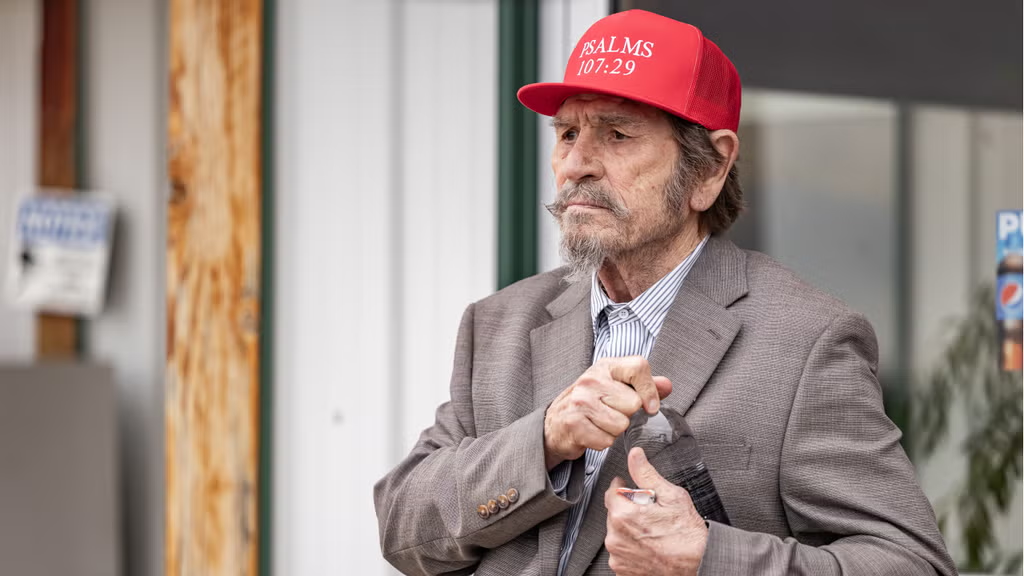
I think it’s one of the best performances of his entire career.
It’s been really cool hearing my dad, who’s a big fan of his, going like, “Man, he is so good at this.” Hearing people that have been fans of his for a long time, it is really cool to hear that.
Betty Gilpin is also incredible in the show too. I loved the postscript in Eureka Springs. Was there ever a world in which she ended up with Lee?
Well there’s hopefully going to be a Season 3.
I was going to ask. You’re ready to dive back in?
I’m not finished with Ginger. It’s funny, I was still writing while we were making the whole thing, and so no one knew how it was going to end, and I kept getting texts from Betty, just randomly now and again, that said, “#DontKillGinger.” (Laughs) But in a similar way to the father and son story, Lee thinks that that’s what he needs, but it’s not what he needs. He’s not gonna buy blue heelers and go live in the woods and raise chickens and crush books all day because he’s got this fire inside of him to do this other thing, and that’s always going to be there. They found each other in this crisis of a time, personally. And in the real world, there is no like, “Oh, but then we walked away holding hands.” There has to be a reset, and I have ideas about what Ginger does and where she went and if she comes back.
Peter Dinklage coming back was also incredible, with the Dylan Thomas monologue. How did that come together?
Peter loved doing Season 1, and he’s super busy right now. So we reached out. We’re just like, “We have this. It’d be really cool to have you in this moment. If you can’t, totally cool. But if you want to make it work, let’s try.” And he was like, “Let’s do it. Let’s try.” So we flew him in for one day, and he just comes in and floors everybody. If ever there was a question of it being worth bringing Peter Dinklage in for one scene, he answers it. He was so pumped after we did it.
It was such a wild funeral scene, and we were just improvising everything at a certain point. There’s this stuff that we improvised that we couldn’t put in the final episode, but it was like me and the choir and the preacher before they walk in, we’re standing there, and I always play music from a Bluetooth speaker, and I just happened to be playing “Thuggish Ruggish Bone” by Bone Thugs, and we all started dancing, and the choir and the preacher were dancing. I was like, “Holy shit, y’all should walk in like this,” and so I literally held up this Bluetooth speaker, the preacher and choir are all going down the aisle out of nowhere to “Thuggish Ruggish Bone,” it’s so funny, and then the preacher keeps quoting “Thuggish Ruggish Bone” and other things while he’s preaching. Sadly, I guess like all of Bone Thugs and Harmony are in legal disputes with each other, so you can’t use their music. So that was scrapped. It also would have been like an hour and a half episode.
How are you feeling about Season 3 chances?
I have ideas for Season 3, it’s up to the powers that be. I think it’d be smart for them to make Season 3.
I do too!
But they never let me know right off the bat. It’s a thing where like this show came out and people call it the best thing on TV, and the reviews have been amazing. Does that translate to awards? I don’t know, because I’ve never understood that. “Reservation Dogs” didn’t get nominated for a lot of awards, and I don’t think that’s because of the quality of the show, so I don’t know what sort of politics in the sky are happening when it comes to awards or whatever. But I would hope that people love the show so much that it would reflect in some of that, which would help us get a Season 3.
It’s all up in the air, and I hope that we get to do it and I have ideas. I know how it’s going to open, and it’s such a wild opening that there’s a lot of great writing that has to happen with this writers’ room to make that make sense. I always sort of have a tone or scenes or an homage or something that I’m feeling for the next season, so I know a lot about what’s going to happen. But my thoughts cost money, so wait until that writers room gets ordered.
I’ll just say if Tommy Lee Jones doesn’t get nominated, that’s just proof the voters didn’t watch it. Because every critic friend of mine says this is the best thing on TV right now.
Put that in your article!
“The Lowdown” Season 2 is now streaming in its entirety on Hulu.
The post ‘The Lowdown’ Creator Sterlin Harjo on the Season 2 Finale, That ‘No Country’ Nod and Season 3 Status appeared first on TheWrap.