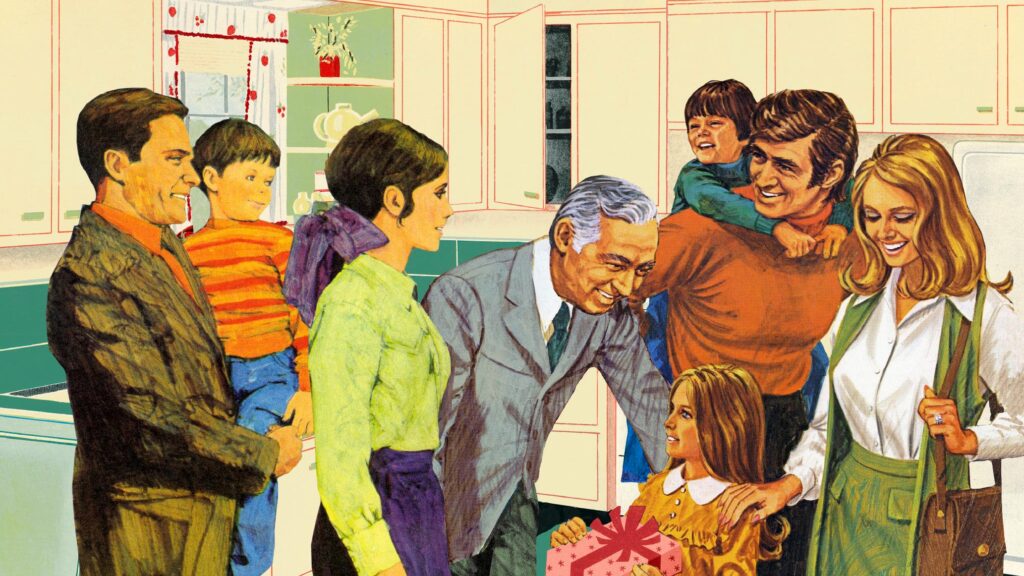
Imagine ending a romantic relationship after years of unresolved conflict. The arguments have become familiar, the resentments have accumulated, and conversations that once offered the possibility of understanding now go nowhere. Eventually, you accept that the relationship isn’t working and decide to go your separate ways.
Now imagine being told that you’re still expected to spend the holidays together every year: to arrive with a gift, exchange pleasantries over dinner, smile together for photographs, and ask about each other’s lives as though the years of conflict between you never existed.
We would find this arrangement peculiar, unhealthy, even cruel, if it involved a former romantic partner. Yet when the person sitting across the table is a relative, we consider it perfectly normal.
Hollywood has long reinforced this expectation through countless holiday movies in which dysfunctional families gather, dredge up old grievances, and somehow reconcile before the credits roll. From The Family Stone and Home for the Holidays to Four Christmases and This Christmas, these movies offer what real life so often doesn’t: the promise that even the deepest family divisions can be healed.
In reality, many families gather year after year without ever confronting the issues that divide them. They uphold traditions, exchange expressions of love, and maintain the appearance of togetherness, only to return to their strained relationships once the wreaths have come off the doors and the Christmas trees have been carried to the curb.
But maintaining that illusion of perfect family harmony can come at a considerable emotional cost.
According to a 2023 American Psychological Association survey, 43% of American adults said holiday stress interfered with their ability to enjoy the season. We often attribute that stress to money, travel, and competing obligations. But what about the pressure to pretend our family relationships are healthier than they actually are?
A friend of mine, now in her late forties, has a complicated relationship with her older sister, in part because they experienced two entirely different childhoods. When their parents divorced, her sister was 17 and preparing to leave for college. My friend was just nine, left to navigate two households, custody arrangements, and the emotional aftermath of her parents’ separation.
While her older sister remembers a relatively stable upbringing, my friend recalls years of uncertainty and upheaval. As adults, their memories of family life are so different that conversations about their childhood often escalate into heated phone calls, followed by months of silence.
For my friend, the most painful part is not that she and her sister remember their childhood differently, but that her sister, who was largely spared the upheaval of their parents’ divorce, has never fully acknowledged what her younger sibling endured. Because her sister never experienced the same instability, she seems unable to appreciate how profoundly those years shaped my friend’s life. The divide between them isn’t simply a matter of conflicting memories. It’s the frustration of having one’s experiences dismissed by someone who wasn’t there to witness them.
Perhaps it’s not surprising, then, that a YouGov survey found that 24% of American adults are estranged from a sibling, with 18% of those saying they had simply grown apart. After all, growing up together doesn’t guarantee that siblings will remain close, or that the bond they shared in childhood will endure into adulthood.
Parents, meanwhile, are often caught in the middle. As they grow older, many grow weary of the disagreements between their adult children. Understandably, they want the holidays to be a time of peace and togetherness, not confrontation. But in their desire to preserve family traditions, they may unintentionally ask their children to set aside years of hurt that have never truly been resolved.
A second friend in her mid-thirties described how her once-close relationship with her brother deteriorated after years of conflict with his wife. What began as occasional disagreements gradually drove a deep wedge between them, culminating in an argument in which her brother accused her of being unfair to his wife and dismissed her attempts to explain why she felt hurt. The argument was never resolved, and neither sibling has made an effort to reconnect. Nearly three years later, they no longer exchange birthday wishes or speak on the phone, though their mother continues to invite them both home for the holidays, hoping they might finally put the past behind them.
She understands her mother’s longing for family togetherness and also mourns the bond she once shared with her brother. This friend says she resents the expectation that she should set aside years of unresolved hurt to preserve the illusion of family harmony.
Of course, not all siblings who have grown apart stop speaking entirely. Some continue to exchange birthday cards, send presents to each other’s children, and share holiday meals. But beneath those gestures of goodwill, the relationship may have become more about honoring a shared past than maintaining a connection in the present. These rituals may be a way of holding on to what remains when neither person quite knows how to bridge the distance between them.
Another friend who is about the same age described a different kind of sibling distance, one rooted not in conflict but in a lack of closeness. She and her older sister never shared the kind of bond that made them confidantes growing up. Now living in different states, they keep in touch sporadically and see each other at family events, but rarely try to connect beyond those occasions.
This third friend has made peace with the fact that she and her sister are fundamentally different people who might never have become friends had they not been related. While she cherishes her relationship with her nephews, she no longer believes that being sisters obliges them to be close.
There can be freedom in accepting a relationship for what it is rather than what we think it ought to be. Not every strained sibling relationship requires a difficult conversation or a reckoning with the past. Sometimes people can acknowledge their differences, adjust their expectations, and move forward.
But when years of resentment have accumulated, trust has been broken, or siblings remember the same childhood very differently, making peace may require more than simply agreeing to leave the past behind.
We can spend years examining our behavior, confronting old wounds, and learning how to build healthier relationships. But what happens when the person we’re trying to make peace with has no interest in doing the same? Even an offer to attend counseling together can go unanswered, leaving one sibling wondering whether reconciliation is possible when the other isn’t willing to participate.
Ultimately, we can take responsibility for our own mistakes, offer forgiveness, and leave the door open to reconciliation. But we cannot make someone else walk through it.
Of course, family relationships are different from romantic ones. They are woven into the stories of who we are, the homes we grew up in, the parents who raised us, and the children who come after us. Creating distance from a sibling can mean losing far more than one relationship. It can mean missing a niece’s birthday party, learning about a nephew’s first day of school secondhand, or realizing you’ve become a stranger to children you once held as babies. Weddings become occasions for carefully arranged seating, and family celebrations become reminders of who’s missing rather than opportunities to enjoy being together.
Acknowledging these losses doesn’t mean every fractured relationship can or should be repaired. But it does raise an important question: How do we continue to love our families without asking one another to ignore the realities of those relationships?
The first step may be accepting that loving your family doesn’t mean agreeing to every expectation that comes with being part of it. For some, that means attending Thanksgiving dinner but choosing not to stay overnight. For others, it means celebrating Christmas with their parents on a different day to avoid a strained sibling relationship, or declining a family gathering without being made to feel guilty. It may also mean maintaining a loving relationship with their parents without being expected to reconcile with a sibling.
Rather than insisting that everyone celebrate together, families can ask what each person feels comfortable with, respect those boundaries, and find new ways to spend time together. The goal doesn’t have to be recreating the holidays we remember. It can be making room for the family we are today, rather than the one we wish we still were.
Maybe the greatest gift we can give one another this holiday season isn’t another wrapped present or another carefully staged family photograph. Maybe it’s the freedom to acknowledge that our relationships are complicated, that love doesn’t erase years of hurt, and that sharing a holiday table isn’t the same as sharing a close relationship.
Because sometimes the hardest part of going home for the holidays isn’t facing the people we’ve grown apart from.
It’s pretending we haven’t grown apart.
The post The Holiday Tradition of Pretending Our Families Get Along Perfectly appeared first on TIME.