Director of National Intelligence Jay Clayton told CNN’s “State of the Union” on Sunday, “If you go back to 2020, there were almost 800,000 cyber incidents reported to the FBI. That is — that is up to a million in most recent data. And this is going to continue. The good news, the very good news, is we lead the world in both the technology, the compute, the models, the application, and in cybersecurity. And we’re going to need to continue to do that.”
Much like an offensive lineman in football, the job of the Department of Homeland Security’s Cybersecurity and Infrastructure Security Agency is to protect something valuable, and if you hear its name, that’s probably a sign something went wrong.
CISA had more than 3,160 employees in 2023; over the Trump administration’s first year, CISA “lost around one-third of its staff, which cost it programs, personnel, and expertise, including the agency’s counter-ransomware initiative and efforts to promote secure software development,” according to TechCrunch. During the Feb. 14 to April 30 government shutdown, CISA required “888 of its current workforce of 2,341 staff to remain in situ and at their desks (without pay) in those excepted areas.”
Now, more manpower does not always mean better results. CISA indisputably experienced mission creep — battling covid misinformation and urging Americans to “think twice before sharing content online” — and a smart, experienced cyber-expert is likely to have better-paying opportunities in the private sector. But if, as everyone familiar with the topic contends, artificial intelligence is going to empower hackers and cyberattacks in new dangerous ways … maybe this was a suboptimal time to cut CISA’s manpower by about a third?
Then there’s the question of the agency’s leadership. CISA has operated under Acting Director Nicholas Andersen since February.
In March 2025, President Donald Trump nominated Sean Plankey to head CISA, and he “had broad support within the cybersecurity community,” according to Federal News Network. Apparently, Sen. Rick Scott (R-Florida) had concerns about Plankey serving in an advisory role with the U.S. Coast Guard, a role Plankey left … and then, in April, Plankey withdrew from the nomination, concluding, “After thirteen months since my initial nomination, it has become clear the Senate will not confirm me.”
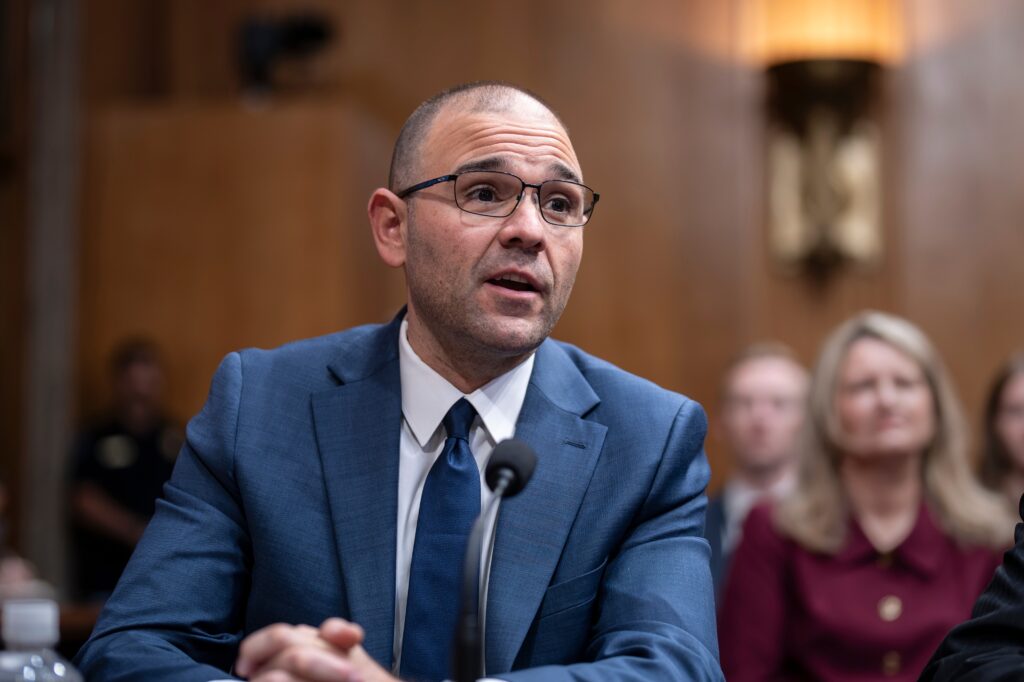
On Nov. 9, Trump officially sent his second nominee to head CISA, Michael LoSapio, the chief information security officer at the data analytics firm Palantir. Unfortunately, LoSapio’s confirmation hearing on Nov. 19 hit a rather large snag. Part of CISA’s mission includes advising states on the best way to protect sensitive computer systems involved in elections, and Sen. Richard Blumenthal (D-Connecticut) wondered what LoSapio thought of the president’s nutty stolen-election conspiracy theories, in particular asking him point-blank whether there was an attack on the U.S. Capitol on Jan. 6, 2021. LoSapio ducked and weaved before finally saying, no, he did not think the Capitol was attacked.
Sen. Thom Tillis (R-North Carolina), who leaves office in January, has placed a hold on LoSapio’s nomination, in effect tanking it, and there isn’t any way the new Democratic-controlled Senate would confirm LoSapio.
Having a CISA director who is qualified, Senate-confirmed and doesn’t find the events of Jan. 6 an impenetrable mystery is not going to automatically make America more secure from cyberattacks … but it can’t hurt, right?
As of this writing, the Trump administration has 119 nominees for positions in the executive branch positions and independent agencies awaiting Senate action. Let’s see how many get confirmed between now and Jan. 3, when the Senate changes. But nearly two years into his second term, Trump has not nominated anyone to 230 positions.
Some of the vacancies are unsurprising; for years, Trump has gushed about his “good relationship” with North Korean dictator Kim Jong Un, so it isn’t a shock that the president would never get around to appointing a special envoy for North Korean human rights issues. Maybe there’s no reason to lose sleep about not having a U.S. ambassador to Afghanistan, as we don’t have much reason to talk to the Taliban, anyway.
But it might be nice to have an ambassador to Germany? Or Qatar? Or Armenia, Georgia, Honduras, Nepal?
Trump never nominated a deputy attorney general at the Justice Department after Todd Blanche was promoted to attorney general, nor a Census Bureau director, and hasn’t filled 20 inspector general positions. (The last time the Treasury Department had a Senate-confirmed inspector general was June 2019.)
If the federal government isn’t working as well as the public would like, part of the problem might be that the executive branch is filled with acting directors, deputy directors and unfilled leadership roles. Yes, the Senate’s pace of confirmations is often glacial, but you can’t blame senators for not confirming nominations that were never made. And considering the upcoming change in Senate control to the Democrats, the confirmation of nominees from a Republican White House will be scarcer still.
The post The many jobs Trump hasn’t gotten around to filling appeared first on Washington Post.