When the National Security Agency’s classified messages system went out of commission Tuesday, Americans rushed to speculate about possible causes. Was it a foreign adversary? A cyberattack? Or an artificial intelligence agent gone rogue?
The actual cause, according to U.S. officials, was more benign. The agency was upgrading its systems in response to vulnerabilities discovered in a common programming language called PHP, Director of National Intelligence Jay Clayton said on Fox News.
That fix exemplified the beginning of a new age of digital chaos.
Experts and government officials insist the wave of digital breakdowns over the last week do not seem connected — and aren’t linked to criminal or foreign cyberattacks. Instead, they said, the outages are stemming from frantic attempts to fix decades’ worth of software bugs newly uncovered by rapidly advancing artificial intelligence tools. Now, governments and businesses across the world are scrambling to find and patch the vulnerabilities before hackers can take advantage of them.
“What we are seeing is a new normal,” said retired Gen. Paul Nakasone, former commander of both the U.S. Cyber Command and the NSA, who spoke to reporters at a Vanderbilt national security conference in Washington on Wednesday.
“Industries and agencies are trying to rapidly modernize, and at the same time, defend themselves,” said Nakasone, who currently serves on the board of ChatGPT-maker OpenAI.
AI is meanwhile rapidly identifying vulnerabilities that require companies to constantly issue new patches to fix them, he said. (The Washington Post has a content partnership with OpenAI.)
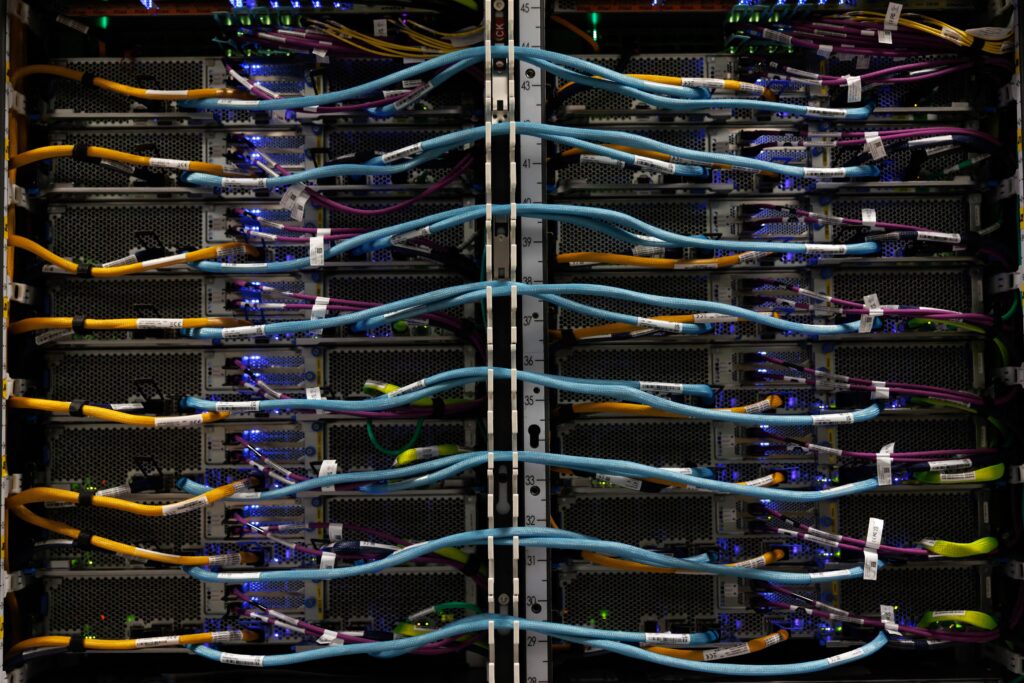
The internet still largely runs on the same system of protocols devised decades ago. The world’s digital infrastructure comprises a massive tangle of wildly different physical hardware and layers upon layers of software programs. Vulnerabilities and bugs lurk everywhere, and some key pieces of internet software relied on by people and companies around the world are maintained by small groups of volunteers working on obscure “open source” projects for free.
“Critical systems are deeply interconnected, and many still rely on brittle legacy architectures where a single vendor misconfiguration, hardware failure or cyberattack can trigger cascading failures,” said Jeanette Manfra, the global head of risk, privacy and compliance for Google Cloud.
Massive hacks and outages have occurred regularly over the years, when a key piece of software breaks or hackers find a new exploit that no one noticed before. In 1991, a single typo in new code issued by the telephone company DSC Communications helped take down millions of phone lines over a period of several months, at the time one of the most disruptive software failures ever.
But with AI, that process of discovering holes has sped up rapidly.
In March, Anthropic announced Mythos, an AI model highly capable at scanning through huge amounts of code and finding bugs. The maker of the Claude chatbot shared it with a select group of Big Tech and cybersecurity companies, who immediately began finding hundreds of vulnerabilities in critical software, some of which had lain dormant for decades. The big firms have rushed to patch as many bugs as they can, but access to the most capable cyber AI models is still strictly controlled by the U.S. government, Anthropic and OpenAI.
While AI has made gaps in systems easy to find, fixing them is still a lengthy process. In a complex system, engineers have to make sure that even a simple fix does not create bigger problems down the line (in the lead-up to the 1991 incident, DSC Communications had skipped its customary 13-week testing period because it considered the upgrades to be minor).
At the same time, freely-available “open weights” models made by Chinese AI companies have generally reached the capability of the top American cyber models from earlier this year, allowing smaller companies to use them to beef up their security, but also giving a potent weapon to hackers.
Those hackers have contributed to the recent carnage.
In October, a 26-year-old living in China used a series of AI models to hack into several South Korean banks to steal personal information from customers and then tried to sell it online, according to an investigation by cybersecurity company CrowdStrike. And earlier in November, French authorities said Iranian state-supported hackers were behind a series of cyberattacks that turned up the temperature on hundreds of supermarket refrigerators, spoiling huge amounts of food.
“I definitely feel like the temperature has gone up and there’s something mounting. If nothing else, these tools embolden adversaries and they embolden lone wolf actors too,” said Luca Taylor, a security adviser to cybersecurity start-up Adronite who previously worked on cyber operations at the NSA.
The hacks have increased the urgency for companies and governments around the world to find and fix vulnerabilities. Combined with the outages caused by cracking digital infrastructure and the rush to patch bugs, they’re serving to create an atmosphere of anxiety for many people who see the wave of outages as yet another sign that the world is in a constant state of crisis.
Nikesh Arora, the CEO of cybersecurity company Palo Alto Networks, estimated that there was enough “technical debt” that “we could be doing this for another 12 to 18 months.” The volume of fixes had gone up as much as five or 10 times, he estimated.
“I think we’re now facing a Y2K-level of effort in terms of getting our infrastructure up to speed,” said Mike Chapple, a cybersecurity expert at the University of Notre Dame, referring to the 1990s fear that the changeover in software systems from “99″ to “00″ at the turn of the century would cause computers to crash.
“Y2K was an extremely serious challenge,” Chapple added, but one where things worked out.
Everybody scrambled to fix their systems, he said, and when the new year came and went, nothing happened.
It remains to be seen how long the current period of outages will last.
“There is a part of me which says there is a Y2K-like period, where you adjust for it,” said Microsoft CEO Satya Nadella at the New York Times’ DealBook Summit on Thursday. But he said he worried about future AI models that were harder to defend against.
“The only challenge with that is, if the models keep getting more and more capable, I don’t know what that means,” Nadella said.
Tara Copp contributed to this report.
The post Welcome to the age of endless digital breakdowns appeared first on Washington Post.