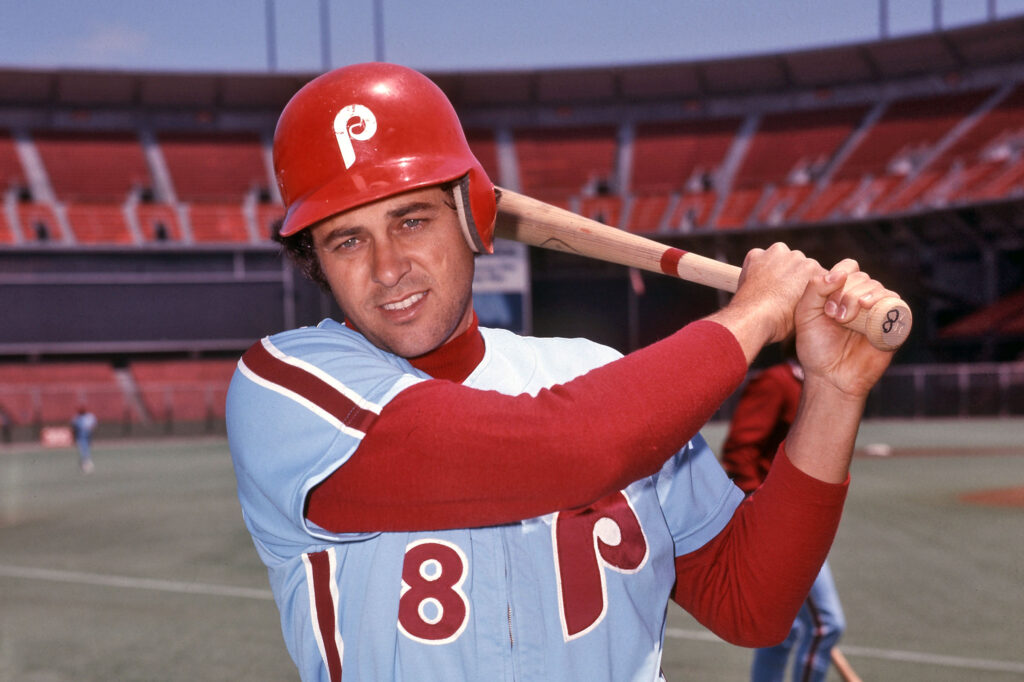
For 80 years, baseball has been the Boone family business.
First, there was Ray Boone, a Navy veteran who joined the Cleveland Indians as an infielder after World War II and spent all or part of 13 seasons in the major leagues.
Next, his son Bob Boone, a rugged catcher who seemed impervious to pain, was a fixture behind the plate for the Philadelphia Phillies and California Angels in the 1970s and ’80s.
In the 1990s, Bob’s sons Bret and Aaron Boone, both infielders, debuted with the Seattle Mariners and Cincinnati Reds, respectively, and went on to have solid careers. Bret, a three-time all star, leads the clan in home runs with 252. Aaron, now manager of the New York Yankees, authored a legendary moment for that storied franchise in 2003, belting a walk-off homer in Game 7 of the American League Championship Series.
In the history of the sport, five families have had three generations of players in the big leagues. The Boones were the first and, many believe, the best. All told, they appeared in nine all-star games (Bret and Aaron faced each other in 2003), won 11 Gold Glove Awards for defensive excellence (seven for Bob, four for Bret) and earned two World Series rings (Ray in 1948, Bob in 1980). “Baseball’s First Family,” they’re called.
As Bret put it in a family memoir, “RBIs in your DNA.”
Bob Boone, who died Nov. 9 at 78, was the most accomplished of the bunch. Starting in the mid-1970s, when the Phillies were stocked with young talent and rising from cellar-dwellers to pennant contenders, Mr. Boone, the starting catcher, was the sturdy defensive backbone of those teams. He guided top-notch pitching staffs with exceptional skill while enduring the grueling physical toll of his position with remarkable toughness.
“Gramps used to tell Dad how special it was to be a ballplayer, and Dad told his sons the same thing,” Bret Boone wrote. “‘Never forget you’re playing the best game in the world.’ That’s something none of us ever forgot.”
In 1978, his sixth full season in the majors, Mr. Boone, who was only a so-so hitter in his career, collected his first Gold Glove as the National League’s top defensive catcher, ending the great Johnny Bench’s 10-year grip on the award. Mr. Boone won it again the following season. And in 1980, he was like a poised, rock-ribbed quarterback behind the plate as the Phillies erased decades of hardball heartbreak, winning the franchise’s first World Series title.
“He was a man of great integrity,” Bret Boone said in announcing his father’s death on social media. “He was a great dad, husband, and patriarch. … Baseball lost a great one today.”
By the end of 1981, Mr. Boone, a three-time all-star with Philadelphia, had caught 1,095 games for the team, then the second-most in Phillies history. But his once-passable hitting had fallen off sharply, and the organization, fearing he’d soon be washed up as a catcher, sold his contract to the Angels. This turned out to be a mistake.
Rejuvenated in California, Mr. Boone improved his hitting while his defensive skills and durability made him arguably the best catcher the Angels ever had. In seven seasons, he won four more Gold Gloves, appeared in his fourth all-star game, led the American League in games caught five times and threw out would-be base-stealers at well-above-average rates, leading the league in that category three times.
Mr. Boone, who holds the Angels’ record for games caught with 961, signed a free-agent contract with the Kansas City Royals before the 1989 season and promptly won his seventh Gold Glove. Only three catchers have more. And only two caught more games than Mr. Boone’s career total of 2,225. In 1990, at 42, he retired after 18 full seasons.
At 6-foot-2 and about 200 pounds, Mr. Boone credited his longevity to staying in shape. He pumped iron and practiced a martial art in clubhouses, where he could win a bet by doing hundreds of sit-ups uninterrupted.
“It’s an attitude,” he told Sports Illustrated in 1988, when he was 40. “The kung fu helps because you reach a level beyond pain, beyond exhaustion, and you always know you can do more. I tell myself it’s only pain. Can I play, or can’t I play? It’s just pain. I can play.”
Robert Raymond Boone (a direct descendant of Daniel Boone) was born in San Diego on Nov. 19, 1947, when his father, Ray, was a minor leaguer. Ray debuted with Cleveland late in the 1948 season and rode the bench as the Indians won the World Series. After he arrived in the majors for good in 1949, his firstborn son grew up playing in clubhouses, chatting with big league superstars and shagging batting-practice balls in the outfield.
Mr. Boone attended Stanford University on a baseball scholarship and earned an undergraduate degree in psychology in 1969. The Phillies drafted him that summer. After a stint in the minors, he spent a few weeks with the Phillies in 1972 and became the starting catcher the following spring.
In time, young Bret and his little brothers, Aaron and Matthew, were hanging around the Phillies batting cages or chasing flyballs before games.
“My kids had a bat in their hands before they could walk,” Mr. Boone told author Kevin Cook for his book “The Dad Report: Fathers, Sons and Baseball Families.” He said, “They were raised with the game in their blood, like me.”
Although he posted terrific numbers in the 1980 World Series, reaching base 11 times in 22 plate appearances, Mr. Boone might be better remembered by some fans for a crucial freak play that lives in Philadelphia lore, a miracle witnessed by 66,000 spectators in the Phillies’ old Veterans Stadium.
Leading the Royals in the series, three games to two, the Phillies were ahead, 4-1, in the ninth inning of Game 6, three outs away from a championship. But their weary relief pitcher Tug McGraw loaded the bases with one out. Then the Royals’ Frank White sliced a foul pop up to the right side. Mr. Boone, with a sprained ankle tightly wrapped, raced toward the arcing ball, as did first baseman Pete Rose.
What happened next, when the two converged at the lip of the Phillies dugout, would become a staple of blooper reels. As Rose looked on, Mr. Boone lifted his glove to make the catch, but the ball clanked off his mitt. He said he felt a jolt of terror as it caromed toward the ground — before Rose, reacting in a flash, reached down and speared it for the second out.
“I wanted to kiss him,” Mr. Boone recalled. McGraw struck out the next batter, and the Phillies finally celebrated a World Series title.
Starting in 1995, Mr. Boone managed the Royals until he was fired in 1997. Four years later, when he became manager of the Reds, son Aaron was about to begin his fifth season with the team. Aaron was named to the 2003 National League all-star team, while Bret, playing for the Mariners, was voted onto the American League squad. Ray Boone, nearly 80 and fighting cancer, and son Bob trekked to Chicago’s U.S. Cellular Field to see them play.
Two weeks after the game in July 2003, the Reds fired Mr. Boone and traded Aaron to the Yankees.
Besides his three sons, Mr. Boone is survived by his wife of 59 years, Susan Boone, and several grandchildren.
After his abortive managing career, Mr. Boone worked as a front office adviser for the Washington Nationals for 16 years. He resigned as a vice president in 2021 rather than comply with the organization’s covid-19 vaccination mandate.
In his elder years, he enjoyed relaxing at home in his memorabilia room with a row of TVs on a wall, watching manager Aaron Boone’s Yankees from his leather recliner.
The post A fixture behind the plate for two teams and part of ‘baseball’s first family’ appeared first on Washington Post.