A top federal health task force that issues guidance on cancer screenings, infectious diseases and other health services is meeting this week for the first time in over a year amid concerns that staff cuts, procedural changes and the appointment of new members has made the influential panel less reliable and more open to conflicts of interest.
The U.S. Preventive Services Task Force, a panel of independent physicians and scientists whose recommendations determine what preventive services are covered by health insurance, normally meets three times a year, but had not convened to discuss health guidelines since March 2025.
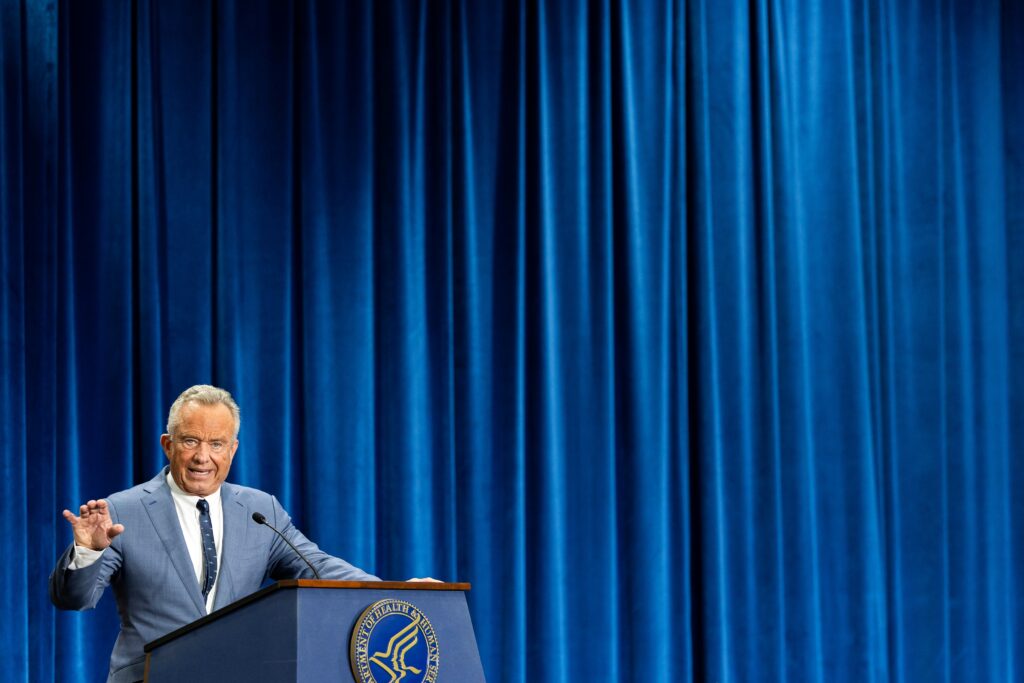
In the interim, Health Secretary Robert F. Kennedy Jr. took major steps to overhaul the group, firing its vice chair and chair, and appointing new members who have received waivers for conflicts of interest for owning stock in pharmaceutical companies. Kennedy has said reforming the task force will strengthen its expertise and pledged it will remain scientifically independent.
But the upheaval has disrupted the work of a group relied upon by physicians for impartial medical guidance, and whose recommendations can have major financial implications for health care providers and biotech companies, public health experts said.
“I think that there’s a huge erosion of trust,” said Aaron Carroll, president and CEO of health policy nonprofit AcademyHealth. “And it’s going to take time to earn it back.”
The Department of Health and Human Services did not immediately respond to a request for comment.
The task force convened Thursday to discuss updates to guidelines on cervical cancer screening and counseling for unhealthy alcohol use and perinatal depression. It is meeting again today to hear presentations from medical experts on colorectal cancer, kidney disease and lung cancer.
In an unusual change, part of the meetings are being broadcast on a public live stream. The task force generally has not made its meetings public in the past.
On Thursday concerns about the task force’s independence and impartiality loomed over some discussions.
Some task force members said that Health and Human Services officials made edits to proposed guidelines for cervical cancer screening, including adjusting language describing tumors and health care professionals and removing references to race and ethnicity.
“I worry that having edits from political leadership on the top line may lead to the perception that the task force recommendations are no longer scientifically independent,” said Sei Lee, a task force member and professor of medicine in the division of geriatrics at the University of California, San Francisco.
Mike Silverstein, a professor of health services, policy and practice at Brown University and former USPSTF chair, said allowing that precedent would severely compromise the task force’s reliability.
“For a political appointee to be editing task force recommendations means the task force is effectively no longer independent and under political control,” Silverstein told The Washington Post.
Several task force members also criticized plans to focus Friday’s meeting on expert presentations. The task force usually relies on systematic reviews of bodies of research on a subject to inform its recommendations, and panel members said that individual medical experts could give potentially incomplete or biased opinions on their areas of study.
Joel Tsevat, a task force member and a physician and professor of medicine at the University of Texas Health Science Center at San Antonio, called the expert presentations “unprecedented” in task force meetings.
“I fear that they stand to infringe on the task force’s scientific independence,” Tsevat said.
Carroll said much of the discussion Thursday still involved reliable, evidence-based analysis.
But the objections raised by task force members were notable, he added, and he remains concerned about how members will manage conflicts of interest. Four task force members appointed by Kennedy to serve on the panel were granted conflict-of-interest waivers despite owning stock in pharmaceutical companies, the New York Times reported.
Several task force members recused themselves from discussing certain topics due to conflicts of interest during Thursday’s meeting. Silverstein said that in previous years, it was unusual for members to recuse themselves during meetings because physicians with many conflicts of interests would not have been appointed to the group.
“All those things make me very concerned for the future of this task force,” Silverstein said.
The post Federal health panel reshaped by RFK Jr. faces political interference concerns appeared first on Washington Post.