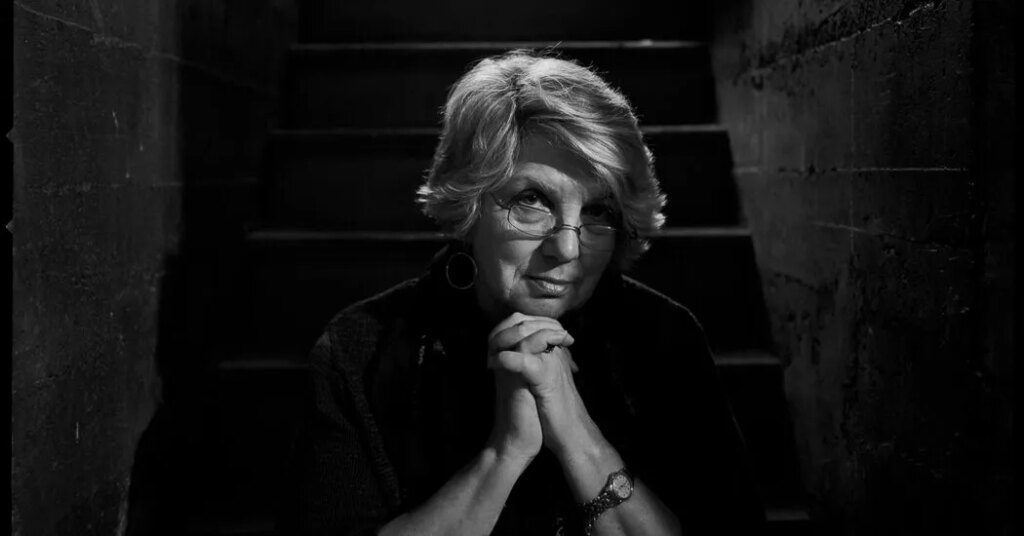
Marsha Linehan, a psychologist who developed a groundbreaking therapy for people struggling with borderline personality disorder and the suicidal thoughts that often come with it — a treatment that, she later revealed, was inspired by her own struggles with the same condition as a young adult — died on Nov. 10 in Seattle. She was 83.
Her death from complications of pneumonia, in hospice care, was announced by the Linehan Institute, which she founded to spread information and training about the treatment, dialectical behavior therapy, or D.B.T.
Borderline personality disorder is characterized by an inability to control one’s emotions, and often manifests in mood swings, unstable behavior, unstable relationships and self-harm, including suicidal thoughts.
Until Dr. Linehan developed her treatment in the early 1990s, therapists were wary of working with clients with borderline personality disorder — they were more likely to die by suicide, to sue therapists or to impose unreasonable demands on the therapeutic relationship.
Dr. Linehan, who taught at the University of Washington, believed that existing treatments, like psychoanalysis and cognitive behavioral therapy, were insufficient because they focused on changing a person’s thoughts.
The problem, she said, was that borderline personality disorder is fundamentally about emotions, not thoughts. And instead of trying to change how a person was thinking or feeling, she developed a set of tools for getting emotions under control.
The result is a therapy rooted in a dialectical balance — changing how a person approaches their emotional state, but also accepting those emotions as part of themselves.
“Freedom from suffering requires acceptance from deep within of what is,” she wrote in her book “Cognitive-Behavioral Treatment of Borderline Personality Disorder” (1993). “Pain creates suffering only when you refuse to accept the pain. Deciding to tolerate the moment is acceptance. To accept something is not the same as judging it is good.”
Over several months of sessions, therapists using D.B.T. introduce patients to techniques for dealing with seemingly uncontrollable feelings, like breathing techniques and acting in the opposite way that an impulse would suggest, combined with mindfulness training that helps them accept the wildness of their emotions.
In clinical trials, Dr. Linehan found that patients who went through dialectical behavior treatment were 50 percent less likely to engage in self-harm than patients in traditional therapy.
It quickly became one of the most common treatments for borderline personality disorder, and by the mid-2000s had been adapted to treat a variety of conditions, populations and settings, like eating disorders, teens and prisons.
It was only toward the end of her career that she revealed what drove her to work with such a difficult, high-risk population: She was a part of it.
As a teenager in late 1950s Tulsa, Okla., she began to display symptoms like self-harm and suicidal thoughts, which doctors diagnosed as schizophrenia. Her parents sent her to an inpatient facility in Connecticut, where she received electroshock treatment, isolation and high doses of medication.
“I was in hell,” she told The New York Times in 2011. “And I made a vow: when I get out, I’m going to come back and get others out of here.”
That’s exactly what she did. As a psychologist, she focused her efforts on people often considered beyond help by her profession, especially those who exhibited suicidal tendencies.
Along the way, she also went through a spiritual transformation. Raised a Roman Catholic, she took a vow of poverty as a lay religious sister. But in her 30s she split from the church over its treatment of women. Over time she found a new home in Buddhism, and was trained in Zen meditation in Germany and the United States.
Many of the ideas she encountered in Buddhism found their way into dialectical behavior therapy, above all the idea that patients had to find a balance between acceptance and change.
“The most fundamental dialectic is the necessity of accepting patients just as they are within a context of trying to teach them to change,” she wrote in her book.
Dr. Linehan came to believe that her doctors had misdiagnosed her, and that she had actually had borderline personality disorder.
She rarely spoke about her experience, though, in part because psychologists are trained not to insert themselves into therapy, and also because she did not want to invite criticism of dialectical behavior therapy.
She finally broke her silence in 2011, first by telling her clients, then by meeting with patients at the Connecticut facility, the Institute of Living in Hartford, where she had lived as a teen. Only then did she tell her colleagues and the world.
She wrote about her experiences in a memoir, “Building a Life Worth Living” (2020).
“I have felt the pain that my clients feel as they wrestle the emotional demons that tear at their souls,” she wrote in the book. “I understand what it is like to feel terrible emotional pain, desperately wanting to escape by whatever means.”
Marsha Marie Linehan was born on May 5, 1943, in Tulsa, the daughter of John, a vice president at the oil company Sunoco, and Ella Marie (Bourg) Linehan, who managed the home.
After returning home from Connecticut when she was 20, Dr. Linehan worked as a mailroom clerk while taking night classes to finish her high school degree — and continuing to deal with thoughts of suicide and self-harm.
She prevailed, and after moving to Chicago entered Loyola University to study psychology. She received her undergraduate degree, with honors, in 1968, and her doctorate in 1971.
Dr. Linehan taught at several universities, including the University at Buffalo and Catholic University, before joining the faculty of the University of Washington in 1977.
She is survived by her adopted daughter, Geraldine Rodriguez; a granddaughter; her sister, Aline Hynes; and her brothers, Earl, Martson and Michael.
Though her work on dialectical behavior therapy was motivated by her desire to help people in crisis, she told The New York Times that without meaning to, she was helping herself along the way.
“I honestly didn’t realize at the time that I was dealing with myself,” she said. “But I suppose it’s true that I developed a therapy that provides the things I needed for so many years and never got.”
If you are having thoughts of suicide, call or text 988 to reach the 988 Suicide and Crisis Lifeline or go to SpeakingOfSuicide.com/resources for a list of additional resources.
The post Marsha Linehan Has Died. She Transformed Treatment for Personality Disorder. appeared first on New York Times.