To some of its backers, the sweeping bill pending in Congress to ease federal permitting rules is “a big step forward” against climate change. To opponents, the legislation is “a massive giveaway” to oil and gas companies.
Environmentalists and climate activists are bitterly split over the measure, which would overhaul environmental laws to make it easier to build all sorts of big projects, from wind farms to gas pipelines. The fight has divided Democrats as the Senate debates the bipartisan legislation.
While the bill has strong backing from Republicans, the White House and the oil and gas industry, it also has notable support from clean energy developers and many who support action to tackle global warming. They say it could expand the U.S. electrical grid and speed development of sources like solar and geothermal power, helping to cut planet-warming emissions.
But major environmental groups like the Sierra Club, the Natural Resources Defense Council and Earthjustice oppose it, as do 17 Democratic state attorneys general. Critics say the bill would alter laws like the National Environment Policy Act and Clean Water Act in ways that would make it harder for communities to block polluting facilities. They also worry the bill would let President Trump lock in fossil fuel projects that would be hard to undo later.
The fight underscores a broader dispute about whether environmentalists should focus on blocking fossil fuels or push to expand cleaner alternatives as quickly as possible.
“There is a core fight here over the diagnosis of the problem,” said Joshua Lappen, a postdoctoral research associate at the University of Notre Dame who wrote a 2023 essay on the divide. “There’s a consensus in some camps that a fundamental obstacle to dealing with climate change is the difficulty in permitting clean energy. But for others, the fundamental obstacle is the power of the fossil fuel industry.”
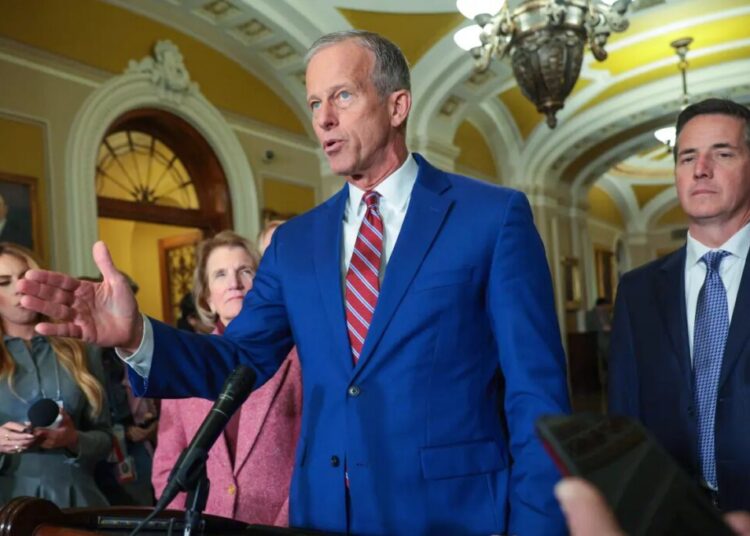
The 494-page bill was negotiated in closed-door sessions between Republicans and two Senate Democrats, Sheldon Whitehouse of Rhode Island and Martin Heinrich of New Mexico, both considered vocal supporters of clean energy and climate action. They say compromises were necessary.
Republicans have been mostly united behind the measure. But in an early test vote, 22 Democrats voted in favor while 24 voted against. Lawmakers are weighing multiple issues, including potential benefits for energy affordability and concerns raised by tribal groups, but the bill’s environmental effects have loomed large.
Here’s a look at the debate.
The climate case for permitting reform
Democrats who want to revamp permitting rules often cite the struggles of the Biden administration, which tried to pour billions of dollars into low-carbon technologies like solar, wind, nuclear and hydrogen.
Much of that money got out the door slowly. Federal grants required lengthy environmental reviews. Many wind and solar projects were stymied by a dearth of long-distance power lines, which can take a decade to secure government approvals. The delays, some say, made it easier for Mr. Trump to repeal the climate spending once he returned to the White House.
“It was ridiculous and shameful that we let so much process get in the way,” said Representative Scott Peters, Democrat of California.
“We have to build offshore wind, utility-scale solar, high-voltage transmission to fight the climate battle,” Mr. Peters said. “A lot of the environmental laws we set up in the 1970s to stop bad things from happening are now stopping those good things too. We’ve got to modernize those laws.”
The permitting bill would pare back laws like the 1970 National Environmental Policy Act, which requires extensive reviews of potential impacts on air and water for many developments. The bill would exempt a wider range of projects — including many receiving federal grants, as well as certain gas pipeline expansions and transmission upgrades — while making it harder for opponents to sue to stop them.
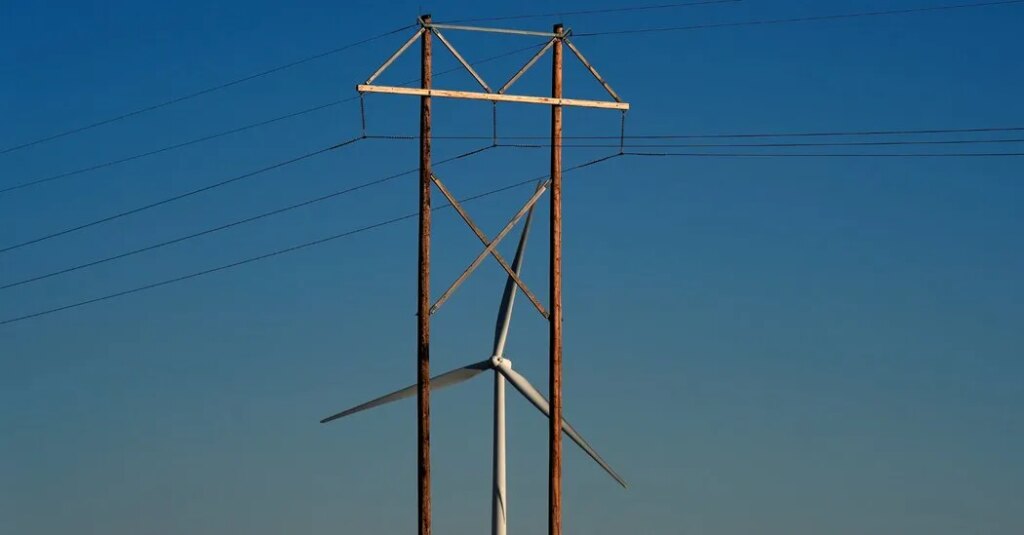
The bill also aims to greatly expand the electric grid, by prodding utilities to plan more long-distance power lines and giving federal regulators stronger authority to site new ones across state lines. That’s a priority for renewable-energy supporters, who say it’s extremely difficult to cut emissions without building thousands of miles of transmission.
Many of those changes would also benefit oil and gas projects. But supporters say that the status quo already favors fossil fuels — today, it’s easier to permit interstate gas pipelines than interstate electric lines. On balance, they say, clearing roadblocks would favor clean energy.
“What we do in this bill is create a level playing field in an environment where historically, and for decades, fossil projects have had a leg up,” said Mr. Heinrich. “The vast majority of the benefit actually accrues to renewable projects that are currently stalled out.”
Lena Moffitt is the executive director of Evergreen Action, one of a handful of green groups that has supported the bill. Ms. Moffitt spent years battling the Keystone XL oil pipeline and coal export terminals in the Pacific Northwest. She is still proud of those fights, but came to realize they were not enough.
“We cannot just stick on this permit-by-permit fight forever, or we will keep losing,” Ms. Moffitt said. “Even with the tools we have today, a lot of fossil-fuel projects are still getting built, and not much transmission is getting built. Something has to change if we’re going to get the clean energy transition we need.”
Several groups have tried to model the permitting bill’s impacts on the U.S. energy system and concluded that it could reduce electricity costs — in part by imposing new charges on data centers — while lowering U.S. emissions modestly. Supporters say that impact could grow if Congress were to pass more ambitious climate laws in the future because it would be easier to build clean energy.
“This bill is a compromise and does include a lot of really painful provisions for me as an environmentalist,” Ms. Moffitt said. “But we decided that because it will take us one step closer to being able to address the climate crisis, this is a deal worth taking.”
The environmental backlash against the bill
Many of the environmental groups opposing the bill agree that it should be easier to build clean energy and have praised provisions to expand the grid.
Where they disagree is on how environmental laws should be scaled back.
The bill “offers a real chance for climate progress, at staggering costs to communities, tribes, and ecosystems,” wrote Sarah Fort, senior director of litigation at the Natural Resources Defense Council. “We should all be grappling with that trade-off.”
Many opponents point to a provision that would prevent courts from halting projects under the National Environmental Policy Act, or NEPA, if they found the environmental review inadequate. Judges could only order federal agencies to update their reviews while construction proceeds.
For supporters, that’s a feature that would prevent unpredictable delays. But environmental groups — who file a large share of NEPA lawsuits — say the changes would render the act toothless by removing a key enforcement mechanism. While experts say that projects would still have to follow other laws, like the Clean Air Act, environmentalists say the reviews are essential for giving communities a voice and helping them understand the effects of new developments in the first place.
Environmentalists have also criticized other provisions that would make it harder for states to protect wetlands or let states handle endangered species reviews. And they argue that they have used lawsuits to halt ecologically harmful projects in the past, such as a plastics plant in Louisiana or Pebble mine in Alaska. On Tuesday, Senator Maria Cantwell, Democrat of Washington, warned that some of these projects could gain new life if the bill passed.
“Real people, entire communities, institutions, protections of our natural resources would be affected, and I think generations would suffer because of it,” Ms. Cantwell said.
Some opponents also aren’t convinced that renewable energy will actually win out under the bill, suspecting that the Trump administration will continue to find ways to stymie wind and solar power, even though the bill aims to prevent Mr. Trump from obstructing projects. Others say the bill could unleash a wave of new data centers powered by natural gas, increasing pollution. The fact that fossil-fuel groups have been so enthusiastic has raised suspicions among many activists.
“Even if I think clean energy will ultimately win out, I’m very worried about the amount of fossil fuel infrastructure we could see in the immediate term,” said Holly Bender, chief program officer at the Sierra Club.
Legal experts have raised more technical concerns. Some worry that provisions meant to bar presidents from unilaterally rescinding permits could prevent future administrations from imposing new pollution rules on industrial sites. Others say the measures could allow the Trump administration to irreversibly fast-track data centers or mines on public lands.
Bill supporters dispute that, and it’s hard to know how judges would rule. But some experts say the uncertainty is a problem.
“It basically creates enormous ambiguity around what governments can do going forward,” said Danny Cullenward, a climate policy expert at University of Pennsylvania’s Kleinman Center for Energy Policy, who expressed concern about unintended consequences.
“This is the biggest change to environmental policy in my lifetime,” said Mr. Cullenward. “And it’s happening on a very fast schedule.”
Even with fierce opposition, many large green groups have remained ambivalent or stayed silent. The League of Conservation Voters, which runs a highly influential environmental scorecard of lawmakers, hasn’t said yet whether they will “score” votes on this bill; a spokesman said the group was waiting to see what further changes might be made.
And some critics, like the Sierra Club, say they’d rather change the bill than kill it altogether.
“If the bill stays as it is, we’ll oppose it,” said Ms. Bender. “But we’re in a fight to fix it, because we do think there’s a lot of good in there.”
Some opponents, like former Vice President Al Gore, have argued that Democrats should wait until next year and write a new permitting bill with large majorities in Congress. Then, the thinking goes, they won’t have to make as many compromises.
Yet supporters say that’s unlikely. Negotiating complex permitting legislation takes years, and enacting laws in the next Congress will still require at least four Senate Republicans plus Mr. Trump’s signature. Some incoming Democrats, such as Mary Peltola in Alaska, also support the oil and gas industry.
“There won’t be a deal next year that’s any better than this one,” said Mr. Peters of California. “I think the people saying we should delay just don’t want a deal at all.”
The post The Bill That’s Splitting the Environmental Movement appeared first on New York Times.