But what will he wear?
Ever since it was announced that Robert Pattinson would be the next James Bond, social media has been alive with the sound of product placement speculation. There are few mega film franchises in which style rather than, say, tights and leotards, plays such a crucial (and lucrative) supporting role.
Bond’s tuxedos, swimsuits and watches are as much a part of his narrative as Moneypenny and Q. In many ways, his brands define him. And he, in turn, has come to define many brands. Each side has profited handsomely from the relationship, with evermore luxury names wanting in on the game and willing to pay for the privilege.
But Pattinson is a new Bond, not just for a new world, one full of new bad guys and new fears, but for a new Bond era, with a new owner (Amazon MGM Studios) and a new director (Denis Villeneuve) — and, most likely, a new slate of brand deals. Ones that will take place against the backdrop of a slew of new celebrity brand ambassadorships. All of which complicates an already complicated calculus that balances the interests of character building with the economic interests of a studio and that of a celebrity.
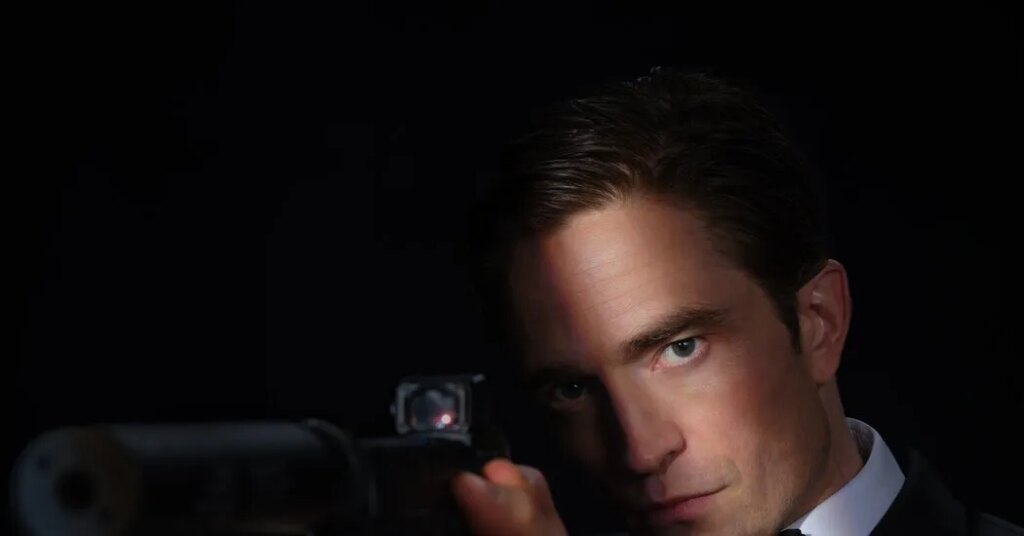
This was made clear by the image released with the news, which featured Pattinson in a (yes) tuxedo with his arms outstretched aiming a gun. None of that was a surprise. What shocked the scrutinizing world was the absence of a visible watch on his wrist. Be still my beating pulse.
Since Pierce Brosnan’s Bond and Daniel Craig’s Bond wore Omega timepieces, since Omega sells a highly successful line of Bond watches, and since the former Omega chief executive Jean-Claude Biver once said that he paid $2 million for the relationship, this image sent tremors through the watch community. It seemed to suggest that every bit of Bond regalia might be up for grabs.
Negotiations on many of the partnerships have not even begun, according to someone with knowledge of the discussions but not authorized to speak about them. Which means that negotiations will be on the table.
Should that really be so unexpected?
Aston Martins aside, almost every Bond, and Bond film director, has defined his own look within the character’s broader parameters. Sean Connery wore suits by the London tailor Anthony Sinclair. British tailors like Cyril Castle and Douglas Hayward dressed Roger Moore. Pierce Brosnan and the costume designer Lindy Hemming changed things up with Brioni, which gave Brosnan’s Bond a little more of a Euro swag.
Daniel Craig switched to Tom Ford suits cut close to the body, as if they could barely contain his musculature. (He also swapped out his shirts, which previously had come from Turnbull & Asser, for Ford). Similarly, Craig made his first emerging-from-the-surf entrance as Bond in a La Perla swimsuit but then updated his look with Orlebar Brown trunks in the subsequent films. And his Bond wore Sunspel boxer shorts.
Those changes don’t even take into account the financial impetus for a studio to offset its own costs through pay-to-play with brands. Reportedly, “Skyfall,” the 2012 Bond film, covered approximately a third of its production expenses, about $45 million, through product placement deals, which stretched far beyond clothes and cars to include companies like Heineken and Sony.
Nor do they address the fact that this is a new era of brand ambassadorships, one in which a celebrity’s ability to move product is taken as a given. Almost as soon as an actor achieves a modicum of fame, he becomes the face of this and that brand. Indeed, Pattinson comes with his own brand deals: with Dior, for clothes, and Jaeger-LeCoultre, for watches.
Such contacts generally do not extend to characters. You don’t see, for example, Jennifer Lawrence, another Dior ambassador, wearing only Dior in most of her movies, or Nicole Kidman, a Chanel ambassador, wearing Chanel. But it’s also true that actors may have preferences for their favored designer.
Pattinson clearly has opinions about style, if his appearances on and off the red carpet are anything to go by. And Jonathan Anderson, Dior’s creative director, has dabbled in costume design, working with the director Luca Guadagnino on “Challengers,” “Queer” and “Artificial.” It’s not hard to imagine him being interested in designing the new look of the new Bond.
That said, there’s little doubt that Pattinson’s existing watch deal would prevent him, as Bond, from becoming a face of Omega, the way Craig and Brosnan did. Which would, in turn, make outfitting Bond potentially less attractive for Omega, opening the door for other brands.
And no one has even mentioned sunglasses. Or the cuff links. The socks. The opportunities!
Certainly, said Remmert van Braam, the founder of Bond Lifestyle, the biggest Bond fashion fan site, Bond has “been a product placement bonanza for a while, so not sure how much more they can do — but for sure there won’t be less.”
No one wants to talk about it, or the amounts of money or the various permutations of deals involved. Not every brand in a Bond film is a paid-for appearance. There are also in-kind relationships, especially when it comes to clothes, in which the brand provides the garments for free, as well as deals that include marketing campaigns that benefit the film.
Dior did not respond to requests for comment. Nor did Orlebar Brown. Tom Ford declined to comment. One executive involved in bidding for a product placement in the first Pattinson film said they were told it would most likely take a seven-figure offer to even come to the table.
The stakes are even higher when you consider that Amazon, the new owner of the franchise, has its own retail arm. Once all of the deals are sorted, Van Braam said, and after the Pattinson film debuts, “maybe there will be a world where the movie will stream via Amazon Prime Video, and people can click to buy products directly from the screen.”
Even the possibility could leave brands both shaken and stirred.
The post New James Bond, New James Bond Style? appeared first on New York Times.