It’s baacccckkk!
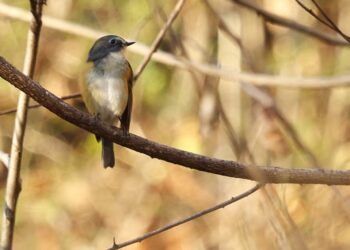
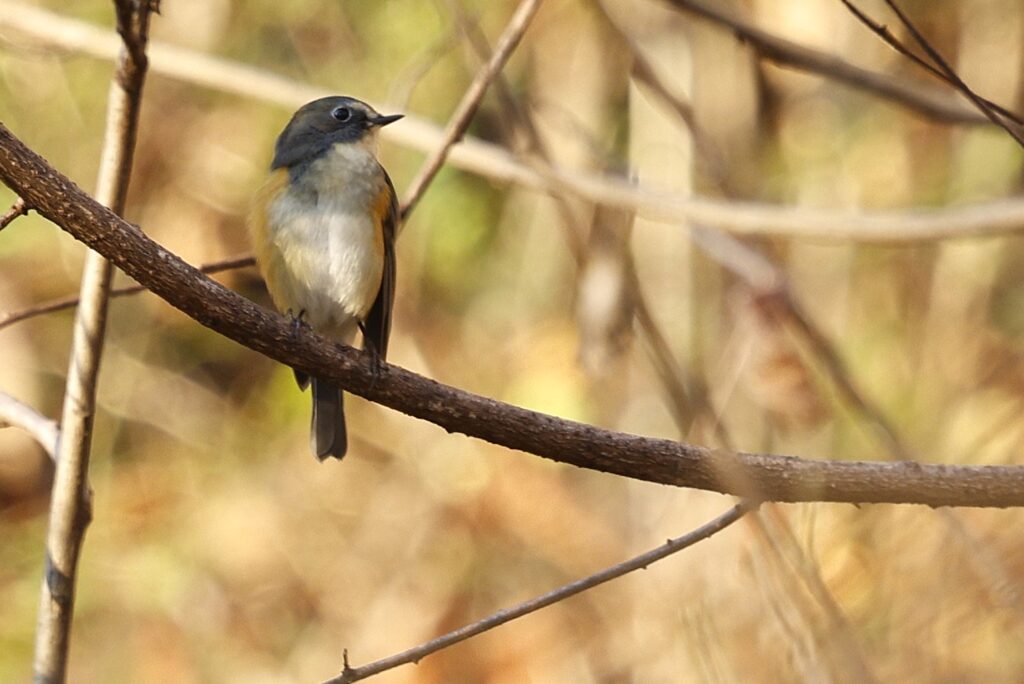
A red-flanked bluetail, a bird rarely seen in the United States, has shown up again at the same park in Northern Virginia where it was spotted 10 months ago.
It was already a rarity when the bluetail, native to Asia, showed up in early January at Great Falls Park. The tiny brown bird, with orange sides and a short, high-pitched whistle, had been spotted east of the Rockies only once before.
So D.C.-area birders were stunned — and excited — to see it again this past weekend. Not only was the bluetail back at the same park, birders reported spotting it in the same tree overlooking the Potomac River, eating red berries from an Asian bittersweet vine.
“I think people are shocked and thrilled about its return,” said Barbara Saffir, a wildlife photographer and birder who lives in Montgomery County, Maryland. “For it to come back to the same spot and the exact same place is uncanny.”
“This is a diamond in a mine for birders,” she said.
A bluetail’s arrival at the Fairfax County park earlier this year attracted locals and bird nerds from as far away as Minnesota, Nevada, Texas and Florida with binoculars in tow.
This past weekend, chatter of a new sighting quickly spread on several apps as birders described where to find the bluetail.
Ornithologists and local birders now believe it is the same bird. Earlier this year, experts thought it might have been a female because females and young males look similar. Now older and more mature, the bird has changed its colors and looks more like an adult male with a deeper blue hue on its head and back. Dan Rauch, D.C.’s wildlife biologist, said the bird looked “dapper in blue.”
How the bluetail traveled thousands of miles and ended up on Virginia’s shoreline for a second time remains a bit of a mystery.
Known by their scientific name, Tarsiger cyanurus, bluetails are classified as “Old World flycatchers,” meaning they mainly eat insects and are commonly found in Asia, Europe and Africa. They typically breed from Siberia and northeastern China west to Russia and parts of Scandinavia. They winter in warmer, forested areas of southern China, Taiwan and Thailand, where food is more plentiful during that period.
There have been sightings of the species in Alaska, British Columbia, Mexico and California. Three years ago, a bluetail was spotted in New Jersey, the first time the species had been seen east of the Rockies.
The bluetail seen in Virginia probably hatched in the summer of 2025 in northeastern Asia or Scandinavia, but migrated the wrong direction and wound up in Virginia, experts said.
Birds that sometimes travel on different and more distant routes than is typical for their populations are often called vagrants. There may be a number of factors that cause a bird to be vagrant, experts said. But they are known to “repeat the same mistake,” said Phil Kenny, an avid birder and estate planning lawyer.
“The habit becomes imprinted, and once they’ve made that first journey and survived, they’re likely thinking, ‘Why wouldn’t I do the same thing?’”
Still, many are wondering where the bluetail has been since it was last seen at Great Falls.
One possibility, experts said, is that it went north, maybe to Alaska or Canada. Others said it probably returned to its birthplace before coming back.
Andrew Farnsworth, an ornithologist at Cornell University, said birds have a “rather elaborate sensory machinery that allows them to remember, find and know their location in space and time to orient and navigate to and from the same destination and origin across years.”
Experts said the bird is likely to spend the winter at the Virginia park, barring any predators such as hawks. Rauch said the bluetail “survived one difficult winter of ‘snowcrete’ and cold temperatures, so there’s no reason to think it could not handle another.”
For many, seeing a bluetail would be an addition to their “life lists,” a tracking of every bird a person has seen.
“It’s exciting because it’s a rare bird on this side of the ocean,” said Daniel Lebbin, vice president of threatened species for American Bird Conservancy.
“It didn’t land in someone’s backyard,” he said, “but in a public park so people get a chance to see it.”
The post A bird rarely seen in the U.S. returns to a Virginia park appeared first on Washington Post.