The rash first appeared not long after Sandra Tiguila finished a sausage breakfast sandwich. It spread to her arms and legs, with a burning sensation that would make sleep impossible. She tried creams, pills, injections. Nothing helped.
But it was after she ate a steak and her face swelled up that she went to the emergency room. A doctor there tested her for tick-borne diseases, a possibility since she’d been bitten twice that summer. The results came back the next morning, as Tiguila was drinking coffee with her usual supplement of bovine collagen for joint, hair and nail health. “I immediately dumped that coffee down the sink,” she said.
The 49-year-old nurse, who lives in Carbondale, Illinois, had developed a meat allergy that’s activated by tick bites. She started avoiding all products with mammal-based ingredients, the primary way to manage a sometimes life-threatening condition that has rapidly spread through much of the eastern United States.
Known as alpha-gal syndrome, the condition arises when the immune system reacts to a certain sugar molecule, called alpha-gal, that’s found in red meat. Symptoms range from mild rashes or an upset stomach to anaphylactic shock; in 2025, the syndrome was blamed for the death of an otherwise healthy 47-year-old man in New Jersey.
As ticks have spread northward, so, too, have alpha-gal diagnoses. Up to 450,000 people in the United States may have been affected since 2010, the Centers for Disease Control and Prevention estimates. Yet the syndrome is still not fully understood.
“It’s emerging as one of the top adult-onset food allergies,” said Onyinye Iweala, an allergist and immunologist at the University of North Carolina at Chapel Hill who has researched alpha-gal syndrome for nearly a decade.
Unraveling the mystery
Allergies are often mysterious, but this one is especially so. “Alpha-gal follows none of the rules that I was taught in training about how a food allergy behaves,” said Maya Jerath, an allergist and immunologist at Washington University in St. Louis and one of Tiguila’s physicians. Unlike other food allergies, where reactions are immediate, alpha-gal symptoms often show up hours after an individual eats meat.
And, strangely, it often arises after a tick bite. Australian allergist and clinician Sheryl van Nunen first shared tales on the scientific conference circuit of patients with a delayed allergic reaction to red meat after tick bites. “Nobody believed her,” Jerath said.
The mystery’s eventual unraveling came on the other side of the world, where immunologist Thomas Platts-Mills, unaware of van Nunen’s findings, was pursuing two parallel projects in his lab at the University of Virginia in Charlottesville. In one, his group was collecting blood samples from people who claimed weird meat sensitivities. In the other, they were investigating patients’ strange reactions to the cancer drug cetuximab.
It would take both projects to crack the case, recalled Scott Commins, an allergist who was then part of the lab and now is at UNC.
First, the cancer strand. Cetuximab is a drug designed to stick to cancer cells and block their growth. It was first approved to treat colorectal cancer in 2004, but as its use spread, an odd pattern appeared. In the southeastern U.S., more than 1 in 5 patients had allergic reactions to the drug — hives, difficulty breathing and even anaphylaxis.
The cause was discovered by Platts-Mills and his team. People who reacted badly to cetuximab, they reported in 2008, had blood loaded with proteins called IgE antibodies. Those cause allergies when activated inappropriately — in this case, by the sugar alpha-gal.
Though humans (and many other primates) don’t make alpha-gal, most mammals do. It’s one of several sugars that cells attach to proteins to regulate their final structure and function. And cetuximab, like many drugs, is manufactured in lab-grown mouse cells. These cells had attached alpha-gal molecules onto the cetuximab, in turn triggering the cancer patients’ allergic reactions.
But it only happened in some patients. And only in one part of the country. Why?
The next clues came from the lab’s other work on meat sensitivities. This puzzle also involved exposure to tissues from non-primate mammals — so the researchers hypothesized that they were looking at the same cause. Sure enough, they found that people with meat sensitivity also had elevated IgE antibodies to alpha-gal, causing a “novel and severe food allergy.”
The allergy is bizarre for several reasons. There’s the delay that van Nunen noticed. There’s also the trigger: Allergies are typically spurred by proteins, such as those in eggs or nuts. But a simple carbohydrate linked to severe reactions was unheard of, said Jeffrey Wilson, an allergist and immunologist at UVA Health in Charlottesville.
Plus, food allergies were supposed to be all-or-nothing: a person allergic to peanuts, for instance, will always react to peanuts. Not so with alpha-gal. Some people react to meat alone. Others are bothered by dairy or items containing gelatin or other mammal products.
Because those products are prevalent, people are exposed to alpha-gal all the time and most have no problem with it. The question was why only some people developed an odd sensitivity.
Commins zoomed in on people with and without the meat allergy to see what the allergic ones had in common. A colleague participating in the study provided a key clue. He was in the ‘with allergy’ category but had been doing well enough that he dared to eat a sausage. Big mistake given his bad reaction. Testing showed his alpha-gal IgE had risen to “freakishly high levels,” Commins said.
The colleague also had itchy spots — from recent tick bites. That got the team thinking, and Commins went back to his other meat-sensitive subjects to ask if they’d also been bitten by ticks. Most of the nearly 200 people said yes. The researchers then learned of van Nunen’s work, bolstering their confidence that they were on the right track.
Indeed, everything pointed to a tick link: The regions where people had alpha-gal antibodies overlapped with the range of the lone star tick; people who got bitten developed more alpha-gal antibodies; and people with those antibodies often also had antibodies to other lone star tick proteins, the team reported in 2011.
The final clincher implicating ticks came a dozen years later, when Commins and CDC collaborators showed that people with alpha-gal syndrome were more than 11 times more likely to recall finding a tick on their body than those who didn’t have the allergy.
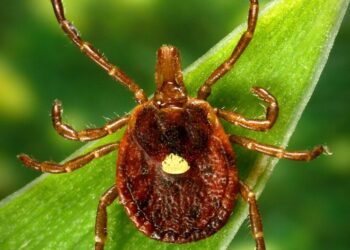
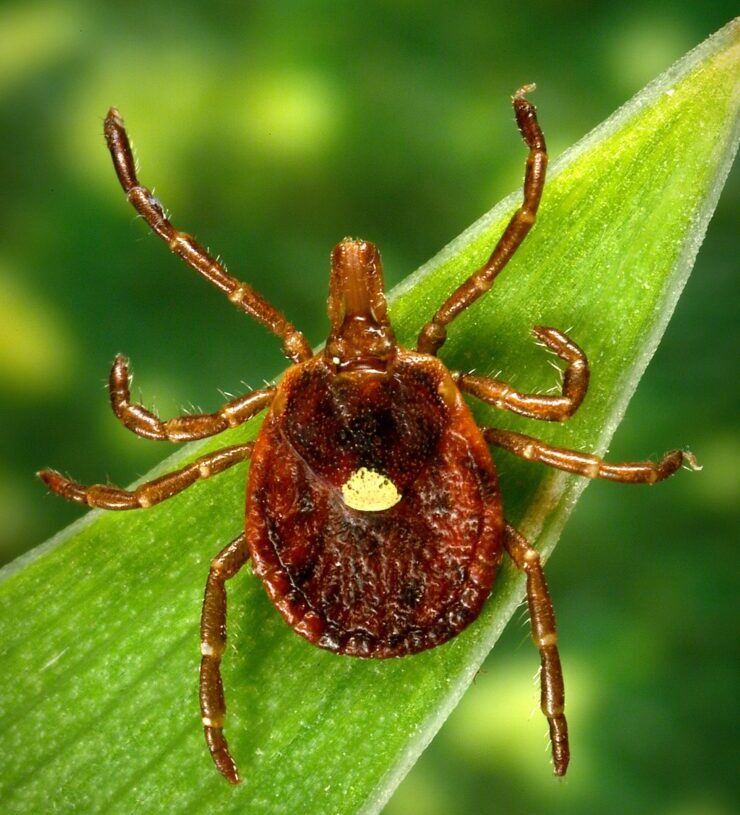
Around the world, about a dozen tick species are now associated with alpha-gal allergy. In the United States, the lone star tick is the major culprit, and it’s spreading north as temperatures warm and deer populations, which the tick feeds on, increase as well.
What’s still unknown
The CDC has pledged $10 million to support alpha-gal surveillance and awareness among health providers and the public. Scientists, meanwhile, have lingering questions about how this mysterious allergy works.
The pathway from tick bite to meat allergy remains murky. Commins, who hosts a podcast about alpha-gal syndrome, speculates that the body can treat alpha-gal as either something to tolerate or something to react to. The route of exposure seems to be key: Alpha-gal in the gut, from food or bacteria, seems to promote tolerance. But exposure via the skin is a prime trigger for an allergic reaction that can overtake the tolerance, Commins said.
His hypothesis fits some of the allergy’s features. A strong reaction to the initial bite, or getting lots of bites, boosts risk. Fresh tick bites can also exacerbate or reactivate the sensitivity.
Researchers don’t really know why certain ticks cause the allergy, and others don’t. What’s also puzzling is why some people get tick bites and don’t develop the allergy, while some alpha-gal patients don’t report any history of tick bites. Some people have high levels of IgE antibodies to alpha-gal but can enjoy cheeseburgers freely. Others are sensitive to meats but have low concentrations of IgE.
For some people, their elevated IgE levels will drop and the allergy will go away. In others, it lingers. And sometimes it seems to morph into a generalized disorder where people have allergy-like symptoms even when they avoid meat, according to Iweala at UNC.
For now, there are no specific alpha-gal therapies. Allergists can suggest antihistamines and offer EpiPens to thwart a reaction. Some prescribe Xolair (omalizumab), a general allergy treatment that can minimize symptoms. But the best approach is to avoid tick-laden areas or use insect repellents like picaridin on skin and permethrin on clothing.
Better treatment would certainly be welcome. Alpha-gal syndrome can cause anxiety, since mammal-derived products are hard to avoid. When Tiguila was first diagnosed, she went into a label-checking frenzy. Only after she was advised to relax around foods that didn’t bother her did she calm down. She still enjoys being outdoors but is careful to slather on insect repellent first.
She recently received more good news: This August, her blood tested negative for IgE antibodies against alpha-gal, suggesting her allergy might be gone. Her physicians prescribed a reintroduction protocol developed for patients who hit such a milestone. She started with an ounce of filet mignon, a low-fat cut, and amped up her exposure from there.
Three months later, she’s back to her usual diet. “I’m very grateful to be cleared and not have to be so cautious,” she said.
The post From tick bite to meat allergy: Scientists investigate the mystery link appeared first on Washington Post.