Hit the gym or lose your muscle. That’s the warning many people hear when starting a GLP-1 weight-loss drug.
Now, researchers in Australia have some of the first rigorous evidence that pumping iron is worth the effort, though perhaps not for the reason most people expect.
Weight training preserved only a sliver of muscle. Its bigger payoff was strength.
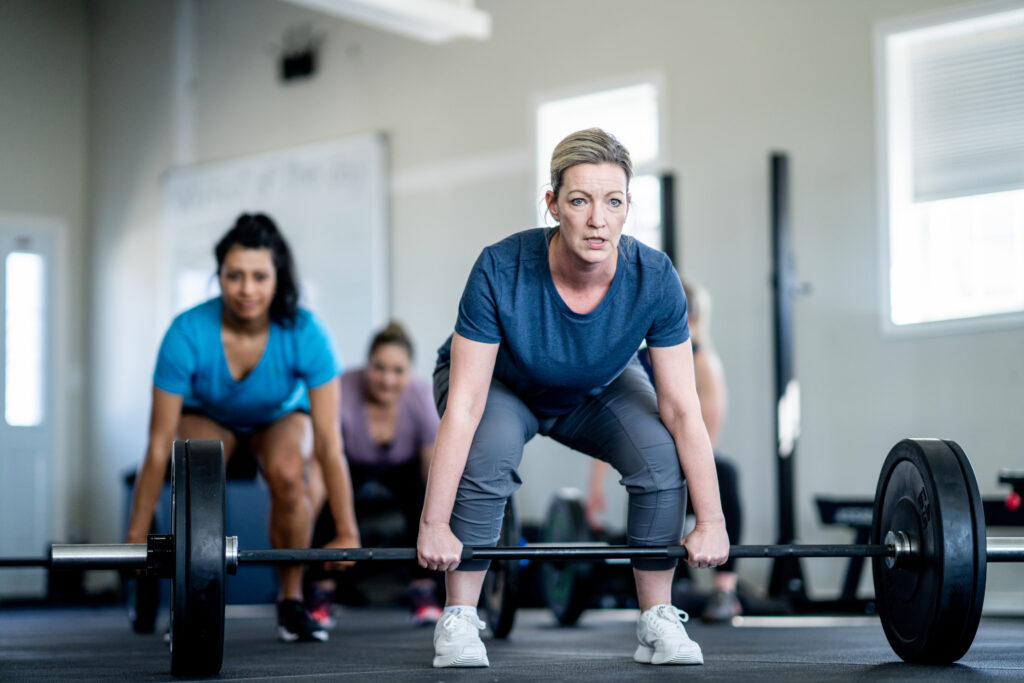
In the trial, conducted in Perth, all 120 participants received weekly injections of tirzepatide, the GLP-1 drug sold by Eli Lilly as Zepbound for obesity and Mounjaro for diabetes. Half were randomly assigned to supervised strength training three times a week. The hour-long sessions started gently, with a focus on form, but ramped up over the months to hard sets of six to 10 reps, at an effort level of 7 to 10 on a 10-point scale.
After nine months, participants in both groups had lost nearly 50 pounds. But those who lifted weights grew stronger, while those who stuck to their usual routines got weaker.
“It’s a really important trial that I’ve been waiting for for a long time,” said Henning Tim Langer, a muscle biologist at Charité University Hospital in Berlin, who was not involved in the research. “It’s very encouraging to see that you’re able to actually increase absolute amounts of strength despite very substantial weight loss.”
Yet the strength gains had little to do with how much muscle the workouts preserved.
The bulk of the weight lost in both groups was fat. The exercise saved only about a pound of muscle, the researchers estimate — a small difference that is unlikely to explain why gymgoers became 10 to 18 percent stronger on tests of upper- and lower-body strength, while those taking the drug alone became 6 to 9 percent weaker.
Strength over size
Where did the extra strength come from? The answer may lie as much in the brain as in the brawn.
Lifting weights trains the nervous system to activate muscle fibers in a coordinated way. So, even muscle that is shrinking can lift more if it is better trained — and it is that strength, more than muscle mass, that helps people stay active and avoid disability as they age.
“Strength is a more important outcome than muscle mass, because it relates to function and frailty,” said Daniel Green, an exercise physiologist at the University of Western Australia who led the study.
Green and his colleagues published their findings this week in Nature Medicine. Eli Lilly supplied the drug but did not otherwise fund the trial.
About 1 in 9 American adults now take a GLP-1 drug, according to a recent Gallup poll.
Major medical groups advise people taking the drugs to regularly strength-train.
But that recommendation rests largely on studies of conventional dieting, not trials of today’s more potent medications. Green’s study was designed to fill that evidence gap.
Keith Baar, an exercise physiologist at the University of California, Davis, said the findings should “allay fears” among people taking GLP-1 drugs who fear that losing muscle means losing strength, as the trial shows that the two don’t necessarily go hand in hand.
“It’s not as worrisome as we thought,” he said.
But some experts say that concerns over muscle loss were overblownto begin with.
Does muscle loss really matter?
A lighter body simply takes less muscle to move, said Caterina Conte, an Italian obesity specialist at the San Raffaele Roma Open University and the IRCCS MultiMedica Scientific Institute. So, shedding some muscle is a natural adjustment, not necessarily a red flag.
“Losing some muscle and strength may therefore be a perfectly reasonable adaptation to substantial weight loss,” she said.
What matters more, said Baar, is strength relative to body weight, not total muscle mass or how much someone can bench press in absolute terms. That relative strength can improve as the pounds come off, even as muscle mass declines.
Exercise is almost always worthwhile for overall health and well-being, said Carel Le Roux, a metabolic medicine specialist at University College Dublin in Ireland. But the Australian trial’s workout regimen demanded a lot of time and effort, and for most people the muscle lost on these drugs may not matter much.
Carrying a heavy suitcase might become a little harder, he acknowledged, but daily activities such as climbing stairs and getting up from the sofa should become easier as body weight falls.
For many people, then, preserving every ounce of muscle may not be worth the hassle of a demanding gym routine. But drugmakers are betting that people taking GLP-1 drugs will want to keep more of their muscle anyway — ideally with pills and shots that do the heavy lift for them.
Squats or shots?
One example is trevogrumab, an experimental Regeneron drug that blocks myostatin, a protein that normally puts the brakes on muscle growth.
In a trial of nearly 1,000 people, reported last week in The Lancet, adding trevogrumab to semaglutide — the blockbuster GLP-1 drug sold by Novo Nordisk as Ozempic and Wegovy — reduced the loss of “lean mass” by up to 43 percent at the highest dose. Lean mass is a catchall term that includes organs, water, skin and connective tissue but is roughly half muscle.
MRI scans of the thigh, which can distinguish muscle from other tissues, suggested that trevogrumab also prevented about 70 percent of the muscle loss otherwise seen with semaglutide alone.
That muscle-sparing effect could appeal to gym rats, bodybuilders and anyone else who wants to look fit, not just thinner, after substantial weight loss. But the trevogrumab study did not test whether the muscle saved translated into greater strength or better mobility. And earlier trials of similar muscle-sparing drugs offer little reason for confidence.
In one such trial, sponsored by Eli Lilly, researchers gave people a similar drug called bimagrumab for roughly a year, either alone or alongside semaglutide for weight loss. The drug built muscle when given on its own and limited muscle loss when combined with semaglutide. But it did little to improve grip strength.
“Clearly you can increase muscle mass with drugs,” said Steven Heymsfield, an obesity specialist at the Pennington Biomedical Research Center in Baton Rouge who led the bimagrumab trial. But, he added, whether the additional muscle translates into better physical function remains an open question.
What about protein?
Diet offers another path to muscle preservation.
Nutritionists generally advise people on GLP-1 drugs to eat plenty of protein, in hopes of sparing muscle as the pounds come off. The payoff, however, might be modest.
An analysis published last week in the American Journal of Clinical Nutrition pooled 33 trials comparing higher- and normal-protein diets during calorie-restricted weight loss, with or without exercise. It found that eating extra protein helped people preserve less than a pound of lean tissue, on average, even when combined with exercise.
None of the trials in the study involved GLP-1 drugs, and the analysis did not assess strength. Still, it does suggest that protein is no magic bullet. “But I wouldn’t equate a small effect with an unimportant one,” said study co-author Leigh Breen, a muscle physiologist and exercise metabolism researcher at the University of Birmingham in Britain.
“Protein alone is unlikely to completely prevent muscle loss,” he said, “but even modest muscle preservation could be valuable when weight loss is large, repeated or considered over the longer term.”
With higher protein intake offering limited protection and the best ways to preserve muscle during GLP-1 treatment still uncertain, researchers are continuing to test other muscle-directed strategies. In Britain, for example, muscle metabolism researcher Francis Stephens and his colleagues at the University of Exeter have partnered with Pvolve, a fitness brand known for its low-impact, resistance-based workouts and celebrity association with Jennifer Aniston, to see whether a video-based, at-home exercise program can help people preserve muscle while taking tirzepatide.
“The type of exercise that you do doesn’t necessarily have to be going to the gym and lifting weights three times a week,” Stephens said. “It can be at home, and it can be with simple resistance bands.”
“There’s been quite a bit of noise around muscle loss with some of these drugs,” he added. Trials like his and the Australian study should help clarify what that loss means for people on GLP-1 therapy — and how best to maintain strength and function as the pounds come off.
The post Lifting weights on a GLP-1 is critical — but not because it saves muscle appeared first on Washington Post.