Israel’s opposition parties took control of Parliament on Tuesday with the election of a new speaker, ushering in a rare and likely confrontational period of divided government, with lawmakers hoping to push back against Prime Minister Benjamin Netanyahu on several fronts.
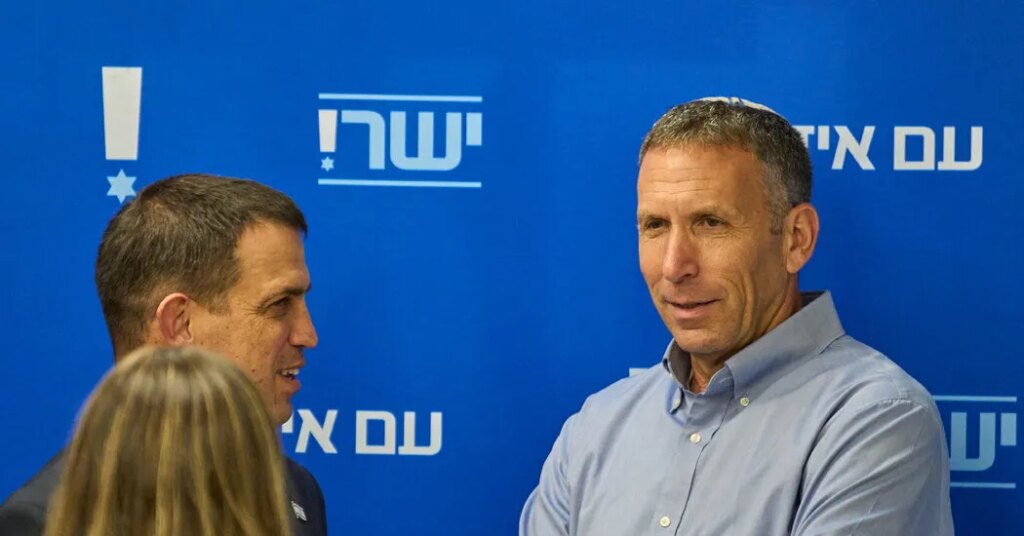
The new speaker, Matan Kahana, a lawmaker from Yashar, the party of the opposition leader Gadi Eisenkot, was elected late Tuesday night after about six hours of often-heated speeches by Parliament members opposed to him.
In remarks after the vote, Mr. Kahana pledged to serve all citizens of Israel, regardless of race, religion or gender, and called on members of Parliament to restore decorum to the divided body.
“The way we conduct debate here in this chamber has a direct and immediate impact on public discourse throughout the country,” he said.
After last month’s inconclusive elections, Mr. Netanyahu remains at the head of a caretaker government while Mr. Eisenkot, a former military chief, tries to turn a diverse group of opposition factions into a coherent governing coalition.
That is no small task: While opposition lawmakers together occupy 67 out of the 120 seats in the Parliament, or Knesset, some of his allies object to serving in a coalition alongside Arab party members, who hold 19 of the seats.
Mr. Netanyahu and his allies had argued that it would be illegitimate to rely on the votes of Arab lawmakers to elect a speaker, part of a wider effort to cast doubt on the election results and make it harder for Mr. Eisenkot to form a government with the Arab parties. The prime minister’s bloc has claimed without basis that Arab voters stole the election, after the Arab parties won a record number of seats.
Some of the Jewish-led parties aligned with Mr. Eisenkot have ruled out working with the Arab parties in a new governing coalition. But the process for selecting a speaker is different from the selection of a prime minister as part of forming a new government. Mr. Eisenkot’s allies drew a distinction between Arab lawmakers asserting their rights as members of Parliament in voting for a speaker and being given a role in government as part of a governing coalition.
Ahead of the vote on Tuesday, lawmakers from Mr. Netanyahu’s coalition repeatedly denigrated the Parliament’s two Arab-led parties. “They despise the people of Israel,” said Itamar Ben-Gvir, the far-right minister of national security. Relying on them, he said, amounted to “a spit in the face of our children.”
Mr. Eisenkot, speaking before the vote, called such rhetoric “inappropriate,” saying Arab citizens of Israel were not “second-class voters.” Parliament, he said, “has to represent all of Israel’s citizens.”
Electing a new speaker gives Mr. Eisenkot and his allies control over the Parliament and its agenda, and thus the ability to start pressuring Mr. Netanyahu and demonstrating to voters that they are delivering on key campaign promises.
Chief among those is the creation of a national commission of inquiry to examine the security failures that preceded the Oct. 7, 2023, Hamas-led attack on Israel, which took place on Mr. Netanyahu’s watch. The prime minister and his allies have opposed efforts to establish such a commission.
Opposition lawmakers are also intent on repealing some of the most divisive laws passed by the Netanyahu government, including some that were part of a yearslong drive to curb the powers of Israel’s judiciary.
Under Israel’s system of government, the speaker of the Knesset and the prime minister almost always belong to the same party, making Parliament the legislative arm of the governing coalition.
There have been instances in which a speaker was elected in defiance of the prime minister’s wishes, demonstrating the Knesset’s independence. But the premier and the speaker have rarely been so directly at odds as they will be now, said Prof. Suzie Navot, an expert on Israeli constitutional law.
Mr. Kahana, 54, entered politics after retiring in 2018 as a colonel in the Israel Air Force, where he was an F-16 pilot and squadron commander. When he was a conscript, Mr. Kahana served as a commando in the same elite unit as Naftali Bennett, who would go on to become a prime minister.
Mr. Kahana joined a party led by Mr. Bennett in 2019 and was elected to Parliament that year. He briefly served as a minister in the government Mr. Bennett headed from 2021 to 2022. Mr. Kahana left the Knesset in July 2025 and joined Mr. Eisenkot’s party that September.
Among other responsibilities, Ms. Navot said, the speaker is first in the line of succession to Israel’s president, a largely ceremonial role that comes with the power to pardon and to select a lawmaker to form a new government.
Johnatan Reiss and Ephrat Livni contributed reporting.
The post Israeli Opposition Elects Speaker of Parliament, Setting Up Netanyahu Clash appeared first on New York Times.