The Wilderness Act of 1964, signed into law by President Lyndon Johnson, promised more than a map of roadless country: It established an ethic of restraint and respect, a beautiful vision of protecting wild places “untrammeled” by roads, machines and permanent development. Less than a decade later, President Nixon signed the Endangered Species Act, recognizing that the fate of habitat and the fate of the species that depend on it cannot be separated. Historically, wilderness has been one of those rare issues that transcends partisan differences. We have grown protected wilderness from an initial 9 million acres to 112 million today. This is an essential chunk of our American heritage: We have long been unified in the idea that wilderness and the richness of experiencing it matter to our core.
That vision is currently under siege.
The war on American wilderness is being waged with a fury never seen before. Today, the threats to wilderness country and the wild animals who live there has never been greater; I have been fighting for these wild animals for over half a century and have never witnessed such hostility towards public lands or archaic hatred of top predators like wolves and grizzlies. Roadless areas and brown bears are on the chopping block. The Trump administration has carefully assembled the political weapons needed to unravel the dreams of our wilderness mentors: Thoreau, John Muir, Theodore Roosevelt, Leopold, the Muries or Edward Abbey.
What is going on with the government attacks on endangered wildlife and wild lands in America? It seems clear the very agencies responsible for protecting rare animals and pristine habitats are no longer pursuing their own mandates. The Fish and Wildlife Service’s director, Brian Nesvic, rescinded the Endangered Species Act’s definition of “harm” in mid-September to exclude protection of habitat—you can’t poach an endangered bear but you can log, mine or otherwise degrade its habitat. And, if you can’t save its habitat, you can’t save the endangered animal.
In 2025, Agriculture Secretary Brooke Rollins rolled back protection for national forest lands under the Roadless Rule, followed by her announcement of invasion of official inventoried roadless lands to include roads, logging and all kinds of motorized recreation. The total acreage affected could be as much as 58.5 million acres. Without roadless areas, there is no wilderness.
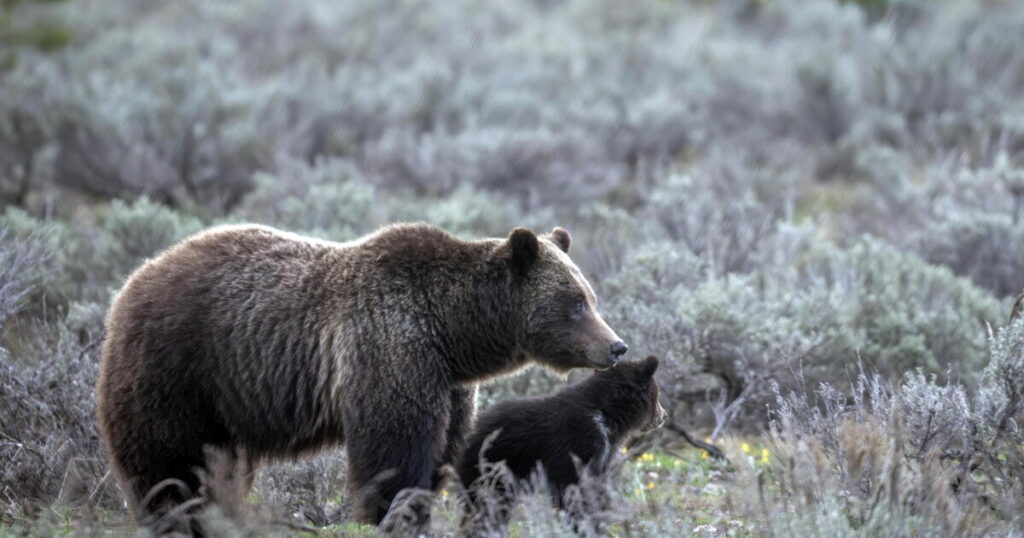
Last summer, President Trump proposed handing grizzly bear management over to the states most hostile to keeping grizzlies on the land: Montana, Wyoming and Idaho. This July, Interior Secretary Doug Burgum made the handoff official, giving these states the ability to kill or relocate grizzlies at will. Burgum was joined at this announcement by the governors of the three states and Nesvik; these five men control the fate of the grizzly in the 48 states. All are on record in favor of removing the grizzly bear from the Endangered Species Act listing as “threatened.”
If the grizzly bear is delisted, these three states will open trophy hunting (virtually no one uses grizzlies for food); two of them almost immediately, the other one perhaps a year later.
Despite their reputation for fierceness, grizzlies will not stand a chance. They are too easily hunted and killed. I know because for 15 years, I filmed many dozens of wild grizzlies in the lower 48 with a 16mm camera at shootable ranges. Also, unlike black bears, grizzlies are open country animals, more visible; they live on the plains and like meadows. Because of their place on the food pyramid — the top — they have evolved to be bold and don’t always run away.
One reason the grizzlies don’t need a trophy hunting season — even if one’s goal is to reduce the population — is because the present mortality is already at an all-time high. In the contiguous states we recorded back-to-back record high mortality years since being listed back in 1975. During 2025, at least 72 grizzly bears were killed in the Greater Yellowstone Ecosystem alone. This year, it’s 81, with two months to go.
The way you save grizzly bears is to protect their habitat and stop killing them. Today, the grizzly needs credible science and action on climate change.
Why do those of us who protect wilderness value it so much? My friend Edward Abbey said, “I come more and more to the conclusion that wilderness, in America or anywhere else, is the only thing left that is worth saving.” He meant that literally. When I came back from two tours as a Green Beret medic in Vietnam, I crawled back into the American wilderness, where I ran into bears. Later, I wrote that wilderness and grizzlies had saved my life.
And what is the most ideal habitat for the grizzly bear? It is wilderness. Like grizzlies, humans evolved in these pre-agricultural landscapes. What we now call wilderness was our original home.
And it is worth saving. We need to resist like never before.
Doug Peacock is the author, most recently, of “Was It Worth It? A Wilderness Warrior’s Long Trail Home.”
The post The American wilderness is under attack like never before appeared first on Los Angeles Times.