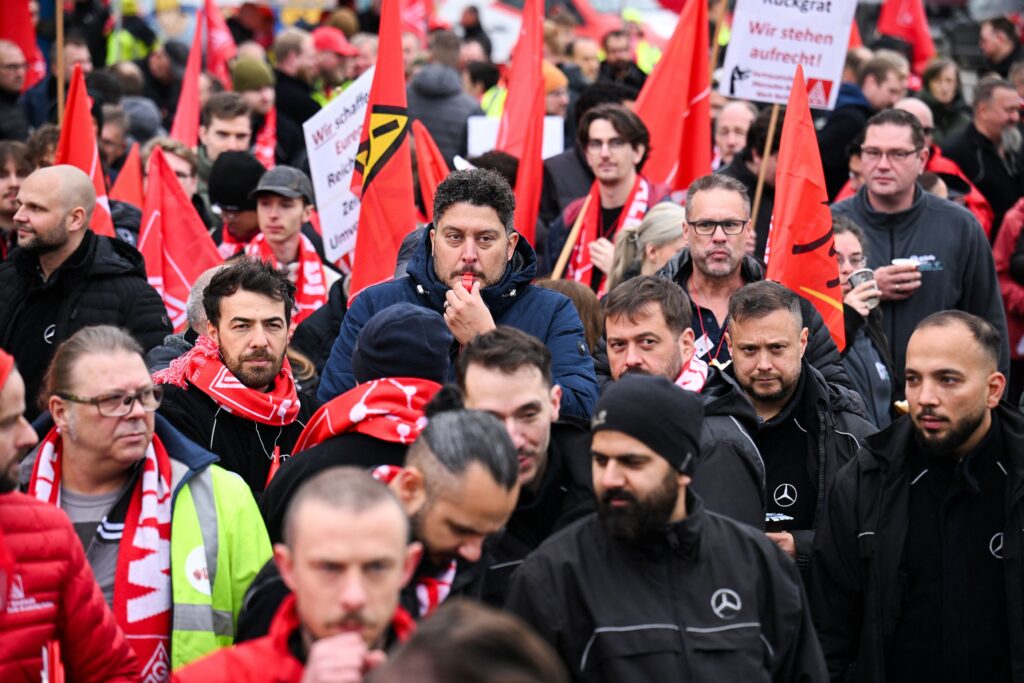
Not even German engineering can swerve around market forces. Mercedes-Benz workers want to preserve their 35-hour workweek in the country where Carl Benz invented the gas-powered car in 1885. The company wants employees to work 40 hours for the same pay. After four months of negotiations reached an impasse, Mercedes announced last week that it would halt new investment in its German plants and consider factory closures.
Mercedes production chief Michael Schiebe says an hour of labor in Germany can cost as much as five times what it does in Eastern Europe. For years, German automakers could shoulder such costs because customers around the world were willing to pay a premium for “the best or nothing.” But Mercedes sales in China fell 31 percent in the third quarter from a year earlier. Chinese automakers have become formidable rivals, particularly in electric vehicles. Mercedes also faces higher raw-material costs and U.S. tariffs.
Other German autoworkers have already accepted the trade-offs. BMW agreed with its works council on a voluntary program expected to eliminate about 8,000 German jobs by the end of 2027. Volkswagen’s unions previously accepted 35,000 German job cuts in exchange for employment guarantees.
Germany’s system of “codetermination” can make adjustment more difficult. Employees at large companies elect representatives to supervisory boards, and works councils have extensive rights over workplace decisions. These arrangements give incumbent workers considerable power to defend existing benefits even when competitive conditions change.
Markets impose a discipline that bargaining cannot wish away. Consumers have no obligation to pay extra for German cars, and capital has no obligation to remain in Germany. If factories cannot justify higher costs through greater productivity or innovation, investment will go elsewhere.
The union at Mercedes can keep insisting on a 35-hour week. It cannot insist that the next Mercedes be built in Germany.
The post Mercedes cannot put market forces in reverse appeared first on Washington Post.