This is an edition of The Atlantic Daily, a newsletter that guides you through the biggest stories of the day, helps you discover new ideas, and recommends the best in culture. Sign up for it here.
Sometimes a book is engrossing enough to play out like a film in your mind—characters assemble in easy conversation, lush landscapes backdrop each scene. So I asked five Atlantic staffers: What is a book that you think would be a good fit for a movie adaptation?
The Transit of Venus, by Shirley Hazzard
Here’s a classic movie setup I’ll never tire of. A young, intrepid woman finds herself torn between two men: one dashing but boorish, the other sweet-natured but meek. If Bridget Jones has taught us anything, she’ll choose the wrong one—but watching her realize her error, and decide whether or not to correct it, is always thrilling (and agonizing). This is the plot you’d get if you put Shirley Hazzard’s exquisite 1980 novel into a Shrinky Dinks machine. There are other storylines woven through it, but at its core, it’s both an unrequited-love story and a period piece: catnip for Hollywood.
Caro Bell, a young Australian woman in 1950s England, chooses the rakish playwright Paul Ivory over the awkward scientist Ted Tice. Paul promptly breaks her heart, which sets her on a wandering path across decades and continents. Some creative makeup might be needed for the age progression, but one can easily envision the montages of far-flung destinations (Stockholm, Sydney); Hazzard’s lucid, dramatic dialogue wouldn’t need much tweaking, either. (The taglines practically write themselves: “All my weakness is distilled in you,” Caro tells Paul.) I won’t spoil the outcome, but know that it’s a tearjerker.
— Sara Krolewski, deputy research chief
***
The Secret History, by Donna Tartt
Immediately after finishing The Secret History for the second time, I went to look up whether a movie adaptation had been made. I was disappointed to learn that not only is there no movie, but there have been multiple failed attempts to make one.
Everything about this book makes it an excellent candidate for translation to film: the pacing; the characters; the bizarre, vivid plot (an imagination goes only so far in piecing together the bacchanal!). At a liberal-arts college in New England, the unreliable narrator, Richard, meets a strange and secretive group of friends through their shared classics major. At first he is enamored with them, but he soon begins to realize that something about this group is very wrong. Morally wrong, in fact. Unsettling rituals fueled by alcohol and drugs, irrevocable acts, and irredeemable lies all push Richard down a once-unimaginable path.
I often find myself unimpressed with the adaptations of some of my favorite books, especially those with excellent prose—but in the right director’s hands, perhaps Richard’s blind obsession with this cast of characters could be shared with even more people.
— Laney Crawley, editorial fellow
***
Skippy Dies, by Paul Murray
No one does tragicomedy quite like the Irish, and no Irish artist so masterfully combines the hilarious with the heartbreaking as Murray. He’s been feted for his most recent novel, The Bee Sting, but I prefer the earlier Skippy Dies, which focuses on a Dublin boarding school’s faculty and students—including, yes, Skippy, the unfortunate adolescent who fulfills the title’s promise in the opening pages. The nonlinear story explores the time before and after Skippy’s death; its abundant subplots feature morally suspect teachers, Skippy’s crush, a terrifying bully, and Skippy’s precocious, string-theory-obsessed roommate.
All of this, to me, demands a big-screen treatment—something like Dead Poets Society as interpreted by Martin McDonagh. The Dublin depicted is an ominous, grim one, careening toward a post–Celtic Tiger recession and mired in ongoing Catholic Church scandals. And yet Skippy Dies manages to retain its sense of humor and a frenetic energy, hopping from character to character in a way that immerses readers in the messed-up but entertaining world of Seabrook College. Capturing even a fraction of the novel’s delirious style on-screen would be challenging, but I’d love to see someone try.
— Dan Goff, copy editor
***
The American Painter Emma Dial, by Samantha Peale
I would love to see an adaptation of Samantha Peale’s 2009 novel, featuring an eponymous heroine who is a studio assistant to a very famous artist—which, in practice, means that she makes his paintings according to his instructions. He’s the brain; she’s the brush. The job is both stable and prestigious, and Emma enjoys it, but she’s well aware that it crowds out her personal artistic aspirations. Over the course of the book, which is full not only of art but of sex and status jockeying, she wrestles with her competing desires for a secure career and creative freedom. It’s a layered, fascinating portrait of ambition by Peale, who once worked as an assistant to Jeff Koons. Plus, all of the studio scenes, with their colossal canvases and vibrant colors, would look terrific on a big screen.
— Lily Meyer, staff writer
***
Moderation, by Elaine Castillo
When Girlie Delmundo’s boss kisses her, she feels him everywhere—her lips, her neck, her fingertips. Which is odd, considering the two are not physically together, but making out in a fairground-themed simulation.
Girlie, the protagonist, is a content moderator for a new virtual-reality experience. The novel, which moves between real life and cyberspace as Girlie does, benefits from Castillo’s incisive narration, which repeatedly evokes the five senses. Take Girlie’s maiden voyage into the augmented landscape: A “deafening chorus” seizes her first; a blinding sight—marble palaces under sunlight—follows. Shivers, from the fading snow underfoot, soon rack her avatar. At times, the descriptions are so vivid that they emphasize the lack of sensation involved in merely reading this book on your couch. But that’s what makes Moderation a perfect candidate for adaptation. At risk of being greedy, a 4DX screening—with moving chairs, splashing water, and ripping wind—might be the only way to do this book justice.
— Catherine Goodman, editorial fellow
Here are three Sunday reads from The Atlantic:
- The cover story: What constant surveillance is doing to children
- The stealth friendship killer
- Alexandra Petri: “What I learned about Christmas—and life—by starring in a Hallmark movie”
The Week Ahead
- Elsinore, a drama about the actor Ian Charleson’s acclaimed final performance as Hamlet while confronting his own mortality (in select theaters Friday)
- The Altruists, a drama miniseries about Sam Bankman-Fried, Caroline Ellison, and the multibillion-dollar downfall of FTX (streaming Thursday on Netflix)
- Nanny Nanny, a debut novel by K. Chiucarello about a wealthy family’s nanny considering motherhood (out Tuesday)
Essay

What I Learned at a Drunk-Math Party
By Lila Shroff
At 7 o’clock on a Saturday in October, the light is dimming in Cole Valley and a group of the AI industry’s young stars is gathered on the second story of a century-old Edwardian. At first glance, it looks like any other San Francisco house party: bottles of cheap liquor on the table and awkward conversations in the living room. But there are signs that this party is different. In the kitchen sits a pile of sharp No. 2 pencils and stacks of white paper. I am drinking vodka and reviewing trigonometry. The unit circle is confusing enough as it is, but it’s even worse when you are three shots in. I am here for a “drunk deriving” party. The plan is to compete against one another in math. We are going to see who, while drunk, can score highest on a set of past problems from Oxford’s math-and-computer-science undergraduate-entrance exam.
More in Culture
- The unbearable mediocrity of microdramas
- A novel about obsessively digging into the past
- How ugly metro sweaters became chic
- The one source Bob Woodward can’t get to talk
Catch Up on The Atlantic
- The spectacular rise and fall of Jensen Huang
- Adam Kirsch on the last Trumpist standing
- Scott Colom is Mississippi’s first Black senator in 150 years.
Photo Album
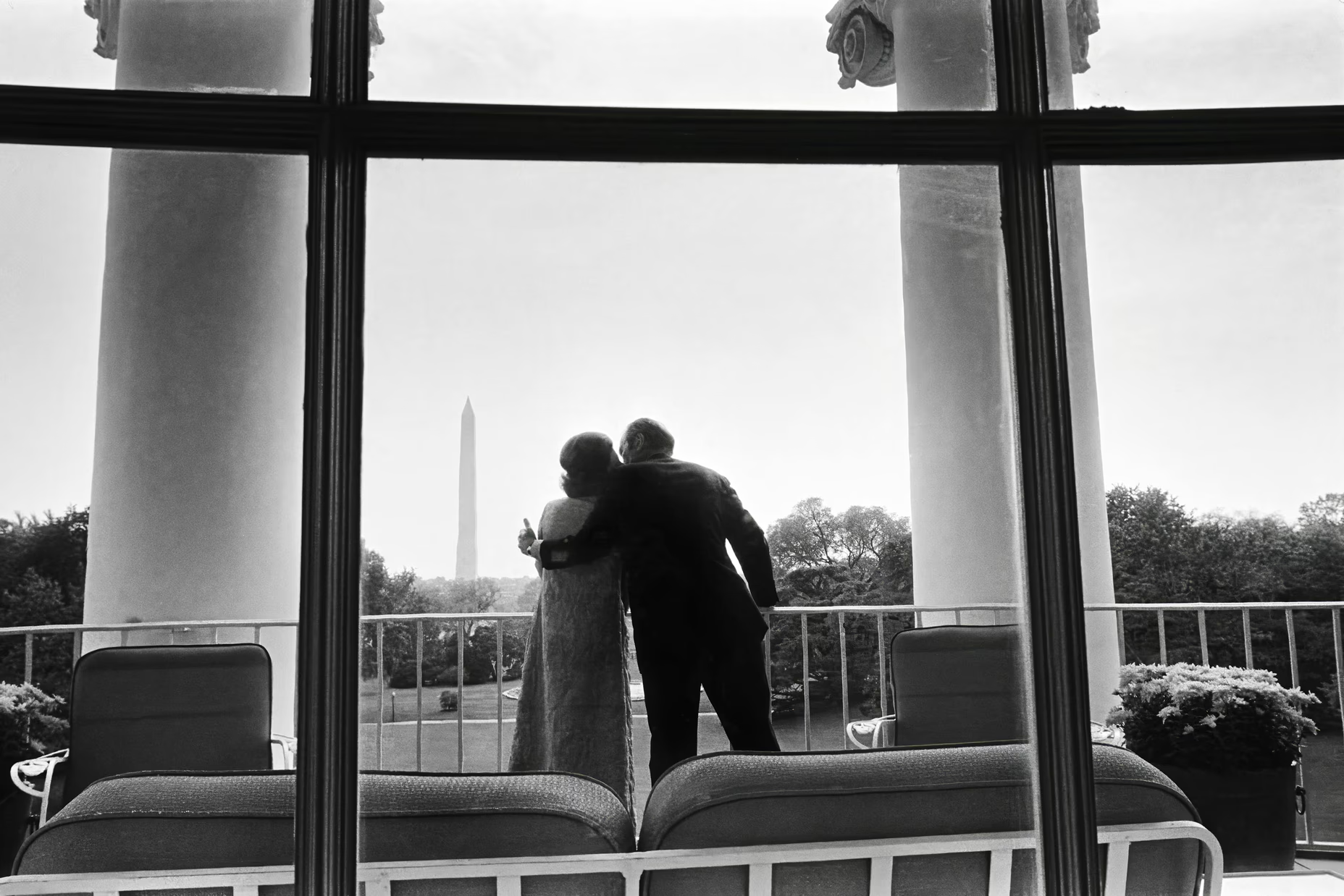
Take a look at images from the photojournalist David Hume Kennerly and his six decades on the “front lines of history.”
Rafaela Jinich contributed to this newsletter.
Explore all of our newsletters.
When you buy a book using a link in this newsletter, we receive a commission. Thank you for supporting The Atlantic.
The post Five Books That Would Make Great Movies appeared first on The Atlantic.