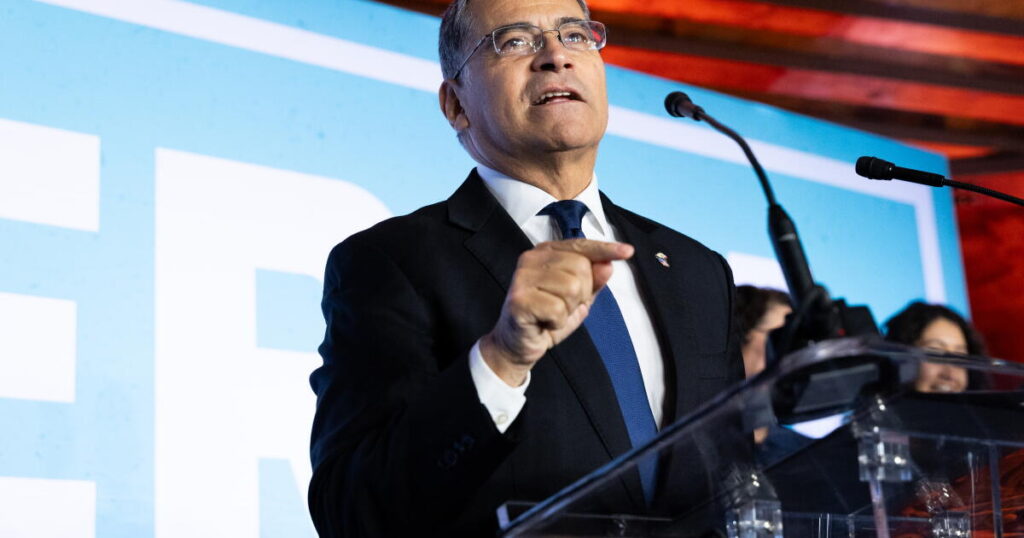
The Trump administration is trying to redefine who counts in America, and California has a lot to lose. Governor-elect Xavier Becerra should prepare to act as soon as he enters office.
The Constitution requires that every person living in the U.S. be counted as part of a national census every 10 years, regardless of citizenship or immigration status. But under changes suggested in a recent federal proposal, the next census would exclude millions of noncitizens from the overall tally used to determine congressional representation. The proposal would also add a question about immigration status in a blatant attempt to scare off people from participating in the census and reduce the recorded population in communities and states with large numbers of immigrants.
This isn’t just a matter of people getting missed in the final numbers. An undercount would have serious consequences for California’s political representation and its fair share of federal spending for the next decade. Census data not only determine representation, but how electoral districts are drawn and the distribution of federal resources for schools, healthcare, housing and other services. Communities already struggling to get their fair share would ultimately lose out. As the state with the most immigrant residents in the country, California has a lot riding on an accurate census that ensures every single person is counted.
California faced a similar challenge in 2020, when the first Trump administration attempted to undermine the census by trying to add a citizenship question, exclude undocumented immigrants in the count and by shortening the count period. In response, Gov. Gavin Newsom and the California Legislature invested an unprecedented $187 million in outreach and public education, supporting community organizations and trusted messengers throughout the state to make sure communities with low response rates were counted. Evaluations found that participation rates in hard-to-count communities, including Latinos, African Americans and children, surpassed other states.
Adding to the challenge this year, we simply cannot trust the current administration to protect private census data. This is an administration that has unlawfully used confidential IRS taxpayer information and Social Security data for its immigration enforcement. It has also sought voter registration records, including sensitive private information, to aid Homeland Security’s attempts to identify noncitizens.
For more than a century, federal law has provided strong confidentiality protections for census data. But after witnessing the government use protected information in nefarious ways, why would Californians trust that their responses to the census will remain private?
New polling by the UC Berkeley Institute of Governmental Studies suggests that confidence in the census is already eroding. For example, only 72% of California registered voters surveyed say their households are certain to complete the 2030 census. Just 21% of registered voters are “very confident” their responses will remain confidential. And only 17% of Californians say they would “definitely” advise a friend or family member who is not a U.S. citizen to participate.
These results reinforce the findings from a September Latino Community Foundation poll of 1,250 registered California Latino voters, which found that less than half were certain they would participated in the census.
As funders of organizations that work to strengthen democracy in California, we’ve seen firsthand how effective our trusted messengers can be in assuring broad participation in the census, voting and civic life. Philanthropy played an important role in the 2020 census, with community foundations and other funders supporting local outreach to assure a fair and accurate count. But philanthropy cannot replace state leadership and investment.
We are ready to partner with Becerra on ensuring a fair and accurate count — and the work starts now.
In 2027, local governments can begin reviewing federal address lists through the Census Bureau’s Local Update of Census Addresses program, known as LUCA. This is the state’s opportunity to identify homes the census might otherwise miss, particularly in communities with “informal housing” or rapidly changing populations. There is no federal funding for participation in LUCA, but California can help local governments cover the costs.
The state also needs to invest in research, message testing and relationships with trusted community organizations that can reach people who are hesitant to participate. Given this administration’s egregious efforts to weaponize confidential data against immigrants and those who disagree with it, building trust will take more than in any previous census.
Unfortunately, California has recently eliminated some of the infrastructure needed for this work. In July, the state closed its Office of Community Partnerships and Strategic Communications, which helped state agencies work with community organizations, faith leaders and ethnic media to reach underserved communities.
As attorney general, Becerra was a champion for a fair census in 2020. He sued to block the addition of a citizenship question that threatened to reduce census participation, as well as the administration’s attempts to exclude undocumented immigrants from the population count. California prevailed in both cases.
Now Becerra has the opportunity to lead again. He can prioritize census preparation in his first budget, including multiyear funding for LUCA, research and outreach. Given the high stakes for California, he can also appoint a Cabinet-level official to coordinate the state’s census work across agencies, local governments and community partners.
When Becerra takes office in January, the 2030 census will be just over three years away, and given the historic challenges we are facing and significant work to prepare, there will be no time to lose.
Raúl Macias is the program director for democracy at Evelyn and Walter Haas, Jr. Fund. Christian Arana is vice president of civic power and policy at Latino Community Foundation.
The post How Becerra can ensure Californians are counted in the 2030 Census appeared first on Los Angeles Times.