Eight days after the 2024 election, I honored a presidential tradition by hosting a visit from the president-elect. Jill and I met President Trump and his entourage in the Diplomatic Reception Room, and then I escorted him into the Oval Office for our formal meeting, accompanied only by our chiefs of staff, Jeff Zients and Susie Wiles. He and I sat in chairs near a roaring fire; Jeff and Susie sat on sofas. Trump was immediately chatty and surprised me by adopting a tone so friendly that I thought he might be putting me on. It bordered on fawning.
“You know, Joe, if it weren’t for politics, I believe we’d be good friends.” I think I blinked, too stunned to respond. Then he kept going, as if intoxicated by the curious conversational path he had chosen. “Yes, if it weren’t for politics, we’d spend all our time golfing together.” He said my performance on job creation had been “extraordinary.” He added that he’d been relieved he didn’t have to run against me. I didn’t really understand why he was buttering me up, so I cut off his compliments to move on to the business at hand. I wanted to give him a wide-ranging overview of the issues that I thought would dominate his presidency. It was essentially a tour of the world, including Ukraine, NATO, Russia, Gaza and the Middle East, China, the Americas, and Africa. He nodded appreciatively. But I noticed a curious pattern: He focused on the personalities of the leaders, as if we were sharing gossip about people at a dinner party, not discussing issues of global significance. Still, I had a lot to share with him, and our conversation, scheduled for 30 minutes, ran for close to two hours.
Despite that meeting, I was worried that the successful policies pursued by my administration would be on the chopping block. All presidents must confront a feeling that their legacy is vulnerable to the pendulum of politics and the whims of their successors. In my case, that feeling was magnified by the dismissive and destructive nature of Donald Trump, who seemed unable to tolerate the idea that someone else’s accomplishments might be worth building on rather than tearing down.
On day one, Trump reversed many of my decisions. I had rejoined the Paris climate accord on my first day in office; he canceled our participation, again, on his. That meant we were one of four countries outside the treaty; the other three were Iran, Libya, and Yemen. That was not a great look to the rest of the world. After that, it was like a bonfire, as one climate measure after another went up in smoke. That first day, he also signed executive orders to open up public lands to drilling for oil, to end support for electric vehicles, and to cancel projects for wind and solar energy. Not only was that going to accelerate climate change; it would cripple our ability to compete with China in some of the biggest industries of the future. Trump announced these policies at a rally as, at a five-star hotel across from the White House, oil and gas executives sipped champagne and nibbled on Pop-Tarts emblazoned with his image.
He also pardoned nearly 1,600 insurrectionists who had been convicted for their violent acts on January 6, 2021. In the new regime, it was as if that terrible day had never happened at all. Indeed, that seemed to be the point. When a plaque was finally placed in the Capitol to honor the Capitol’s defenders, it was installed at 4 a.m., with no ceremony. That was an insult to the Capitol Police, and to all Americans who believe in the sanctity of our democratic elections.
[Alex Kalman: The letters that outgoing presidents wrote to their successors]
And we know the truth. Donald Trump led an insurrection. His goal was to remain in power after the American people had voted him out of office. That’s the truth. It was a violent assault. The rioters weren’t “peaceful protesters.” They came armed to stop the official certification of a legitimate election. The criminals who attacked law-enforcement officers that day didn’t deserve pardons. They deserved prison terms. To this day, Trump and his supporters continue to preen and posture like they’re supporters of law enforcement. Here’s my view: You don’t get to turn a blind eye to cops being punched, speared, sprayed, and brutalized and call yourself a friend of law enforcement. What Trump did on January 6, 2021, should never be forgotten. It should follow him to his grave.
In the days and weeks that followed Trump’s inauguration, the damage deepened. As before, the lies kept coming. They began on his first day, with the utterly discredited claim that he had defeated me in 2020. And they gained momentum as Trump took a wrecking ball to our traditions and institutions—at times literally, as when he tore down the East Wing of the White House (after promising that he would not).
Although Trump had won only a narrow victory, with less than half of the American people behind him, he was set to govern divisively. The 19th-century French diplomat and writer Alexis de Tocqueville marveled at the way Americans lived out the daily miracle of democracy—listening to one another’s concerns at town meetings, stepping forward to run for office, accepting defeats and moving on. He called these values and behaviors our “habits of the heart.” I was worried that these precious habits could quickly corrode under a government that tried to tear down institutions and inflame hatreds.
It was clearly going to be a crueler government. We were the richest society in history, and considerably richer than we’d been four years earlier. But now it seemed like anyone who worked for the federal government in a job that helped the disenfranchised or the disabled or the needy was on the chopping block—especially after Elon Musk’s so-called Department of Government Efficiency began to cut hundreds of thousands of jobs.
It was also going to be a government that stoked racial tensions instead of calming them. The new administration would launch a campaign to end the birthright-citizenship protections of the Fourteenth Amendment to the Constitution, a proud legacy of the Civil War. ICE officers would comb American cities, using expanded police powers to round up brown and Black people and detain them far from the courts and local police.
We would be a less tolerant society, with raging conspiracy theories actively promoted by the White House and Trump’s constant and increasingly unhinged social-media feed. We would be a sicker society. MAGA anger over COVID meant that the government would drastically pull back its support for vaccines, leaving the country vulnerable to higher rates of measles and other diseases. We also withdrew from the World Health Organization, a decision that removed us from essential international coordination against disease outbreaks.
We would be a less democratic society, with a supine Congress, less balance among the branches of government, and an executive largely impervious to any guardrails, especially after the 2024 Supreme Court decision that ruled that presidents have immunity from prosecution for nearly any act that falls within their official duties. There was no precedent for that ruling. Common sense didn’t support it. There was no constitutional basis for it. It was inexplicable. Indefensible. And a death knell for accountability. Donald Trump was a convicted felon and a sexual abuser. He had mishandled classified documents. He had led an insurrection. Now the Supreme Court seemed to grant Trump blanket immunity. No nation can survive character-free leadership for long. And we’re no exception to that rule.
Democratic states would see their federal funding cut with no explanation. The administration would also try to gut newspapers, nonprofits, and civil-society organizations—the lifeblood of democracy. It would do these things despite winning less than 50 percent of the popular vote in the 2024 election. Voting, too, would become more difficult, with threats of soldiers patrolling polling stations, and a constant drumbeat of false accusations about election fraud.
We would be a more fearful society, looking over our shoulders at one another, worried about dropping our kids off at school, worried about going to the voting booth, nervous about government surveillance and the increasing presence of masked government agents, heavily armed, in our streets. Franklin D. Roosevelt was wise to establish freedom from fear as a core human right.
And we would be increasingly on our own. I had worked constantly to strengthen our alliances, NATO above all but also AUKUS, the Quad, and the United States–Japan–South Korea friendship in the Indo-Pacific. They would all languish in a world of “America First.” That would make us that much more vulnerable in any competition with China or Russia. To make matters worse, global confidence in the United States to do the right thing was once again plummeting. After years of principled diplomacy, at the head of the world’s community of democracies, we were launching wars of aggression with incoherent and contradictory motives that alienated our allies and did nothing to promote the rule of law—quite the opposite.
In all of these ways, I am troubled by my successor, and find myself asking: How can we reclaim our better angels? It will surely take time; it may be the work of a generation or more. But we are not condemned to lives of blind acceptance. We are built for lives of purpose. We can reject efforts to define us by our differences and divide us. I believe in the young people I met throughout my four years in office. And I take heart from the knowledge that we have been in dark places before.
The phrase better angels comes from such a moment. Lincoln’s first inaugural address may have struck some listeners as naive, calling on Americans to treat one another with more respect, when so much anger was in the air and seven states had already seceded (to be followed by four more). But Lincoln was right that rank-and-file citizens, from all walks of life, would stand up to defend a certain vision of their country against an alien project being imposed on them. That included more than half a million immigrants, proud to serve their adopted country by enlisting in the Union Army. The result was a stronger republic that more truly lived up to the aspirations of the Founders.
As Americans, we are the beneficiaries of 10 generations of principled leadership, going back to the Founders, who wrote the words we still live by. Our problems are formidable—but we already possess the skills needed to solve them. In my speeches, I have often said that we lead not just by the example of our power but by the power of our example. I have always believed in the idea of America—not just in our talented people and our glorious land but in a certain generosity of spirit, easily found in our great documents. The national epic begins with Jefferson’s immortal language about rights and respect, embedded within the Declaration of Independence. It deepens with the delicate balance between the branches outlined by the Constitution, and the legal protections afforded by the Bill of Rights. These sentences are not random platitudes; they offer a precise blueprint for self-government, based on lifting people up, not keeping them down.
That vision gained strength over the centuries. Lincoln improved the blueprint, putting down a racist rebellion and preparing the way for citizenship for all Americans. FDR improved it further, using the full powers of the state to fight poverty and economic depression, and to widen the field of opportunity. Many other presidents, Republicans and Democrats, built on these achievements and improved the blueprint again. Many nonpresidents did the same, including someone who never ran for office, Dr. Martin Luther King Jr., and someone who died as he was seeking the presidency, Robert F. Kennedy. Binding our nation’s wounds, as King and Kennedy tried to do, has always been foremost in my mind, even decades after their deaths.
[Kamala Harris: The constant battle]
Of course, not all of our presidents listened to their better angels. During the last Gilded Age, in the late 19th century, the presidency often seemed like a revolving door for politicians who presided over a party system that rewarded wealthy donors, embraced corruption, and did little to constrain the brutal economic forces that were dividing the haves and have-nots. We face a version of that challenge today. When the powerful write the rules to benefit themselves—or sell access to power while silencing those who blow the whistle—people lose faith, not just in politicians, but in the whole idea of self-government.
But history also offers a form of consolation, because we tend to use our crises constructively and build back better than before. The Civil War was followed by Reconstruction and a time—admittedly brief—of greater racial justice. The Gilded Age was followed by a period of vigorous progressivism, guided by principled Republicans as well as Democrats, and talented leaders at the state and local levels. The Great Depression led to the New Deal, which, by deepening democracy at home, allowed the United States to stand up for it around the world when it came time to defeat fascism. That immense struggle was followed, in turn, by an enlightened Pax Americana that has held for 80-plus years. It is still going, although now gravely endangered by the Trump administration’s disdain for alliances.
Can we find our way back to the national story, in a way that unites instead of divides us? Let’s begin with the Declaration of Independence. Personally, I find that it still speaks to us. It not only created a new country; it defined that country’s characteristics. America would be infused with a radical decency—the phrase a decent respect appears near the beginning. It would promote local democracy—legislatures and courts—against a distant monarch who was trying to snuff them out. It would reject the idea of standing armies in cities, sent “to harass our people.” It would oppose “cutting off our trade with all parts of the world.” It would, in short, let people live their lives, at peace with one another, free to try, and perhaps to fail, but then to try again.
The Declaration concludes with a sentence that still speaks of that mutual respect so vital—and so necessary—for any democracy worthy of the name. As candidates, as voters, and as citizens, we must accept the setbacks that are inevitable in politics. We win some campaigns, and we lose others. But we must never relinquish our fundamental faith in the country, and in one another.
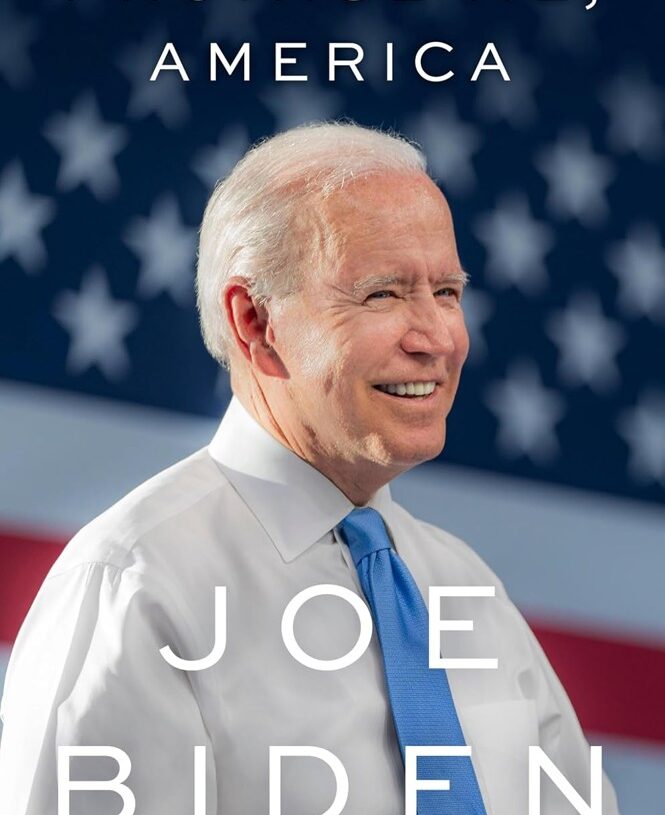
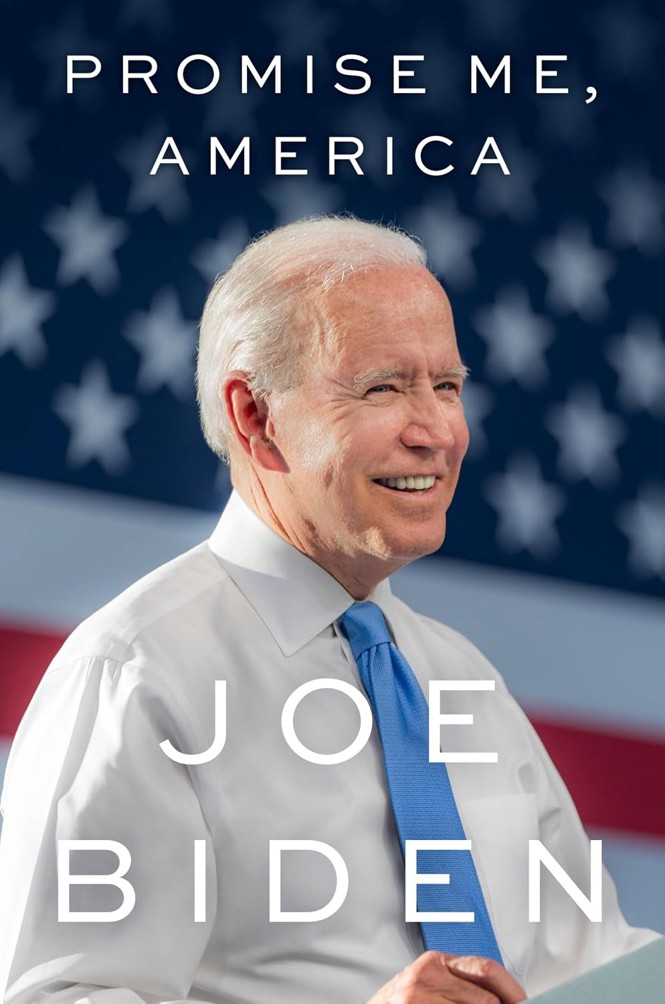
This article has been adapted from Joe Biden’s forthcoming book, Promise Me, America.
The post Biden: What Trump Did on January 6 ‘Should Follow Him to His Grave’ appeared first on The Atlantic.