The humble flu shot may have a hidden talent: fighting cancer.
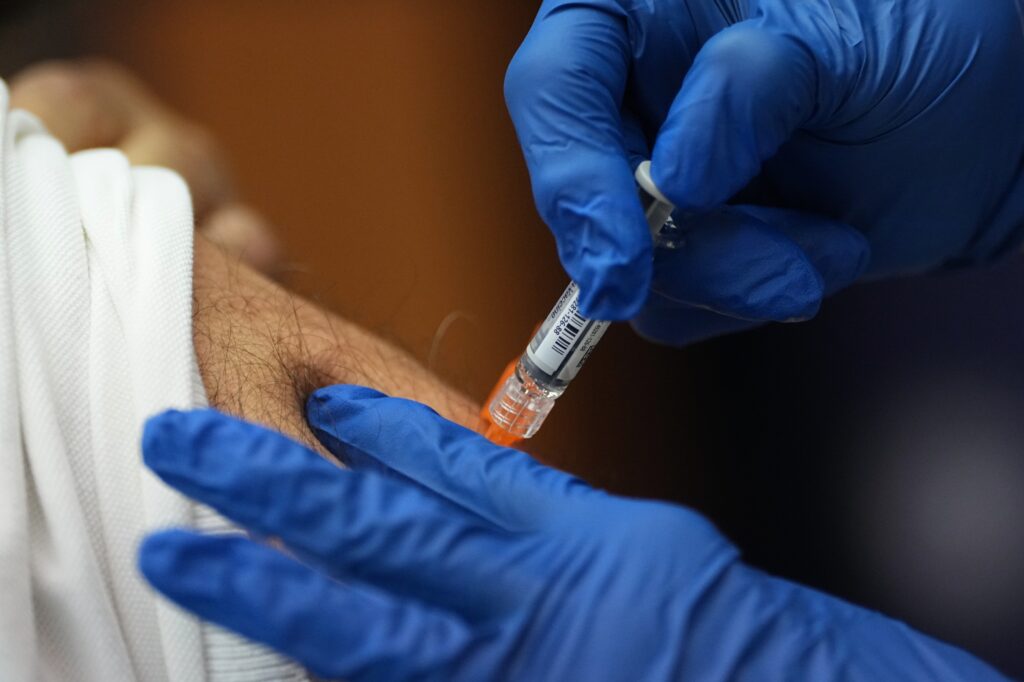
In a small clinical trial in Ohio, doctors injected an ordinary flu vaccine straight into patients’ skin tumors, hoping to fool the immune system into mistaking the cancer for an infection.
The ruse seemed to take. Immune cells flooded into most of the injected tumors. By the time surgeons cut the cancers out, more than a third of patients showed signs that their tumors were in retreat. In a few, no trace of cancer remained.
The trial involved just 18 patients and lacked a comparison group, so the findings are far from proof that the approach works. But they hint at a possibly inexpensive, off-the-shelf way to help cancer patients and offer an alternative to cancer vaccines, a field that has lately centered on bespoke, highly expensive shots built to match the mutations in each patient’s tumor. The findings were presented last week at the Society for Immunotherapy of Cancer’s annual meeting in Phoenix.
Last month, researchers reported that one such personalized mRNA vaccine, from Moderna and Merck, cut the risk of melanoma coming back by 42 percent when added to a standard immune-stimulating drug after surgery. But every one of those vaccines must be custom-designed and custom-made for each patient.
A flu shot, by contrast, comes readymade. It’s cheap, it’s everywhere, and it needs no tailoring.
“I love the concept,” said Marcin Kortylewski, a cancer immunologist at City of Hope, a leading nonprofit cancer research and treatment center in California, who was not involved in the trial. “It’s a relatively simple procedure. It’s tolerated quite well. And it seems to have this very clear immune-stimulatory effect.”
Why a vaccine built to fight influenza should do anything to a tumor isn’t obvious. But the shot isn’t teaching the body to recognize cancer. It’s starting a commotion where the cancer lives.
Many cancers survive by keeping a low profile, putting out signals that calm the surrounding tissue and hold immune cells at bay. A squirt of flu vaccine ruins that calm. Reinforcements pour in, among them scout cells that grab bits of anything foreign and show them around. Rummaging through a field of dying cancer cells, those scouts pick up pieces of the tumor and point the body’s killers at it.
In mice, the strategy works. Whether the same happens in people is what the researchers at the Ohio State University Wexner Medical Center set out to learn.
Each of the 18 volunteers in their study had melanoma skin cancer that could be removed surgically. They first got a standard flu shot in the arm. A couple of days later, and again 12 days after that, the same vaccine went straight into their tumors. Most patients got triple the usual dose with each tumor injection. None had serious side effects.
Two weeks later, doctors removed the tumors and examined the tissue under the microscope. They found immune cells teeming through most of the samples. Blood tests taken before and after treatment told a similar story of an immune system roused to action, with telltale shifts in levels of inflammation-promoting signaling molecules and immune-suppressing cells.
In seven of the 18 patients, the tumors showed signs of regression by the time of surgery. In three, not a single cancer cell remained.
“A pretty striking pattern emerged,” said Ian Garbarine, a surgery resident at Ohio State who presented the findings at the Phoenix meeting. And he suspects the flu shot could work even better when paired with drugs such as Keytruda and Opdivo, checkpoint inhibitors that release the brakes on the immune system.
The team is testing repeated tumor injections alongside these immune-activating drug therapies in people whose melanoma has spread and cannot be removed with surgery.
History counsels caution. Other drugs designed to mobilize the immune system from inside a tumor have looked promising in early trials only to flame out in later-stage testing, Kortylewski noted. And even if the strategy pans out, it would work only for tumors a needle can get to.
“This is early-stage,” he said, “and it requires accessible lesions for local delivery.”
But few ideas in oncology are this easy to test. The vaccine is already available, already cheap and already in every clinic — so others are exploring it, as well.
At the Dana-Farber Cancer Institute, oncologist Karam Khaddour is testing the same strategy on a different type of skin cancer, known as squamous cell carcinoma, which arises from the flat, scalelike cells that make up the skin’s outer layer rather than from the pigment-producing cells that give rise to melanoma.
These cancers are usually cured by surgery alone, but there is a risk of the disease coming back or, in rare cases, spreading beyond the skin. By stirring up an immune response while the tumor is still in place, Khaddour said, he hopes to leave behind defenses that can pick off any cancer cells the scalpel misses.
But skin tumors are the easy case. They sit within ready reach of a vaccine needle.
In Denmark, surgeons have taken aim at a less accessible tumor type. In a small trial that wrapped up a few years ago, they injected flu shots directly into cancers of the large intestine and rectum using an endoscope threaded in from below.
Like the injected melanomas in the Ohio trial, rear-end cancers treated in this way wound up chock-full of cancer-fighting immune cells. But these colorectal tumors held their ground, barely shrinking at the time of surgery.
Mikail Gögenur, a trial investigator from Denmark’s Zealand University Hospital, suspects the schedule was to blame. In the 10-person study, the tumors were removed just a week or two after the flu shot, and newly activated immune cells may need longer to mount a full assault, he said.
His team is now pairing the flu shot with Keytruda in a follow-up trial that waits about a month after the vaccine jab for surgery.
Another factor that could help explain the gap in outcomes is priming. The Ohio patients got a conventional flu shot in the arm before any vaccine went into their tumors, the idea being that an immune system already on alert for influenza would react more fiercely when the same danger signals turned up inside a melanoma. The Danish patients got no such preparatory jab.
There is some support for the notion. Last year, researchers at the University of Texas MD Anderson Cancer Center reported that patients with advanced lung cancer or melanoma who received a covid shot within 100 days of starting a checkpoint inhibitor drug lived markedly longer. A more recent study from Sweden documented a similar survival benefit in people who got a seasonal flu shot while undergoing checkpoint inhibitor treatment.
A growing body of research is pointing in the same direction, said Catherine Wu, an oncologist and cancer vaccine researcher at Dana-Farber. A common vaccine, whether jabbed into the arm or injected straight into the tumor, may be able to rouse the immune system against cancer.
“It’s exciting,” she said. “The fact that you can give something like a flu vaccine that can give the immune system a kick in the pants and get it restarted again just speaks to the whole power of immune-activating substances.”
The post Why the simple flu shot could be a surprise weapon against cancer appeared first on Washington Post.