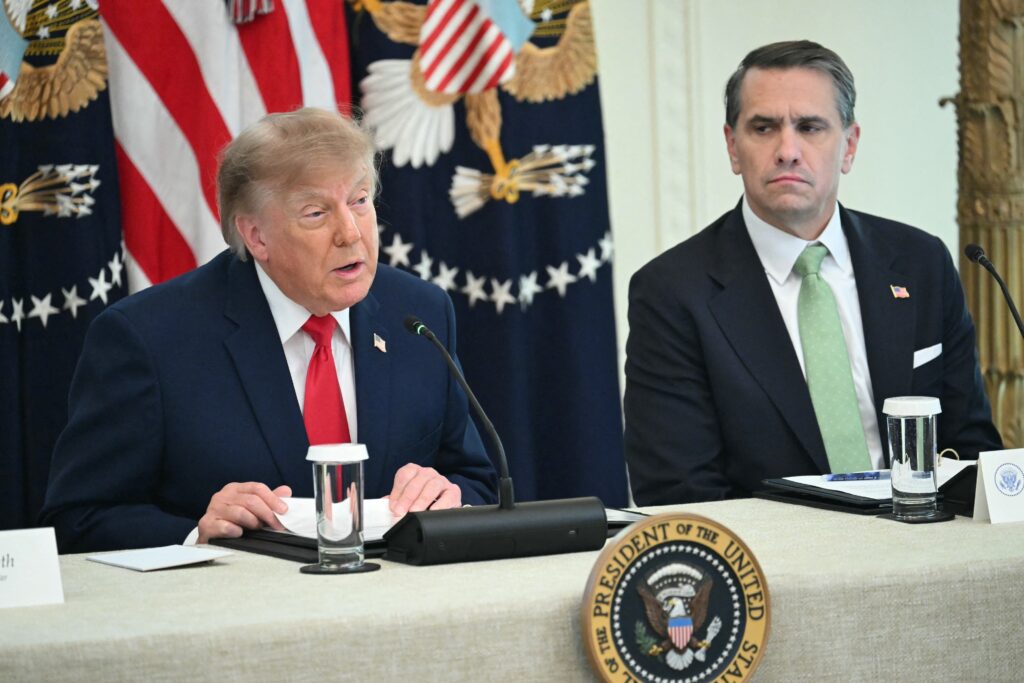
During the first two years of President Donald Trump’s second term, the Justice Department has been on the front lines of some of his most contentious actions, pursuing his perceived foes and agenda with relish and little pushback or oversight from Congressional leaders.
The next two years will likely be dramatically different.
As Democrats prepare to take control of the House and Senate following sweeping victories in the midterm elections, the Justice Department is bracing for a barrage of subpoenas and investigative inquiries as lawmakers say they will aggressively scrutinize the agency in a way Republicans did not while in the majority.
Attorney General Todd Blanche will face that opposition with a diminished workforce and withered trust from lawmakers, the public and the courts.
Under the Trump administration’s stewardship, the department has been rocked by mass firings and an exodus of career staffers; an obliteration of the traditional distance between the agency and the White House; and several controversial cases brought against Trump’s adversaries. Congressional Democrats have been eager to explore these areas during their years in the minority.
Now in control, they aim to make the remaining two years of Trump’s term a reckoning, putting Blanche and his advisers on the defensive and holding them to account for what the lawmakers have framed as the complete perversion of the Justice Department’s mission during this administration.
Relevant committees are already building their investigative ranks and have been hiring from the large pool of former career prosecutors who were fired or departed from the Justice Department since the start of Trump’s second term.
Several prominent department officials, meanwhile, have left the agency in the election’s wake, including John Eisenberg, head of the national security division; Harmeet K. Dhillon, leader of civil rights division; and Jason Reding Quiñones, the top prosecutor in South Florida.
These Senate-confirmed officials were all involved in some of the Justice Department’s most high-profile efforts, including a push to investigate Trump’s nemeses, and the White House and Blanche had grown increasingly frustrated with their performances.
In the weeks before the midterms, Blanche had one of his busiest stretches as attorney general, unleashing a flurry of prosecutions and investigations into Trump’s foes and jumping into politically fraught election-related cases.
Since the election’s outcome became clear, Blanche has signaled he’s digging in for the fights to come.
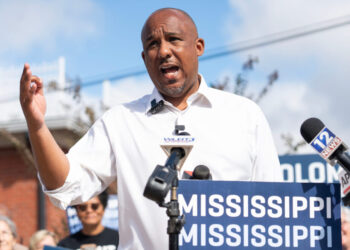
“They’re being extraordinarily transparent in what they want to do,” he said of congressional Democrats in a Fox News interview Friday, his first public comments about the post-election environment since the midterms.
“It shouldn’t be a surprise to anybody, any Republican, who lived through the last several years before Trump was reelected,” Blanche said. “It’s so disgusting to see them not even wait before the week is out.”
Trump, in the years before winning another term, was indicted four times — including twice by the Justice Department — and Blanche served as his defense attorney.
It seems unlikely that the White House will be eager to walk back the sea change it has ushered in at the department or step away from some of its controversial criminal probes.
Trump has been vocal about wanting the Justice Department to carry out a campaign of retribution against his foes, even as cases have faltered in court or been rejected by grand juries.
On Friday, Trump announced that his longtime aide Stephen Miller would become his new chief of staff. The pugilistic adviser, who as deputy chief of staff was the White House official most directly involved with overseeing the Justice Department’s work, has been a driving force in shaping some of the agency’s most sharp-elbowed, far-right stances on immigration and cultural issues.
Rep. Robert Garcia (D-California), who is expected to chair the House Oversight Committee in the next Congress, reacted to the announcement of Miller’s new title with in a statement suggesting he should “lawyer up.”
Blanche responded on social media, writing: “The Chief of Staff already has a lawyer. The Attorney General of the United States and the Department of Justice.”
The expected heads of the House and Senate Judiciary committees — Rep. Jamie Raskin (D-Maryland) and Sen. Sheldon Whitehouse (D-Rhode Island) — have also signaled a lengthy list of investigative targets.
Among the areas of likely inquiry is the deal Blanche signed off on earlier this year to settle Trump’s lawsuit against the IRS over the leak of his tax returns.
The agreement drew bipartisan condemnation in Congress for its proposed nearly $1.8 billion fund to reward people who claimed they were victims of political prosecutions. Facing congressional opposition, Blanche this summer said the fund would not proceed.
Democrats have condemned another, still intact aspect of the deal, which granted immunity to Trump, his sons and several associated entities from inquiries into their past tax returns, a potentially lucrative benefit for a president who has frequently complained of onerous IRS audits.
The department’s handling of the investigation into deceased sex offender Jeffrey Epstein, those who associated with him and the congressionally compelled release last winter of its investigative files last winter will also be a focus of lawmakers.
And Democrats have expressed eagerness to probe the cottage lobbying industry that has sprung up around Trump’s extensions of pardons to allies and explore the prosecutions of the president’s foes, such as former FBI director James B. Comey, who faced a third set of criminal charges weeks before the midterms.
How intensely Blanche and other top Justice officials resist those oversight efforts remains to be seen.
The Justice Department and Congress often have an uneasy relationship, with lawmakers wanting more information about criminal investigations than law enforcement officials are typically willing to give up.
Traditionally, the Justice Department would help determine whether subpoenas sent to the executive branch and private companies it dealt with should be complied with or contested on grounds of executive privilege, which allows presidents to keep certain communications and internal deliberations secret.
But the Trump administration risks further exacerbating these already fraught conflicts because of its expansive view of executive power. The department is expected to fight to keep executive branch information protected from congressional investigations.
The department’s Office of Legal Counsel, which provides counsel on legal matters to the executive branch, concluded in an opinion released earlier this year that executive privilege extends beyond just government officials and also includes certain communications Trump “or his direct advisers” have with figures outside the government. Legal observers say this perspective will probably be challenged in court.
When Democrats won back control of the House after the midterms in Trump’s first term, initially antagonistic relations between the Justice Department and Congressional Democrats developed over time into an uneasy working relationship, said John S. Moran, who served as a senior department official during the period.
“There’s a natural inclination to feel like ‘I need to fight, and assert the prerogatives of my side,’” said Moran, now co-chair of the congressional investigations practice at McGuireWoods. “Over time, though, if this is the 10th time there’s a fight over a congressional request [with] the deals that have been worked out, the accommodations that have been reached, the issues that have been conceded … it gets a bit easier.”
Trump initially struck a conciliatory tone as midterm results came in, telling reporters Tuesday that he would find ways to work with the new Congress.
But on Saturday, Trump posted on social media that Democrats were “going around threatening a lot of people,” including Blanche, saying this was extortion and “Weaponization and Lawfare at another level.” Calling this a “criminal act,” Trump said he was ordering the Justice Department to investigate the matter.
Multiple people interviewed said it would be tough for Blanche to build a productive relationship with Democrats on the Hill.
During the Trump administration so far, the Office of Legislative Affairs (OLA) — which is the Justice Department section that serves as its liaison with Congress — has been largely sidelined. Blanche’s office has made many of the big decisions on how to deal with Congress, according to multiple people familiar with the department, who asked to remain anonymous to discuss internal workings of the section.
Typically, according to Carlos Uriarte, who headed that office during the Biden administration, the staff at OLA is responsible for building relationships with both parties in Congress. But the people familiar with OLA said many of the experienced career staffers there have left and the office did not work on making headway with Democrats while they were in the minority party.
That strategy could hurt them the next two years.
“I suspect there is a path for DOJ to repair some of those relationships on the Hill,” Uriarte said, “if the administration is willing to take a more conciliatory approach, at least with Congress.”
The post Justice Department braces for congressional scrutiny after Democrats sweep elections appeared first on Washington Post.