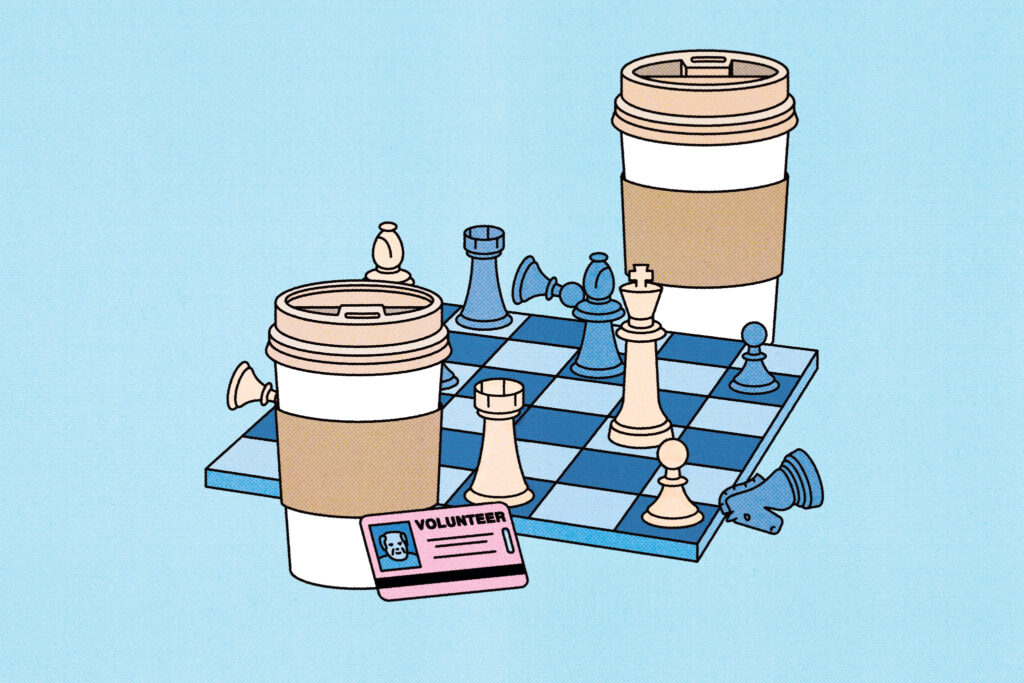
People associate retirement with more free time and relaxation for hobbies, reading and travel.
But retirement can also impact your cognitive health.
Research shows that retirement may mean less mental stimulation and social engagement — and faster cognitive decline. Studies have linked the life transition with worse cognitive outcomes — including potentially higher dementia risk — compared to people of similar age who haven’t retired yet.
“When you’re retired, it’s a very big shift in how our minds and our bodies work,” said Stephanie Leal, an assistant professor of integrative biology and physiology at UCLA.
This is because, for many people, their job is often a major source of cognitive stimulation and social connection — both of which are important for keeping the brain healthy.
The good news is that you can prepare your brain for these changes. Here’s what to know about how retirement affects your cognition — and how to stay sharp after you stop working.
The link between your age and cognitive risk
Because of longer lifespans, people will be retired for a larger proportion of their lives — a fact that many people might not fully anticipate until they’ve made the transition, Leal said.
The average American retirement age is 61, meaning that someone who lives to 79 — the average life expectancy — spends 23 percent of their lives retired.
“You have a lot of life left after retirement now that everyone’s living longer,” Leal said. “What you do with it really matters and especially in this window where there might be this vulnerability in our cognition.”
That’s because the typical retirement age coincides with an inflection point in cognitive health around when dementia risk may increase.
The age you retire may also play a role. One 2020 study of more than 63,000 adults found that those who retired at age 66 or older had about a 66 percent lower risk of dementia after a follow-up 24-year period compared to those who retired younger.
The brain benefits of work
Leal became interested in researching the effects of retirement because her grandmother, a lifelong elementary schoolteacher, had a big change in her mental health after she retired.
“She just didn’t know what to do with herself when she was retired. And I think it definitely took a toll on her,” Leal said.
Her grandmother ended up getting Alzheimer’s disease, and Leal saw “this vicious cycle” with depression feeding into the Alzheimer’s and making it worse, she said.
The experience underscored how much retirement may influence our health.
Work establishes regular opportunities for social interaction, a sense of contribution and identity. If you don’t replace these opportunities in retirement, that can cause isolation and lower sense of purpose — increasing risk to cognitive health.
In many cases, work also provides mental stimulation. And one hypothesis — known as “use-it-or-lose-it” — suggests that losing the challenges found in working life, such as learning, problem-solving and planning, may contribute to cognitive decline.
“If you are not using your brain and keeping active, then you might lose that and your brain might start to change the connections that it had formed while working,” Leal said.
What does retirement mean to you?
Retirement is complex, and many factors contribute to how it affects you.
“For some people, it reduces stress and creates opportunities for rest, family life, and enjoyable activities,” Gabriela Nazar, an associate professor of psychology at the Universidad de Concepción in Chile, wrote in an email. “For others, it brings financial strain, isolation, or the loss of valued roles and routines.”
Some studies found that men had more cognitive decline post-retirement than women, potentially because traditional gender roles may mean their jobs are more central to their life and identity, said Nazar, who wrote a 2025 review about retirement and cognition.
“People who rely heavily on work for purpose, daily structure, and social connections may experience a more disruptive transition,” she added.
Other research suggests that the job you leave also matters. Leaving stressful jobs or ones that are more physically demanding may be more favorable. On the other hand, jobs that are more mentally challenging protect the brain, and leaving them may lead to faster decline, Nazar said.
And whether retirement was a voluntary choice is also important; being forced to leave a job you loved sooner than you wanted may negatively affect cognitive functioning, Nazar said.
Retirement also changes people’s priorities. In one 2025 study, Leal and her colleagues found that while retired older people perform worse on a memory test, they did better when remembering more positive things, suggesting a stronger “positivity bias,” which is thought to get stronger with age.
The results suggest that older adults may prioritize well-being over new learning, Leal said.
“If we can do both, prioritize well-being, but also keep learning new things, I think that is really, really important to keep our brains sharp as we get older,” Leal added.
How to keep sharp in retirement
Nazar said we shouldn’t assume that working longer will protect everyone, or that retirement inevitably causes cognitive decline. Most of the studies in Nazar’s systematic review found a link between retirement and worse cognitive function, but some studies haven’t.
Both Leal and Nazar said there is still more research needed on retirement and cognition.
But the researchers said there are steps people can take to help keep their brain sharp.
“The aim is to build a sustainable, enjoyable routine that supports both cognitive health and overall well-being,” Nazar said.
- Have a retirement plan. This means more than just getting financially prepared. You also need to mentally prepare for what your priorities will be and what you want your new lifestyle to look like, at least for the first few years of retirement, Leal said.
- Keep learning. Research shows that learning a new language, picking up a new hobby, reading books or traveling can keep your brain active and sharp. “Something about the newness of a new activity is really, really good and stimulating for our brains,” Leal said.
- Find meaningful roles. Volunteering or being a doting grandparent are ways of not only giving back but also improving your mood and even cognition, studies show.
- Stay physically active. Retirement can change sleep patterns and physical activity, Nazar said. A 2023 review found that retirees tend to engage in more passive leisure activities and less physical activity. Research shows that exercise can lower Alzheimer’s risk.
- Prioritize connecting with others. Make it a point to reach out to others or join an activity that builds social connection into your life. Stronger social connections are linked to living longer, feeling happier and lowering the risk of cognitive decline later in life.
Leal’s mother, like her grandmother, was an elementary schoolteacher and retired three years ago. Leal advised her to “just keep doing things, have a plan, be active.”
“I think she’s great at keeping active” and socially engaged, Leal said. “And I think that’s the biggest thing.”
Do you have a question about human behavior or neuroscience? Email [email protected] and we may answer it in a future column.
The post How to keep your brain sharp after retirement appeared first on Washington Post.