This much was clear: On Nov. 27, 1978, a disgruntled San Francisco politician named Dan White walked into the office of Mayor George Moscone and shot him to death.
He then walked down the hall to find Harvey Milk, a member of the city’s board of supervisors and the first openly gay man elected to public office in California. Mr. White shot and killed him, too.
Mr. White was immediately arrested, and he confessed. But at his murder trial the next year, his lawyers claimed that his mental capacities had been diminished by stress and depression, a claim they supported by calling the forensic psychiatrist Martin Blinder to the stand.
Dr. Blinder testified for more than four hours. But it was a passing reference to junk food that earned him a place in history.
Mr. White was a fit, healthy man, Dr. Blinder said. But he struggled with depression, and when he was depressed, he turned to sugary foods to cope.
“Whenever he felt things were not going right, he would abandon his usual program of exercise and good nutrition, and start gorging himself on junk foods — Twinkies, Coca-Cola,” Dr. Blinder testified. “The more junk food he consumed, the worse he’d feel. The worse he’d feel, the more he’d gorge himself, and so on, in a vicious circle.”
And several studies, Dr. Blinder noted, showed that “high-sugar-content food with lots of preservatives can precipitate antisocial and even violent behavior.”
He never claimed that junk food like Twinkies had caused Mr. White’s diminished capacity; he offered a much more nuanced analysis. But after the jury found Mr. White guilty of voluntary manslaughter rather than first-degree murder, reporters looking for an explanation blamed Dr. Blinder and what came to be known as the Twinkie defense — namely, that eating too much junk food made a person temporarily irrational.
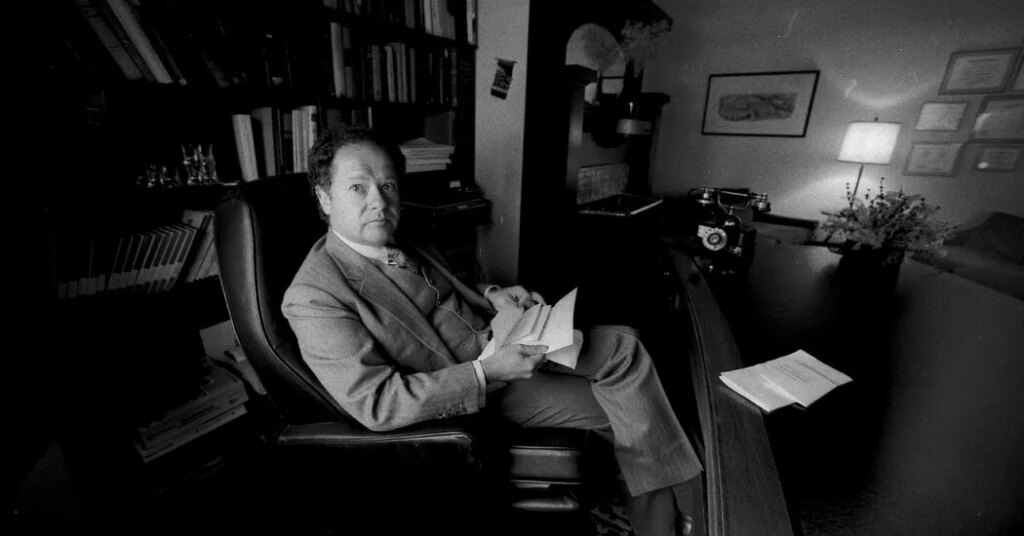
Dr. Blinder, a highly regarded forensic psychiatrist who spent the rest of his career trying to correct the record, died on Oct. 30 at his home in San Anselmo, Calif. He was 89.
His wife, Mary Mahima Daily Blinder, said the death was from pancreatic cancer.
The Twinkie defense became a pop-culture buzz phrase in the early 1980s, and a popular target for victims’ rights advocates, who saw it as evidence of a legal system run amok. In 1982, California voters abolished the diminished-capacity defense, and several states placed restrictions on the use of expert witnesses in felony trials.
Dr. Blinder found the whole experience infuriating.
“There never was a Twinkie defense,” he told The San Francisco Examiner in 1983. “Because it’s so preposterous, it’s made me the object of derision.”
Martin George Blinder was born on Feb. 22, 1937, in the Bronx. His father, Harry, was a cardiologist, and his mother, Regina (Schwartz) Blinder, managed the home.
He graduated from Cornell in 1958 and received an M.D. from the Chicago Medical School in 1962.
Dr. Blinder settled in San Anselmo, north of San Francisco, where he practiced medicine and taught at nearby universities. He also got into politics: In 1972, he was elected to the Town Council, where he oversaw the passage of one of the country’s first restrictions on smoking in public places, and served as mayor from 1975 to 1976.
He was married three times. His first marriage, to Dorothy Braco, ended in divorce in 1976. His second wife, Elizabeth Doney, died by suicide in 1986.
In 2000, Ms. Braco attacked him in his home, stabbing him multiple times before fleeing. He managed to call 911 before collapsing from blood loss. Ms. Braco’s car was later found near the San Francisco entrance to the Golden Gate Bridge; her body washed up on the shore nearby.
He married Mary Mahima Daily in 2010. Along with her, Dr. Blinder is survived by two children, two grandchildren and a sister, Phoebe Blinder.
Dr. Blinder wrote several books for academic and popular audiences, including “Psychiatry in the Everyday Practice of Law” (1972) and “Lovers, Killers, Husbands and Wives” (1985), about the reasons people kill intimate partners.
Mr. White received parole in 1984 and died by suicide in 1985.
Dr. Blinder remained a highly sought-after forensic psychiatrist long after the White case receded into history. But he never stopped trying to live down the moment that made him famous.
“If I found a cure for cancer,” he told the news website SF Gate in 2003, “they’d still say I was the guy who invented the ‘Twinkie defense.’”
If you are having thoughts of suicide, call or text 988 to reach the 988 Suicide and Crisis Lifeline or go to SpeakingOfSuicide.com/resources for a list of additional resources.
The post Martin Blinder Has Died. He Was Blamed for the ‘Twinkie Defense.’ appeared first on New York Times.