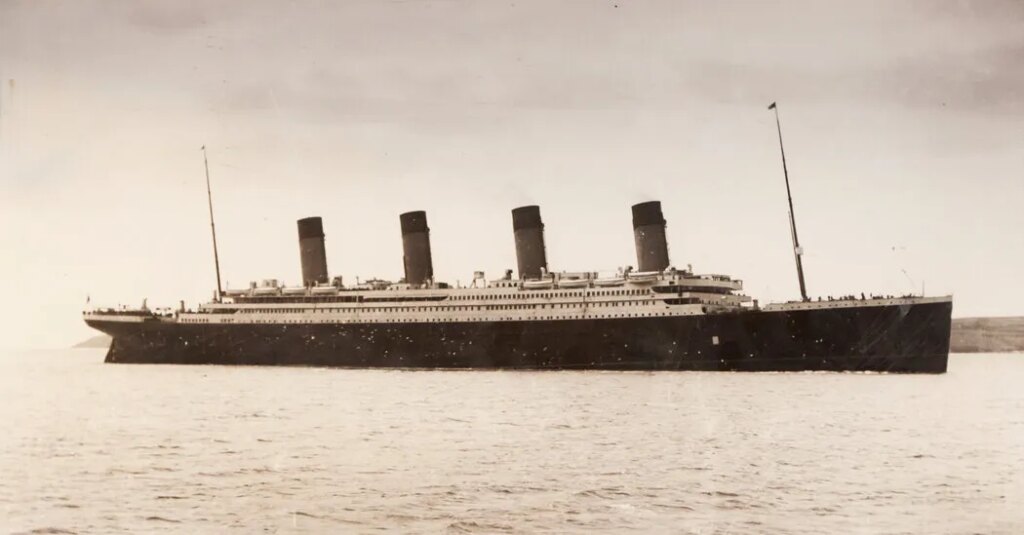
From her seat in the old Art Deco federal courthouse in Norfolk, Va., Judge Rebecca Beach Smith presides over perhaps the most intriguing case in maritime law: the salvaging of the Titanic.
Since 1987, the company R.M.S. Titanic Inc. has raised about 5,500 artifacts from the ship with the court-sanctioned understanding that it can never sell the objects. But it can put them on display. So the company has permanent exhibitions in Las Vegas and Orlando plus traveling shows that have been seen by 35 million people.
In March, though, the company argued it was broke — so broke, it said in court papers, that it needed to auction hundreds of the artifacts so it can take good care of the rest and pay off its debts.
Judge Smith was skeptical. Years ago, as a younger judge, she sometimes raised her voice and stared down lawyers whom she questioned. But at a Titanic hearing in August, she spoke in a conversational tone as she questioned the depth of the company’s financial straits, her authority firmly established by four decades on the bench.
“There seems to have been misrepresentations to the court in this regard,” she said icily.
Two weeks later, she extended a temporary ban on any sale.
For decades, Judge Smith, 77, has controlled all matters involving the Titanic. She decides what can be salvaged and how, what can or cannot be touched and what must be done with the brittle artifacts after they are raised.
The Titanic’s original owner, the White Star Line, is defunct. The insurers who paid out after the 1912 disaster are long out of the picture. So Judge Smith comes as close to operating as the wreck’s owner as anyone alive.
“She has a real passion for using maritime law to protect the Titanic and keep the artifact collection together,” said Ole Varmer, a maritime lawyer and co-author of “Titanic Law and Policy.”
But how did Judge Smith come to oversee the remains of a ship that was built in Belfast, sailed from England, was heading to New York City and sank off the coast of Canada in international waters more than 1,000 miles from Norfolk?
A quick answer might be that Norfolk is a hub for shipping and for the practice of maritime law. The real answer is that the laws of salvage are arcane and can seem even nonsensical to the uninitiated.
Judge Smith’s authority, as it turns out, stems from a ruling by her predecessor who found that bringing a single wine decanter recovered from the Titanic into the Norfolk court was enough to give him jurisdiction over the entire shipwreck.
Decades have passed since that ruling, which has not been successfully challenged. But the legal seas began to roil this summer when lawyers for the salvage company whose auction plan she put on hold, argued that, actually, Judge Smith does not control everything about the world’s most famous shipwreck.
Often Opaque, like the Sea
In the United States, maritime law is as old as the Constitution itself. Article III, Section 2 gives federal judges jurisdiction over all admiralty cases. So legal matters involving shipwrecks in U.S. waters typically end up in the nearest federal court.
But what if, like the Titanic, the wreck is in international waters? What if it’s 400 miles off the coast of Newfoundland, resting on the ocean floor, improbably upright, in two pieces, two and a half miles under the ocean surface?
Here is where things can get complicated.
International waters have no sovereign; no single nation can claim the oceans. But courts around the world can oversee a salvage operation on the high seas if a claim is brought and the nation has applicable law.
For decades, U.S. judges have recognized claims on individual items salvaged within their territorial jurisdiction. But their authority expanded in the 1970s and 1980s when judges began to create a mechanism to manage the salvaging of shipwrecks found deep in international waters.
One key ruling came in 1990 after a 19th-century side-wheeler, full of bounty from the California gold rush, was found in international waters off the coast of South Carolina.
The American group that found the wreck, led by Tommy Thompson, an Ohio inventor, now had to figure out how to defend their claim. They couldn’t raise the ship or fence it off. It rested more than a mile under the ocean’s surface.
Thompson’s lawyer told him to grab something from the wreck and take it to court to register his claim for exclusive salvage rights. He snatched a chunk of coal and hustled it off to the Norfolk courthouse, where Judge Richard B. Kellam wrote an oft-cited legal opinion. He reasoned that if the coal was physically within the court’s jurisdiction, it could be viewed as representing jurisdiction over the entire wreck and its cargo. Kellam ordered the so-called “arrest” of the coal, which established the court’s jurisdiction over the wreck and the salvors. He then awarded Thompson’s group exclusive salvage rights.
It was a bit of legal fiction. Maritime lawyers call it “constructive in rem jurisdiction” — the notion that a court can assume jurisdiction over a wreck in international waters if part of the wreck is brought into court.
And it worked. Soon, many other famous shipwreck cases came to the courthouse in Norfolk.
Sitting on the Ocean Floor
The heralded invincibility of the Titanic as an ocean liner rapidly dissolved in the North Atlantic in 1912 when, on its maiden voyage, it hit an iceberg and sank, sending roughly 1,500 passengers and crew members to their deaths.
It would be 73 years before the wreck was discovered and another two until a Connecticut company called Titanic Ventures joined forces with a French oceanographic institute to begin salvaging the wreck.
Their joint expedition raised approximately 1,800 artifacts from the ocean floor in 1987, including some iconic items like a bronze cherub statue from Titanic’s grand staircase and a bell from the ship’s crow’s nest.
The company brought the artifacts to France where a court granted them title to the objects, but not exclusive salvage rights. A few years later, the company — now reconstituted into a new company called R.M.S. Titanic Inc. — faced challenges from a competitor that was also interested in recovering items from the ship.
Lawyers for R.M.S. Titanic quickly brought the crystal wine decanter, bearing the White Star logo, to Norfolk. It was their chunk of coal, and they asked Judge J. Calvitt Clarke Jr. to use the “constructive in rem” approach to grant the company exclusive salvage rights.
He did in 1994, after the company promised not to sell any salvaged items. It also agreed to keep the artifact collection together, and to make money only through public exhibitions.
For a while, the company thrived and continued financing expeditions, including a gala journey in 1996. Two cruise ships with 1,700 passengers accompanied a salvage vessel to the wreck site. Three Titanic survivors joined the actress Loni Anderson and the astronaut Buzz Aldrin in mingling with the guests. The Discovery Channel paid $3 million to film it all. The company raised 400 artifacts.
Two years later, R.M.S. Titanic raised a 15-ton section of the ship’s hull, nicknamed the Big Piece, that was lying, dislodged, on the ocean floor. It is the centerpiece of the company’s exhibition in Las Vegas that includes recreations of the opulent Grand Staircase and what the company describes as “a chillingly lifelike Promenade Deck set to the temperature of that fateful night.”
Masters of a Shipwreck
With his bushy white eyebrows and gravelly voice, Judge Clarke was a commanding presence with the power, at any time, to yank R.M.S. Titanic’s status as the ship’s exclusive salvor.
“We all work for him,” the company president George Tulloch said in a 2000 interview. “ He says, ‘Jump!’ and we say, ‘How high?’”
Relations between the company and the judge weren’t always rosy.
In 2000, R.M.S. Titanic proposed making “surgical incisions” into the wreck to search for marketable treasures. “We want the first-class mail,” said the company’s largest stockholder. “We want the first-class baggage. We want the safes and the purser’s bags. We know exactly where everything is. We can hit it like a target.”
Such talk alarmed Judge Clarke and disturbed historians. The court was flooded with letters of protest and the judge ordered the company to drop any plans to cut into the wreck, detach anything or sell anything.
“A judicial voice has spoken, and history rejoices,” John P. Eaton, a Titanic historian, wrote at the time.
When the judge’s eyesight started failing around that time, he asked Judge Smith to work with him on the case, to learn its complex history and to eventually take over.
She did in 2004, when Judge Clarke died at the age of 83. At that point, Judge Smith — a high school valedictorian, law school star and the first woman appointed to the federal bench in Virginia history — had been a judge for 15 years and had earned a reputation as a no-nonsense jurist.
“Judge Smith has no tolerance for idiots or being unprepared,” David N. Ventker, a Norfolk maritime lawyer, said. “If you argue with her, well, that’s just not very smart. And if your briefs are snarky or disrespectful, that doesn’t play well, either.”
Known as someone who guards her privacy, Judge Smith declined to be interviewed, but she is well known in Virginia legal circles, where she has handled many high-profile cases. In one, she sentenced a man to life in prison for killing a female courier, recommended he never be paroled and spoke of her duty to protect society from his “dark side.”
“When will it erupt?” she asked. “Whose mother? Whose daughter? Whose sister? You’ve got a daughter. Would you want your daughter meeting up with someone like you?’‘
Maritime lawyers say the judge has similarly shielded the Titanic, an attitude evident in what she told lawyers during a hearing almost two decades ago.
“I am concerned,” she told lawyers in the case in 2008, “that the Titanic is not only a national treasure, but in its own way an international treasure, and it needs protection and it needs to be monitored.”
Disputed Jurisdiction
Since the spring, the salvage company has been pushing to auction 361 items recovered in the first expedition. The company owns those objects by order of the French court.
The effort has put Judge Smith and the company on a collision course.
Their relationship has not always been adversarial. In the early years, she and Judge Clarke had mostly supported R.M.S. Titanic’s salvage rights against competing claims. More recently, though, the judges had interceded when they felt the company was overstepping its bounds.
In 2017, Judge Smith resisted when R.M.S. Titanic asked her to remove a federal agency, the National Oceanic and Atmospheric Administration, from overseeing the company. Years earlier the company had agreed to let the agency oversee its operations as a condition of Judge Smith giving the company title to the artifacts it had raised since 1993.
Judge Smith bristled at the company’s request and expressed frustration that the court was “having to constantly be in a combative relationship with R.M.S.T.”
“The reason that NOAA is here is because of all the machinations and happenings through the years with the court,” she said at a hearing.
She refused the company’s request that she name a different overseer.
“I am not going to let, to use a colloquialism, the fox guard the hen house,” Judge Smith said. “That is basically what occurs when R.M.S.T. is guarding the artifacts.”
The federal government has argued against any auction of the artifacts, suggesting any sale would breach the covenants that R.M.S. Titanic made in 2011.
At a hearing in August, Judge Smith, challenged the depth of the company’s financial straits. The company, in turn, challenged the judge’s jurisdiction over the items in question.
R.M.S. Titanic said Judge Smith has no authority over the 1,800 artifacts recovered in 1987 because the company’s title to them was conveyed by the French court.
The French government, however, has also objected to an auction, noting that the artifacts were conveyed to R.M.S. Titanic “subject to assurances made by the company that the collection would neither be sold nor dispersed.”
So far, Judge Smith has yet to budge on her ban on any auction. On Aug. 24, she ordered the company to produce an exhaustive inventory of all its artifacts so as to register their whereabouts and condition. She ruled that it had agreed to keep the artifacts together as a single collection, no matter when they were salvaged, when they received title to them from her in 2011.
“After decades of proceedings and in the context of R.M.S.T.’s mounting legal challenges, recent staff reductions, and the worsened financial situation,” she wrote, the company’s legal filings “do not assure the court that the collection is intact and will remain so after R.M.S.T.’s planned auction.”
The company has appealed.
It now says it is so broke, it could run out of money in six to 12 months, a prospect that would place all of the Titanic artifacts in some risk.
“Without revenue from the sale of items from the French Collection or an alternative source of funding,” the company wrote in court papers in October, “R.M.S.T. may not survive long enough to take advantage of any appellate decision.”
The post She Commands the Sunken Titanic, from 1,000 Miles Away appeared first on New York Times.