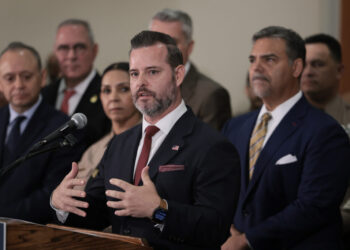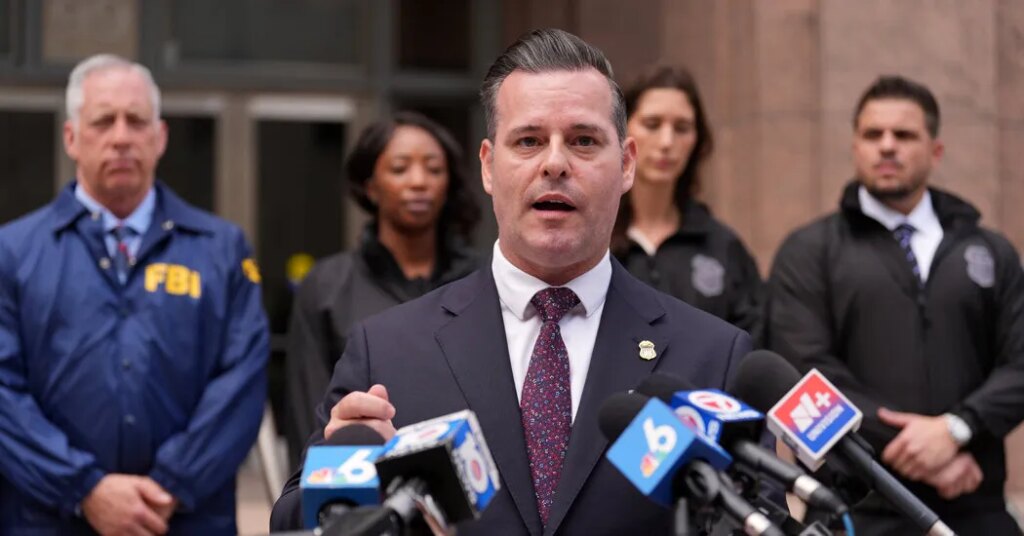
The U.S. attorney who had overseen a centerpiece of President Trump’s retribution campaign, the so-called grand conspiracy inquiry of Obama-era officials, has resigned amid growing dissatisfaction with his performance, people familiar with the situation said.
Attorney General Todd Blanche announced the departure of the prosecutor, Jason A. Reding Quiñones, on social media. He is among the first of what is expected to be a succession of departures at the Justice Department after the midterm elections on Tuesday.
Mr. Blanche, in making the announcement, did not mention Mr. Reding Quiñones’s work on the grand conspiracy case, but instead cited his efforts on violent crime, drugs and the indictment of the former Cuban leader Raúl Castro.
Mr. Reding Quiñones, a close ally of the influential right-wing lawyer Mike Davis, had long been viewed as ineffective and had largely been marginalized. Many of the office’s most sensitive investigations were already being overseen by a top Blanche deputy, Aakash Singh, according to three people with knowledge of the situation who spoke on the condition of anonymity to discuss internal matters.
Officials were frustrated not only with Mr. Reding Quiñones’s inability to demonstrate progress on the grand conspiracy cases but with his troubled stewardship of a marquee U.S. attorney’s office responsible for major drug and gang investigations.
Mr. Reding Quiñones did not immediately respond to a request for comment, but he thanked Mr. Trump on social media. “I am grateful to President Trump for his trust and to the extraordinary men and women of the great Southern District of Florida for their dedication, friendship, and unwavering commitment to justice and the rule of law,” he wrote.
Mr. Reding Quiñones presided over an office in deep crisis. The Southern District had more than 200 lawyers when he arrived, but by the fall it fell to slightly more than half that number, after a spate of firings and resignations.
So many career prosecutors have fled that Mr. Reding Quiñones, an Army reservist, was forced to bring in military lawyers to backfill the ranks.
Mr. Reding Quiñones is at least the third U.S. attorney in the Trump administration to step down after being assigned to investigate all or part of the “grand conspiracy.” The catchall term has been used by Trump loyalists to describe the effort to file criminal charges against former Obama administration officials, intelligence veterans and Democratic operatives for purportedly misusing their positions to harm Mr. Trump.
Two U.S. attorneys in Virginia were forced out of their jobs last year, having displeased senior Trump administration officials by concluding that criminal charges were not warranted against figures such as the former F.B.I. director James B. Comey.
In Mr. Reding Quiñones, the Justice Department found a prosecutor willing to pursue the investigation further, with the help of a judge who had proved herself amenable to Mr. Trump’s legal arguments: Judge Aileen M. Cannon in Fort Pierce, Fla.
But the investigation has not fared much better. A career Justice Department official in Miami who oversaw the case concluded that there was not sufficient evidence to support criminal charges against John O. Brennan, the former C.I.A. director, and was subsequently removed from the case.
The administration brought in a veteran former prosecutor, Joseph DiGenova, who proceeded to slowly retrace the previous investigations. Senior administration officials grew frustrated with what they viewed as the snail’s pace of Mr. DiGenova’s work, and he left under pressure in September.
Another Trump loyalist assigned to the case left weeks later, and senior officials have privately expressed frustration with Mr. Reding Quiñones’s handling of the case.
In October, the Justice Department filed new charges in Washington — without a grand jury indictment or a judge’s signature — against Mr. Comey, accusing him of directing a leak of classified information to a New York Times reporter in 2016. Mr. Comey has denied the accusation and is seeking to have the case dismissed.
The post U.S. Attorney Who Oversaw Centerpiece of Trump’s Revenge Campaign Resigns appeared first on New York Times.