The Democratic sweep of the House and Senate that has upended the balance of power in Washington has also given an atrophied Congress an opportunity to reclaim its relevance and constitutional role as a check on the president after two years of Republican compliance.
Since President Trump was elected in 2024 along with G.O.P. House and Senate majorities, Republicans on Capitol Hill have defined their role mainly as empowering him and beating back Democratic resistance. That has allowed the executive branch to act with near impunity, steamrolling Congress on spending, tariffs and war powers.
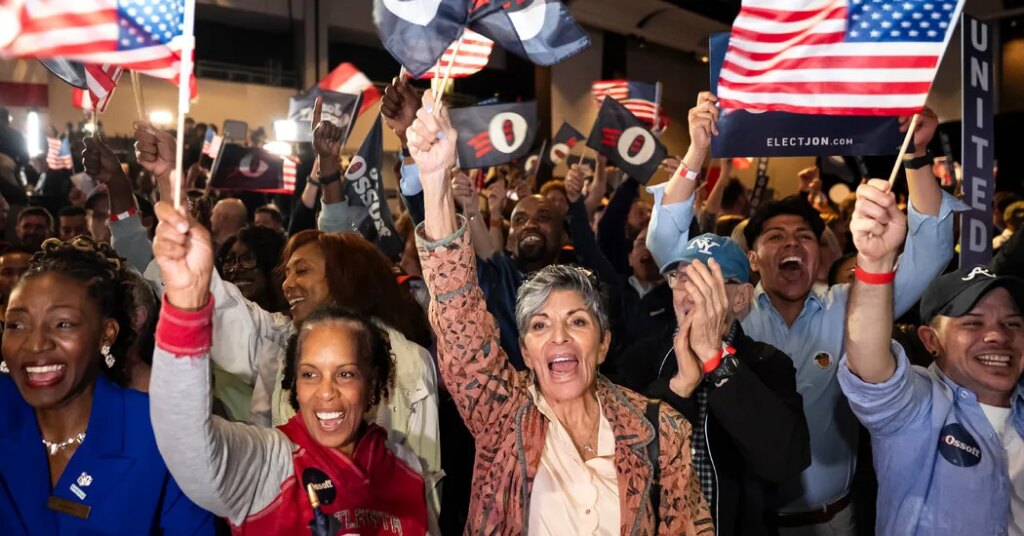
Now, with Democrats set to take firm control of both chambers in a rebuke to Mr. Trump and the Republicans who ceded much of their power to him, the legislative branch is poised to reassert itself in multiple ways — notably on spending and oversight. Democrats say they are determined to investigate and push back against the president and his administration.
“We are going to bring accountability to those who have visited unprecedented corruption on this country,” said Representative Hakeem Jeffries, the New York Democrat who is in line to become speaker.
On Wednesday in Washington, as the scope of Democratic victories came into sharper focus, he declared, “The days of the House of Representatives functioning like a wholly owned subsidiary of the Trump administration are over.”
Senator Chuck Schumer of New York, the Democratic leader, also vowed that Democrats would bring about the an end of an era: “The days of Trump’s supplicant Senate are over,” he said.
Despite their aggressive intentions and the scope of their electoral victories, Democrats may be limited in their ability to restrain the president. Mr. Trump has demonstrated a disregard for the power of Congress and the traditional norms that govern the relationship between the legislative and executive branches.
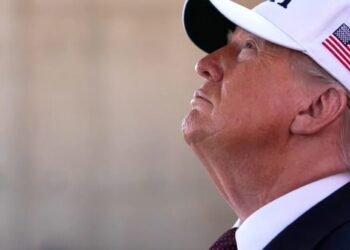
Mr. Trump told Fox News before the elections that he intended to be “Mr. Veto” if Democrats seized control. But as the results — and the obvious backlash — poured in from across the nation, the president struck a more conciliatory tone, saying he would be willing to cut some deals.
It was reminiscent of his first term, when the president, embracing his art-of-the-deal persona, seemed open to bargaining with Democrats on big issues. But partisanship has hardened considerably since then, and Democrats, bolstered by the reach of their victory, are going to press for any deals to be made more on their terms than his.
It is also likely that the administration will put up fierce resistance to attempts by Democrats in Congress to demand answers from executive branch officials, which could spark major conflict and poison efforts to work together legislatively.
In their appearances before Congress over the past two years, Trump administration officials have been dismissive and confrontational with minority Democrats sitting on panels run by friendly Republicans. Democrats will wield those gavels beginning in January, with the accompanying subpoena power to pursue what they see as a target-rich environment of activities and people that merit thorough investigation. Senate Democrats will also have veto power of their own and will be able to delay or block confirmation of Mr. Trump’s judicial and executive branch nominees if they choose.
Top Democrats say they hope the election defeat attributed in many respects to the president will persuade more Republicans to break with Mr. Trump — even at the risk of angering the now weakened president — and join them in pushing back against the White House and even undoing some of its actions.
But Senator John Thune, the South Dakota Republican and current majority leader, took a combative stance as the losses piled up Tuesday night, saying Republicans would not let “fringe” Democratic positions become mainstream. Even with their gains, Democrats remain short of the 60 votes needed to overcome the filibuster, allowing Republicans to retain some leverage.
“Senate Republicans will not stand idly by as the far-left, socialist wing of the Democrat Party attempts to unwind everything we’ve done,” Mr. Thune said. “Thankfully, we still have President Trump in the White House, and we’ll work with him to stop the worst impulses of Democrat extremism.”
Democrats say they intend to give Republicans the chance to show whether they took any lessons away from the drubbing by forcing votes on reversing cuts to health care and other safety net programs that hurt rural areas where voters rejected Republicans.
“We are going to challenge them,” said Mr. Schumer said. “We are going to put some easy things on the floor and see if they vote for them.”
Democrats will have some challenges of their own. Their members have sharp ideological differences that could be difficult to bridge, lessening the party’s ability to reach consensus. And despite Mr. Trump’s sudden impulse to cut bargains, legislative agreements could be hard to come by, frustrating voters who demanded sudden change.
Spending fights could be particularly thorny. Democrats will want to reclaim congressional spending authority after Republicans used a special party-line process to fund Mr. Trump’s immigration crackdown after Democrats balked, leading to an extended shutdown of the Department of Homeland Security.
The administration also refused to spend some money Congress had allocated and shifted other money to pay for Mr. Trump’s pet projects in ways lawmakers have not approved. The administration has also applied its “rescission” authority to strip out money in a way that lawmakers in both parties say breaks budget laws.
Democrats will be eager to restore Congress’s spending prerogatives and could look for help from some Republicans on the House and Senate Appropriations Committees who were quietly unhappy with the president’s spending decisions.
The congressional obeisance to Mr. Trump was clearly a factor in the election outcome, as Democratic candidates skewered Republicans on Capitol Hill for standing on the sidelines while Mr. Trump neutered them and took actions detrimental to their states and districts.
“We’ve got a Republican senator, Roger Marshall, who in essence is a ‘yes man’ to the president,” Adam Hamilton, the Democrat who defeated Mr. Marshall in Kansas, said on MS NOW. “Instead of fighting for the people of Kansas, he comes back as though he’s a spokesperson for the White House.”
In his remarks after the results, Mr. Jeffries said the outcome was the beginning of the “great American comeback.” It could be a comeback for Congress as well.
The post A Democratic Sweep Gives Congress an Opening to Reassert Itself appeared first on New York Times.