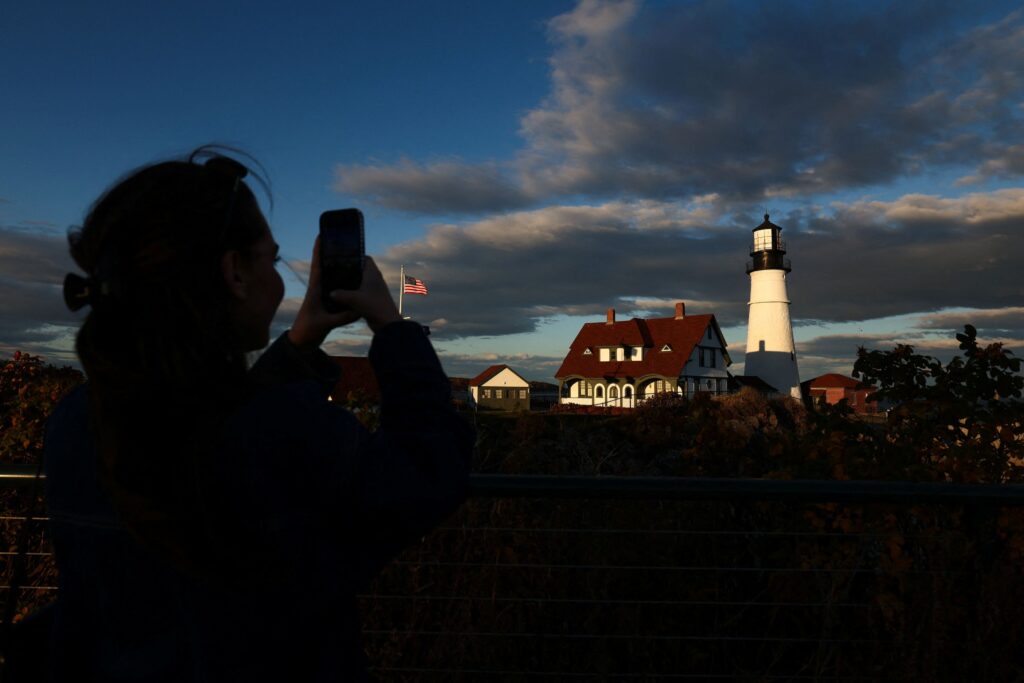
A charming aspect of the summer’s World Cup soccer extravaganza was the phenomenon of visitors from other countries documenting their travels in the United States on social media, rhapsodizing about the American friendliness and abundance that greeted them. Those reports, and stadiums teeming with fans from dozens of countries (hello, Cape Verde!), contributed to the sense that the U.S. put out the welcome mat and soccer fans from around the world happily responded.
But the social media posts and television images masked an unsettling reality that is now coming into focus. This summer was a dismal one for international tourism in the U.S. According to the National Travel and Tourism Office, overseas visits were down by 1.8 percent in June (when the World Cup began and most teams were involved) compared with the same month in 2025. In July, when the soccer final was held, the numbers were down 7 percent, and in August, 11.8 percent. Provisional figures show that overseas visits were also down 4.3 percent in September, year over year.
Not that 2025 was so great. Except for a tiny uptick in the spring, the number of international arrivals dropped every month last year beginning in February, shortly after President Donald Trump took office. Previously, growth since the pandemic had been strong, as foreigners gladly visited the land of the free.
There is no single reason for this year’s drop. Overseas travel has become more expensive since the Iran war pushed up the price of jet fuel. But it is hard to avoid the conclusion that America’s previously robust tourism industry has become collateral damage in the Trump administration’s immigration crackdown. The president’s target was supposed to be illegal immigration, and rightly so. But in implementing the policy, he has created an impression of America, this most hospitable of nations, as so unwelcoming that many potential tourists are reconsidering their vacation plans.
A series of disturbing encounters have contributed to anxiety about coming to America. In an episode last year widely covered by British media, Becky Burke, a 28-year-old British visitor on a backpacking trip, was detained for 19 days in an immigration detention center in Washington state after Canadian officials denied her entry and U.S. officials questioned her upon her return across the border. She mentioned that she had spent some time with a host family in Oregon doing chores around the house in return for board and lodging. That set off alarms for Immigration and Customs Enforcement officials, who deemed the arrangement as paid work, violating her tourist visa.
In another case that drew extensive media coverage last year, German tourist Lucas Sielaff was locked up for 16 days. He and his fiancée, a U.S. citizen who lived in Las Vegas, had driven to Tijuana, Mexico, but upon returning, Sielaff was detained at the border, according to news reports, then shackled and handcuffed and transported to a crowded immigration detention center. Sielaff, who had a 90-day U.S. tourist permit, said he was never told what he had done wrong; he was eventually allowed to fly back to Germany. The Associated Press headline for an article on his and similar cases: “Weekslong lockups of European tourists at US borders spark fears of traveling to America.”
Adding to the tourist-discouraging atmosphere has been spectacle of U.S. border agents rummaging through the smartphones, laptops and other electronic devices of visitors, who are required to surrender passwords or risk being refused entry and having their devices seized. In fiscal 2025, U.S. Customs and Border Protection conducted 55,000 searches of international travelers’ devices, a 18 percent increase from the year before. The number of searches is steadily rising: In the first quarter of fiscal 2024, border agents conducted 10,937 device searches; in the third quarter of this fiscal year, the number nearly doubled to 19,732.
Though there may be proper reasons for searching personal electronic devices, the rules allow agents to undertake basic searches without any reasonable suspicion. This undercuts America’s standing as a bastion of personal liberties. For law-abiding travelers planning a vacation, the prospect of a U.S. immigration official sifting through their emails and social media might make a week in Antigua or Barcelona more appealing.
The Trump administration has done a remarkable job of stemming the flow of illegal immigration at the southern border. But overzealous immigration enforcement elsewhere is compromising an industry of enormous value to the U.S. economy. The World Travel and Tourism Council found that international visitor spending in the U.S. in 2025 was $176 billion, a 4.6 percent drop from the year before. Add another entry to the list of the Trump administration’s unforced errors, as with its tariff regime, that have hindered the free market.
The post America’s tourism slump is an unforced error appeared first on Washington Post.