In today’s edition … Why are you voting? … And why voting is so important … but first …
The races to watch
There’s a certain art to watching results come in on Election Night, and I want this piece to help you understand how early race calls can hint at broader trends that play out later in the evening.
My full post on what to watch for when polls start closing is here — with insights on races from 11 of the top states in play this cycle. But the big thing you need to know is that a few early races will speak volumes about how the night could go for either party.
First, let’s look at Kentucky.
Some precincts in the state close at 6 p.m. Eastern, but the race to watch is the contest to replace Rep. Andy Barr (R) between Ralph Alvarado (R) and Zach Dembo (D). Trump won the district by 15 percentage points less than two years ago, but Democrats have grown increasingly hopeful that they could actually compete there. If this race is close, or if Democrats are in a position to win it, the night could be a very good one for the party.
Florida will also be compelling.
Few states count ballots faster — the vast majority of votes are usually counted within an hour. (Polls close at 7 p.m. Eastern.) The state will provide insights into two topics: How do some Latino voters feel about this political moment, and did Republican redistricting backfire?
On the first point, several Latino-majority districts are in play this cycle, especially around South Florida. The most compelling would be Rep. María Elvira Salazar’s district around Miami. If the Republican is ousted, it would mean Republicans failed to hold onto Latino voters in South Florida, and could signal that Trump’s immigration policies — which affected the district so strongly that Salazar cut an ad asking Trump to rethink his strategy — may have backfired.
Democrats are increasingly confident Rep. Jared Moskowitz (D) can win in a redrawn South Florida district. The most telling races will be the contest between Kathy Castor (D) and Mike Beltran (R) around Tampa, and the contest between Pia Dandiya (D) and Casey Askar (R) in a new district stretching across South Florida.
Both races are toss-ups, so Democratic victories would signal a wave strong enough to overcome redistricting meant to benefit Republicans. And if Democrats can win in the new GOP-leaning districts in Florida, expect growing confidence that they can also win in new, redder districts in states like Texas and North Carolina.
Virginia will say a great deal about whether Republicans can protect their incumbents.
The seat most likely to flip in Virginia is the 2nd Congressional District featuring a rematch between Rep. Jen Kiggans (R-Virginia) and former congresswoman Elaine Luria (D) in the commonwealth’s southeastern Tidewater region. The race tests anti-incumbent sentiment, and Republicans believe it will go a long way toward showing how their incumbents could fare later in the night. If Luria can’t oust Kiggans in a district Trump won in 2024, Republicans will breathe a big sigh of relief, and Democrats will start worrying whether the night will deliver a wave.
I’ll also be keeping a close eye on Virginia’s 5th Congressional District, a large district stretching from the Shenandoah Valley mountains in the north to the North Carolina border. If former congressman Tom Perriello (D) can oust Rep. John McGuire (R) — or even if McGuire wins by just a little — tonight will be a huge night for Democrats.
I have been most focused on two states this cycle: Maine and Pennsylvania. You likely know this as loyal readers of this newsletter.
I’m interested in these two because they will tell us a lot about control of both the Senate and the House.
First, in Pennsylvania. The margin in the House headed into the midterms is so narrow that Pennsylvania contests alone could decide control of the body. There are four uber-competitive races with Republican incumbents, in a state Trump won two years ago. If Democrats pick up all — or even most — of the four competitive House districts, it will likely guarantee the party controls the House next year.
And lastly, Maine.
The state will provide some national lessons — namely, the race between former two-term governor Paul LePage (R) and Democrat Matthew Dunlap in Northern Maine is possibly the best chance for Republicans to pick up a seat this year.
But most eyes will be on Maine’s contested Senate race, with longtime incumbent Sen. Susan Collins (R) seeking a sixth term against Troy Jackson (D) in a state Trump lost by 7 percentage points in 2024.
If Collins can once again suspend political gravity and win reelection in the state, she will likely go down as one of the most difficult Republican incumbents to beat in modern Senate history. If she loses, however, Democrats will be on a path toward taking the Senate, an unexpected result even a few months ago.
A word of caution: Maine is slow to count ballots and uses ranked-choice voting that requires complicated tabulation, if no candidate clears 50 percent of the vote. So you may want to prepare to wait.
Want this in your inbox?
Start your day with The Washington Post’s flagship political newsletter. Sign up here.
From across the newsroom
- Susan Collins makes her last stand showing off what she delivered for Maine, from Alexei Koseff.
- Democrats can’t believe their luck. No really, they can’t, from Dan Merica, Matthew Choi, Laura Beveridge and Molly Hennessy-Fiske.
- Angry voters head to the polls as the election is fought in red America, from Hannah Knowles.
- Supreme Court denies Trump administration request to set aside California ballots, from Justin Jouvenal and Patrick Marley.
- Trump makes midterm closing arguments at troubled Reflecting Pool site, from Dan Diamond, Maura Judkis and Cat Zakrzewski.
- Judge dismisses case against former FBI agents in Hunter Biden laptop investigation, from Salvador Rizzo.
What I’m watching
Elections are a complicated, messy, contentious part of the American experiment.
But they are also critical.
I have covered American elections for over 15 years, and every one has been different — from the sea change when Donald Trump defeated Hillary Clinton in 2016 to the blue wave in 2018 to Democrats fighting over the future of their party in 2020 to Trump sweeping back into power two years ago.
This one will be different, too. And while the winds are clearly at Democrats’ back, we don’t know what will happen tonight — and that should be exciting.
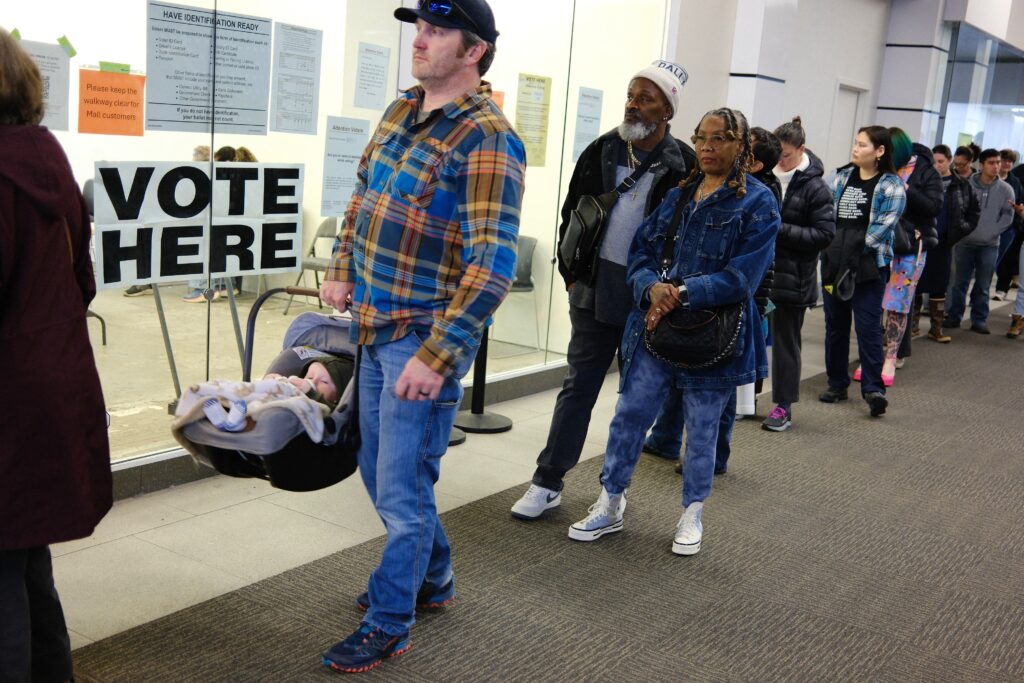
So I don’t have a lot for you to watch for today other than my one piece of advice: Go vote. It’s a critical right we all should use, no matter why you are voting or who you are voting for.
Much more on the results tomorrow night.
In your local paper
Arkansas Advocate: Anger over data centers is playing out in local races in Arkansas, election experts have found, not the statewide or federal contests.
Alabama Reflector: Three authors have sued the state board overseeing Alabama’s libraries over its decision to bar their books from libraries in the state. They allege the decision violates the First Amendment.
From you
It’s Election Day, and many of you are filled with a mix of hope, dread and pure exhaustion.
(Iwrote this morning about how Democratic voters, truly, can’t believe they have a shot at winning the House and Senate.)
“Happy to see the flood of text messages, email and advertisements stop. I have no doubt that the election results will reflect my voting,” wrote Jayne Phillps.
Richard Thorne said today has filled him with “angst.”
“The stakes are incredibly high. I feel that sense of ‘fear and loathing,’ but am trying to keep it in check,” wrote Mary Ciriello. “There are so many ways in which things could go sideways. … Lots of slow, deep breathing this week!”
“I have such mixed feelings,” wrote Jamie Nicholas. “I am so hopeful to have a giant blue wave that flushes out all the reps that have given Trump carte blanche to his awful policies, his corruption and his own private army, then I feel the dread I remember feeling both times Trump was put in office.”
Send a reply
You’ve made it. It’s Election Day. Who knows what the results will be when your answers are published tomorrow, but I want to ask a simple question: Why did you vote today? Let me and your fellow Early Brief readers know at [email protected].
Thanks for reading. You can follow me on X at @merica.
The post Here is how you should watch election night appeared first on Washington Post.