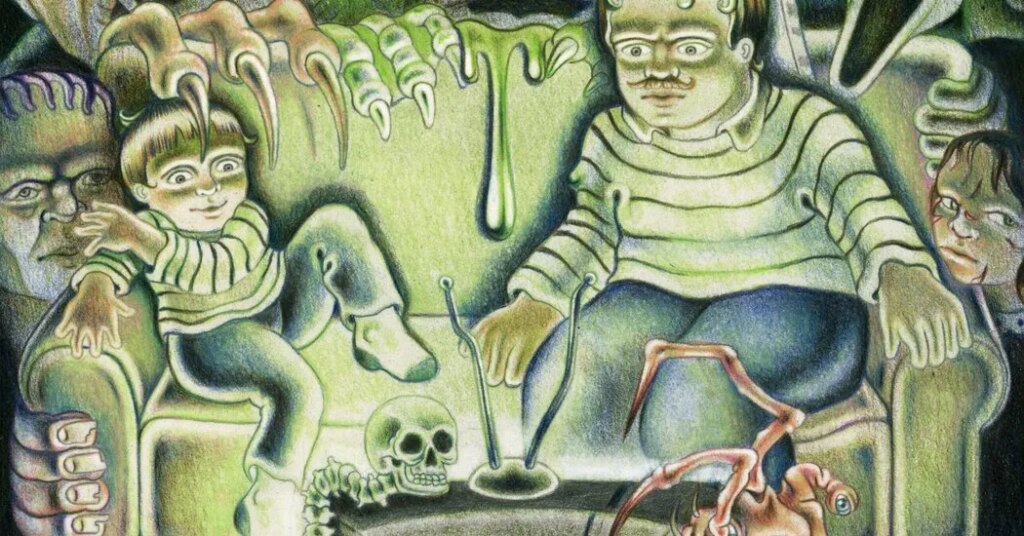
Don’t go into the basement. It’s a rule every horror fan knows. After decades of writing all sorts of creepy films, from Stephen King adaptations to “Halloween” sequels, I should know. The basement is a place of fear and darkness; it’s where the unspeakable lurks. The only reason movie characters go down there is that we screenwriters make them so that audiences know something terrible will happen.
But why do we keep wanting to go down those stairs? Horror is more than the sum of its scares. It’s not just a knife held by Jason or Michael Myers. It is art at its most primal — and communal. It doesn’t just frighten us; it frightens us together. My father taught me that lesson from beyond the grave. Three years after his death, my stepmother discovered six boxes in their building’s storage area. Of course, it was in the basement. I went down to confront my father’s ghost in that dusty crypt.
In life, my dad had been many things — psychiatrist, writer, pop culture commentator on news shows (he even had a cartoon cameo in Comedy Central’s animated series “Dr. Katz”) and collector of many things, including Baroque instruments, antique tins and Native American pottery. But in these boxes I unearthed his true passion, and one that, given what I do for a living, we shared: a collection of 899 vintage comic books, untouched for decades, filled with our most beloved horror titles. “The Tomb of Dracula,” “Swamp Thing,” “The Haunt of Fear.”
For some reason, he had chosen to keep these comics hidden. Lugging the boxes upstairs, I could feel an awful presence over my shoulder. It wasn’t a mutant hillbilly cannibal or a Lovecraftian ghoul. It was a question: “Why did you never tell me about this, dad?” What was it about his love of horror that he had to keep it in the basement?
My father was a highly sensitive man who grew up in a decidedly insensitive environment. Raised in deep Brooklyn, the son of a man whose own father had killed himself in a tenement, he was surrounded by cruelty, want and mental illness. Like many such men, he built up psychological walls to protect himself. While those barriers defended his sanity, they also blocked attempts at emotional intimacy made by those who loved him.
I spent most of my life longing to connect with him. Now, I realize there were some moments he let those barriers down. They followed a pattern, one that began in his own childhood. He told me once that his mother had dragged him kicking and screaming to see James Whale’s “Frankenstein” and something clicked. Somehow, from that moment on, horror became his love language.
That pattern continued with me. While other dads bounced their toddlers on their knees or played catch, mine was making me watch “The Blob” and sneaking me into screenings of “Horror on Snape Island.” When the ticket ladies railed at him for bringing a child to slasher films, my father would reply: “Madame, I’m an eminent child psychiatrist. I think I know what I’m doing.” Some might call this a form of child abuse, but for me, it was joy. Horror movies, horror novels and horror comic books — which I only ever saw him buy for me, never for himself — brought shared light into our eyes. Once, we went to see George A. Romero’s “Dawn of the Dead” the day it opened. During a jump scare, my father grabbed my knee. I froze — not with fear, but with wonder. My dad, so averse to physical contact, was suddenly holding on to me for dear life.
It was the closest thing to a real hug from him that I had ever felt.
Even after decades of writing my own horror movies, I didn’t fully comprehend the meaning of such moments. Like many other people, I spent much of my life as a slave to preconceptions. One of the worst was that horror was just about scares. The other was that my father was emotionally unreachable. When I found those comics in the basement, they forced a realization. My father and I could communicate, just not with words. Horror was our language of love.
I would sometimes tease him: How come we didn’t play baseball or go camping or do any of the “normal” bonding activities of fathers and sons? My father would just chuckle. None of those things were him. I believe he simply wanted us to be ourselves. The hours we spent terrified in those darkened theaters were perfect for that. When we’re afraid, we are as true to ourselves as we can be.
I don’t know why, exactly, my father never shared his collection of horror comics with me. I was the one person he shared his passion for horror with, yet he chose to lock them away in the dark. Maybe there were parts of himself he still couldn’t express. Maybe he felt I would not have fully understood. But now, I do understand: There are many people just like my dad and me, people who connect and feel best when we’re terrified in a movie theater or under a reading lamp. I’ve met them — at screenings, at conventions, online. You probably know some, too.
Sometimes it just takes a night screaming in a theater, or shivering together under the covers with a Stephen King book. Every scare can be a hug.
You should go down into the basement. Just don’t go alone.
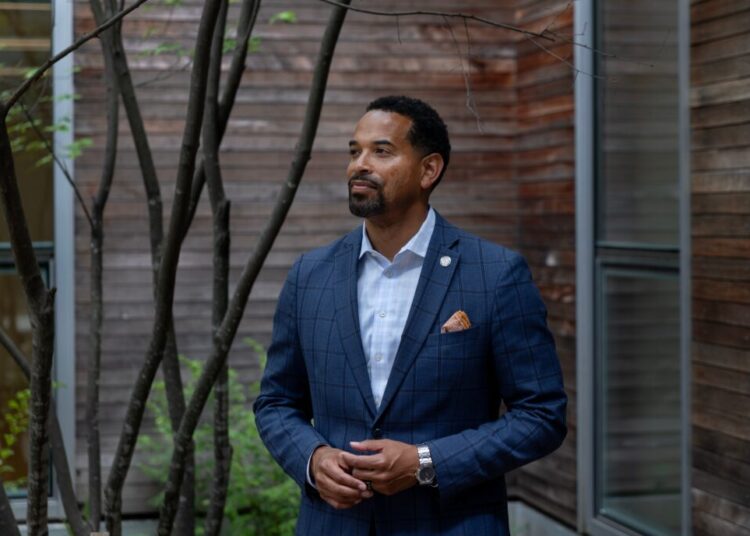
Matt Greenberg is a screenwriter and a founder of the horror platform Scary Bacon. His work includes “1408,” “Halloween: H20,” “Reign of Fire” and the screen story for “Pet Sematary.”
The Times is committed to publishing a diversity of letters to the editor. We’d like to hear what you think about this or any of our articles. Here are some tips. And here’s our email: [email protected].
Follow the New York Times Opinion section on Facebook, Instagram, TikTok, Bluesky, WhatsApp and Threads.
The post What My Father Taught Me About Horror appeared first on New York Times.