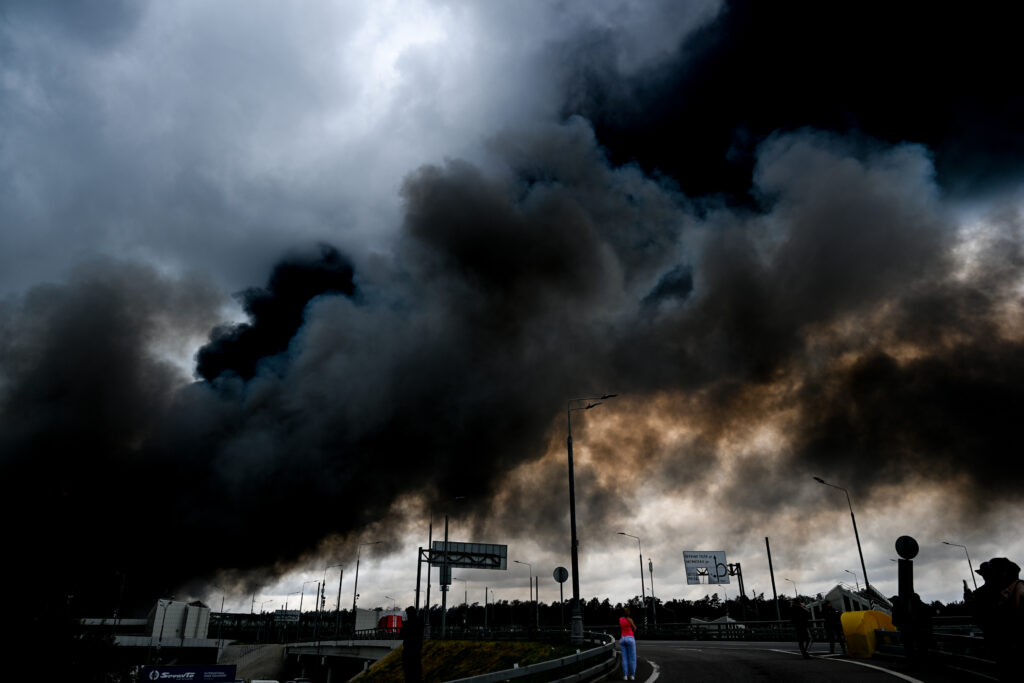
Ukrainian drones struck a large oil refinery in Russia’s Samara region on Friday, according to a Ukrainian defense company, just a few days ahead of the U.S. midterm elections and in defiance of Washington’s pressure to halt such operations as President Donald Trump hopes to stabilize diesel prices ahead of the vote.
The intensity of attacks on Russian refineries had appeared to subside in recent weeks, according to monitors, amid the U.S. pressure. There had not been any strikes on Russia’s fuel infrastructure since Oct. 20, when drones hit a dispatch station in the Tambov region. An oil terminal in St. Petersburg was hit on Oct. 18.
Fuel costs have climbed sharply since the war with Iran began at the end of February and are now a core part of the cost-of-living concerns that have dominated the campaign, with higher gas and diesel prices emerging as a key vulnerability for Republicans.
Fire Point, the Ukrainian defense contractor that produces the country’s FP-1 drone, said Ukrainian drones hit the Novokuibyshevsk refinery, a claim that could not be confirmed independently. “Multiple hits were recorded across the refinery grounds,” the company said. Footage published by Telegram channels monitoring strikes on energy facilities showed plumes of smoke over the refinery. Ukrainian officials have not commented on the strike.
Yuri Ushakov, a foreign aide to President Vladimir Putin, accused Ukraine of defying Trump and his request to refrain from striking energy facilities.
“Once again, they have disobeyed — and, I would say, are simply ignoring him. Although Trump has been — and continues to be — insistent on this matter, they are not listening,” Ushakov said. “They are probably bold, because Europe continues to support them. It’s unlikely they would have dared to do this on their own.”
The remarks appear aimed at driving a wedge between Trump and Ukrainian President Volodymyr Zelensky, whose relationship has worsened in recent weeks, with Trump blaming Ukraine for high diesel prices, despite the U.S. war in Iran being the main contributor, and even calling for Zelensky’s ouster.
The Novokuibyshevsk refinery belongs to Rosneft, Russia’s oil giant, and produces a range of petroleum products, including gasoline, diesel and jet fuel for the Russian military. Vyacheslav Fedorishchev, governor of the Samara region, confirmed the drone attack on “civilian infrastructure facilities” with a “record number of drones,” but made no mention of the refinery or the fire on its premises. The extent of damage to the facility is unclear.
The attack further undermines Trump’s plan to offset the global fuel price surge caused by the war with Iran by pressuring Ukraine to stop hitting Russia’s refineries, strikes that have forced Russia to periodically ration fuel at home and impose an export ban on diesel.
Trump announced on Oct. 11 that Russia and Ukraine had agreed to “an energy ceasefire” in a brief social media post that offered little detail on the deal beyond a warning: “Do not break it!”
He also moved to lift sanctions on Russia, allowing it to export diesel on global markets, initially releasing 300,000 tons of fuel, with larger shipments to follow in November and December.
To ensure the supply, Russia lifted its self-imposed export ban, but experts said the amounts remain too small to effectively lower global prices. Trump’s decision to lift restrictions also undermined years of U.S. policy that used energy sanctions as leverage over Moscow.
The truce appeared never to have been fleshed out with either side, leaving it fragile and ill-defined. Zelensky initially was caught off guard by the announcement, telling Axios it was “news” to him, but quickly said Kyiv would support it if Moscow did.
Ukraine held off on attacks for three days after Trump’s announcement but accused Russia of repeatedly attacking its power grid, including a power plant in the northeastern city of Kharkiv, which Ukrainian officials said was hit hours after the U.S. president’s post appeared.
Moscow said little on the matter and did not confirm that the truce was in place. The day after Trump’s announcement, Kremlin spokesperson Dmitry Peskov said contacts were ongoing when asked whether the two sides had agreed, and he declined to say whether the ceasefire would apply only to oil refineries.
The Kremlin later said the scope of the energy ceasefire had never been determined, argued that Ukraine’s targeting of Russian energy infrastructure ran counter to U.S. peace efforts and disputed that Ukraine had paused its refinery strikes at all.
In an interview published Oct. 15 in the Financial Times, Zelensky said Ukraine would restart strikes on Russia’s oil refineries, saying Russia had failed to abide by the truce and expressing anger over the U.S. withholding intelligence and disruptions to the Starlink connection that is crucial to Ukrainian military operations. He said he felt betrayed by Trump.
“The block [on attacking refineries] is out. We’re done,” Zelensky added. Hours later, the Russian Defense Ministry said Ukraine had “attempted a massive attack on the Ryazan oil refinery,” about 180 miles southeast of Moscow.
Kostiantyn Khudov and Natalia Abbakumova contributed to this report.
The post Another Russian refinery is aflame despite Trump’s warning to Kyiv appeared first on Washington Post.