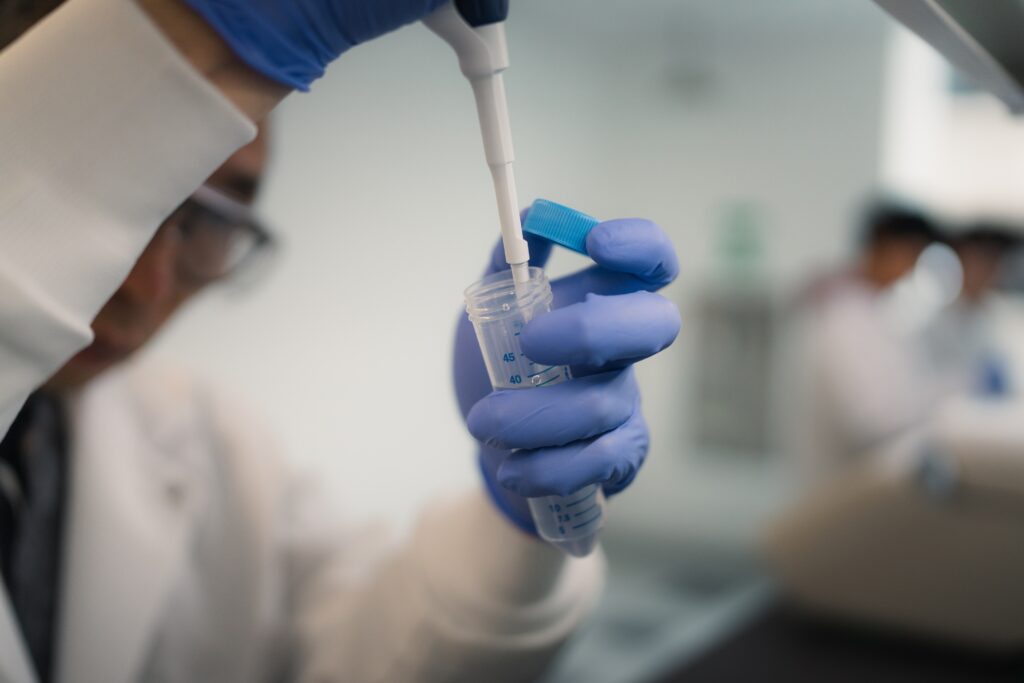
For women experiencing abnormal vaginal bleeding, ruling out endometrial cancer is critical. Doctors have long relied primarily on transvaginal ultrasounds to examine the thickness of the uterine lining for abnormalities, as well as on endometrial tissue biopsies to determine whether cancer or precancerous changes are present.
But both procedures can be uncomfortable and even painful, and endometrial biopsies do not always yield adequate tissue samples — including about 30 percent of the time in postmenopausal women. In some cases, the uterine lining is too thin. In others, clinicians can have difficulty passing instruments through a narrow cervix.
A much less invasive test may be on the horizon.
This vaginal swab test, developed by the molecular diagnostics company PinkDx, uses a clinician-collected swab as a first step to detect endometrial cancer. It’s intended for women who already have symptoms, including postmenopausal bleeding.
“Endometrial cancer really affects so many women,” said June Y. Hou, a gynecologic oncologist at Columbia University. “Of all the cancers, this is one that is getting more and more cases being diagnosed every year.”
The death rate from endometrial cancer has been climbing, driven in part by an increase in aggressive non-endometrioid uterine cancer subtypes disproportionately affecting Black women.
“I think there’s a lot of research effort in trying to figure out if there is a way to lower the barrier to get women the kind of diagnostic testing they need,” Hou said.
Hou is the principal investigator for PinkDx’s PROACTION clinical validation study at Columbia’s Irving Medical Center, one of 16 U.S. sites involved in the study. The company set out to enroll about 3,000 participants.
To develop the test, PinkDx first had to determine the most reliable and least invasive method for collecting the sample. Researchers analyzed samples from 27 women undergoing hysterectomies.
“We really wanted the vaginal swab to be the winner,” chief scientific officer Giulia Kennedy said in an interview. “We sampled tissue or swabs or cytobrushes along the vaginal tract and up into the cervix and showed that we could reproduce the signal from the tumor all the way down the canal.”
As cancer cells in the uterus die, Hou said, they shed fragments of DNA and RNA that carry a molecular footprint of the tumor. Those fragments can drop into the vagina, where they potentially can be picked up by a swab and tested for signs of cancer.
“The key finding of the study that was a bit of a breakthrough was that we could detect a cancer up higher in the reproductive system by simply swabbing the vaginal opening,” said Bonnie Anderson, chief executive of PinkDx.
Nicolas Wentzensen, deputy director of the Clinical Genetics Branch at the National Cancer Institute, said the initial study evaluating the swab as a mechanism was “a very small discovery effort” with findings that need to be tested in a larger independent population to assess possible clinical use.
PinkDx is trying to do this with its multisite study, Wentzensen noted.
The company is focusing on both sensitivity, meaning how well the test detects the presence of cancer, and specificity, meaning how reliably the test identifies women who don’t have cancer. On that latter measure, the higher the number, the fewer false alarms.
Officials said preliminary results are meeting the target of 90 percent or higher sensitivity and at least 50 percent specificity. If those results hold up, they’d meet the benchmarks Wentzensen would set to consider the swab as a first step that could help women avoid more invasive testing.
The test could spare “half of the population from doing the biopsy,” he said.
Women who test positive would probably need a biopsy and perhaps further testing, he noted. Those who receive negative results would still be advised to follow up with their doctor, particularly if abnormal bleeding persists. Numerous benign conditions also can cause such bleeding, including fibroids, polyps and perimenopausal changes.
The current clinical validation study is expected to conclude this year. PinkDx plans to offer the swab as a laboratory-developed diagnostic test, with samples analyzed in its own clinical laboratory. Anderson expects to complete certification through the Centers for Medicare and Medicaid Services by early next year, which would allow the company to make the test available to patients by mid-2027.
“It’s ambitious. It’s not impossible,” Wentzensen said of the timeline, providing that the larger study shows the approach works.
Although the test does not require FDA approval, Kennedy called the company’s product development process “very, very rigorous.” PinkDx sequences up to 100 million reads for each sample. “We take an approach where we basically pull out all the stops,” she said. “We look at every RNA transcript that is in the vaginal swab.”
The swab test was developed under the leadership of Kennedy and Anderson, both co-founders of PinkDx. The two brought their molecular diagnostics acumen to the venture after working together at Veracyte, a genomics diagnostics company that Anderson co-founded to help patients avoid unnecessary invasive procedures and surgeries.
PinkDx, which is based in California, works exclusively on women’s medical issues.
The post A new test could make it easier to detect one of the most common cancers in women appeared first on Washington Post.