NAIROBI — Tanzanian opposition activist Twaha Mwaipaya was reportedly seized from a taxi by three men east of Kenya’s capital earlier this week, according to human rights groups.
He has not been seen since.
The facts of the case are uncertain and could not be independently verified. But the disappearance Sunday — word of which was spread by rights groups including Amnesty International and Kenya’s National Commission on Human Rights — fits a pattern raising concern among political activists and human rights advocates in the region: the abduction of dissidents, even in exile, across Kenya, Tanzania and Uganda.
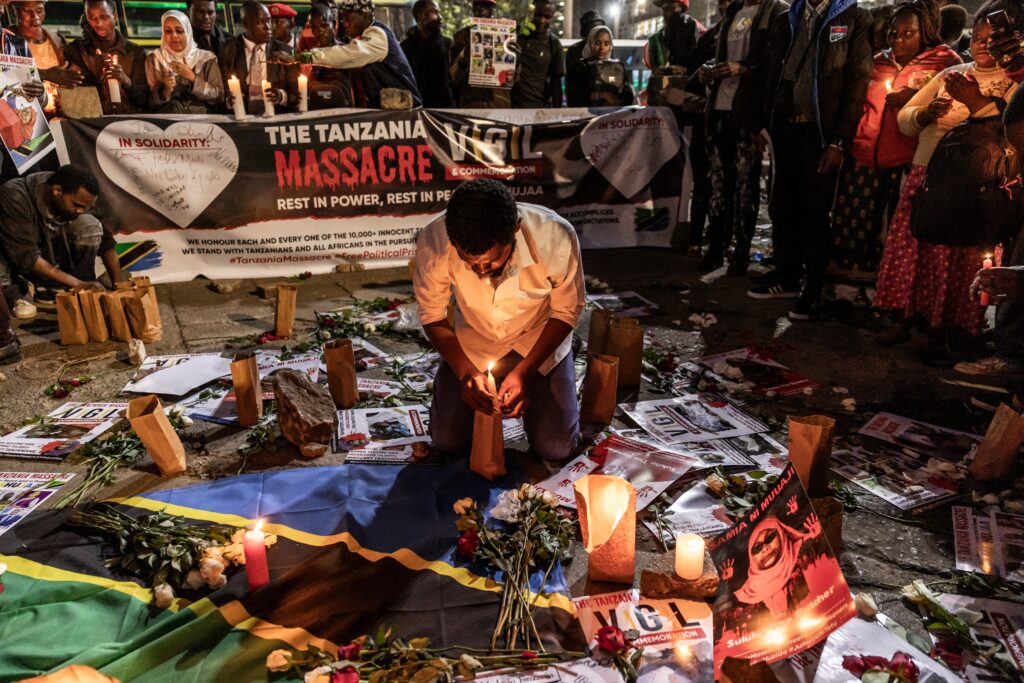
Tanzania’s election last November — widely seen as a coronation for President Samia Suluhu Hassan, who had jailed her main opponent and presided over a widely documented crackdown on dissent — descended into violence. Activists say state security forces killed more than 1,000 people, a charge the government denies.
A Tanzanian commission found in April that at least 518 people had died in the post-election violence, though rights watchdogs called that an undercount. The government shut down the internet for days amid the crackdown.
Sen. Jeanne Shaheen (New Hampshire), the ranking Democrat on the Senate Foreign Relations Committee, in a statement at the time called the elections fraudulent and asked for a review of the U.S.- Tanzania relationship, saying Tanzania’s ruling party had endangered the safety of its citizens.
Mwaipaya, a youth opposition activist, was tortured by security forces after the vote, he told Amnesty International. He fled to Kenya, where he continued to criticize Tanzania’s government over the crackdown.
Fear has been growing in Kenya over confirmed and apparent political abductions. Former Ugandan presidential candidate Kizza Besigye was seized in Nairobi in 2024, only to resurface in a military court in Uganda, and Tanzanian activist Maria Sarungi said she was attacked in the Kenyan capital by unknown assailants and held for hours in 2025.
In 2025, Kenyan and Ugandan rights activists were arrested and tortured by security forces in Tanzania, prompting the U.S. to impose sanctions on a top Tanzanian police official alleged to be involved.
“This is a new kind of normal that has been established, and it’s something that we need to pay close attention to,” said Oryem Nyeko, a researcher for Human Rights Watch.
Besigye remains in a Ugandan prison, charged with treason.
In Tanzania, the main opposition leader, Tundu Lissu — to whose political party, Chadema, Mwaipaya belongs — is also in prison.
Chadema in a statement called for Kenya’s president to ensure that action is taken to trace and locate Mwaipaya. “No individual should be abducted, threatened or deprived of their right to live in safety because of their political beliefs or involvement in the activities of a political party,” the statement said.
“This would be a very serious stain on the Kenya government to allow abductors to enter and take someone within their borders,” John Heche, Chadema’s vice president, said of Mwaipaya’s abduction in his own statement. “Kenya is a democratic country. If someone has fled to you, and sought refuge, they cannot be abducted while in Kenya.”
Kenyan police said they were not aware of the matter.
“I have never heard of this abduction, I do not know who this fellow is, I do not know who has abducted him. It’s only you people that are saying it,” Kenyan police spokesperson Michael Nyaga Muchiri told The Washington Post.
Tanzania’s government did not respond to a request for comment.
Two days after Mwaipaya was seized, activists filed a petition to Kenya’s High Court in an effort to compel the government to produce him.
“We are reminding the government that it’s their responsibility to protect everyone in their territory and also especially those at risk, those who if taken back to their country would be at risk of torture or even being killed,” said Sikula Oniala, a researcher for Amnesty International.
“Government has the obligation to ensure that he is not crossed over the border because there is now a trend where activists are picked and taken back to their countries,” he said.
A growing number of journalists and activists have fled Tanzania for fear of reprisals from Tanzanian authorities, but activists now fear that the East Africa region may not be safe.
“The abductions are part of the standard playbook script of spreading fear among the people. Tanzanians have made it clear last year, and continue to make it clear this year, that they will not tolerate authoritarianism and will not accept a government that is not elected by them,” said Sarungi, the Tanzanian activist who was briefly abducted in Kenya last year.
The post A year after Tanzania election violence, dissidents face danger even in exile appeared first on Washington Post.