The Trump administration released a plan Thursday to update requirements for certain nutrients in infant formula.
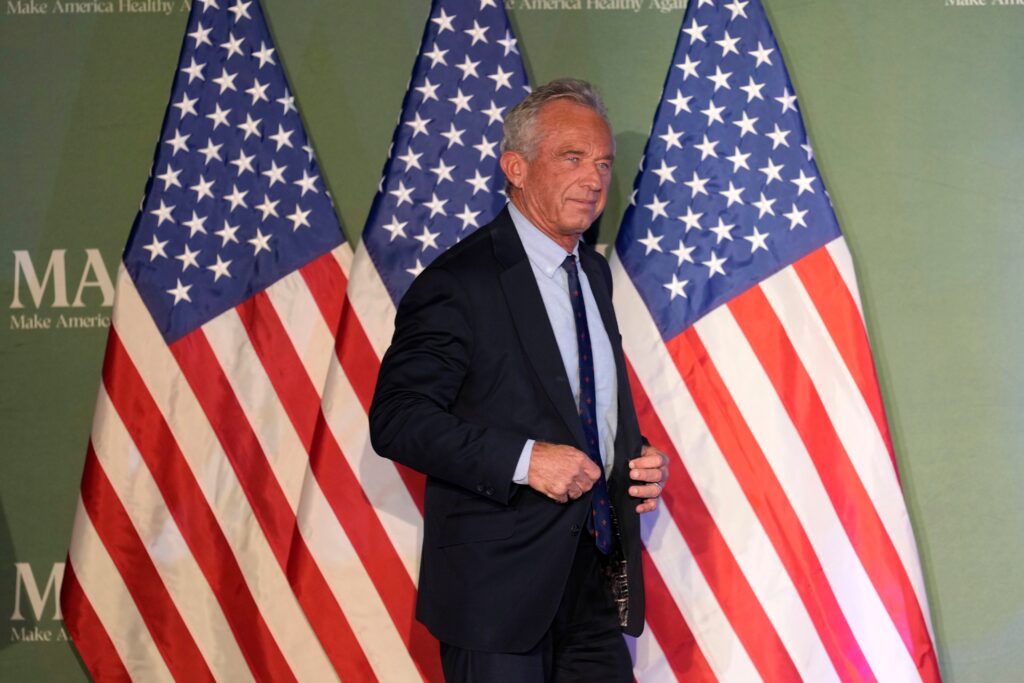
Last year, Health Secretary Robert F. Kennedy Jr. announced an initiative dubbed “Operation Stork Speed,” including the first review of infant formula ingredients and nutrition in nearly 30 years. The effort is part of his Make America Healthy Again agenda, as Kennedy and his supporters seek to crack down on artificial dyes and other ingredients used in the nation’s food supply.
The first phase of the review announced Thursday proposed updated requirements for iodine, manganese, vitamin A and vitamin D. The Food and Drug Administration is also seeking public input on new ingredients “currently not required in infant formula but commonly added by manufacturers due to their nutritional value,” including arachidonic acid (ARA), docosahexaenoic acid (DHA) and L-carnitine.
The announcement comes just a few days ahead of next week’s midterm elections, in which Democrats are heavily favored to retake the House while Senate control is expected to be determined by just a handful of close races. Some influential MAHA activists have warned that “MAHA moms” may sit out the election due to disappointment with the Trump administration. The infant formula measures are policies that will probably appeal to those in the movement, as would a separate effort Wednesday to allow the temporary sale of six unapproved peptides.
The Department of Health and Human Services said the FDA will review 30 nutrients currently required in infant formula. The review is being conducted in three phases, with the goal of releasing one final rule compiling all the changes.
Bill Marler, a prominent food safety lawyer, said in a statement that the effort is “real work, and I want to say so plainly.” But he called for more testing of bacteria that have recently been tied to foodborne outbreaks related to infant formula, such as Clostridium botulinum, which causes infant botulism, a rare but life-threatening illness.
The FDA also released new chemical contaminant testing data on infant formula as part of “Operation Stork Speed” and called the results “reassuring.” Most infant formulas tested had low or nondetectable levels of chemical contaminants, according to the agency, consistent with other results released this year.
Hundreds of people had submitted public comments as Kennedy launched the baby formula review, with some demanding more robust testing for heavy metals and contaminants. Some parents have expressed concerns about the sugar content in formula or seed oils used to deliver essential fatty acids to infants.
The Infant Nutrition Council of America, an industry trade association, said in a statement that it supports the FDA’s review of formula standards.
“Infant formula is rigorously regulated by the FDA, and manufacturers must meet applicable safety, quality, and nutritional requirements,” the council said.
Steven Abrams, a professor of pediatrics at the University of Texas at Austin, said the proposal was “very professionally done by the staff.”
He said most of the proposed changes aren’t dramatic, though increasing vitamin D may mean some babies who are formula-fed are less likely to need additional supplements of the vitamin.
The plan didn’t tackle some questions that have been the focus of social media influencers, such as those around seed oils and sugars.
“Some of the most controversial or challenging questions aren’t covered in this. They will be, but they’re not covered in this” phase of the review, Abrams said.
Barry Popkin, a professor of nutrition at the University of North Carolina, said while he thought the document looked good, he had questions over who within the agency is leading the review, expressing concern over other scientific matters, such as vaccine changes during Kennedy’s tenure.
“Infant formula is very, very finely tuned to replace breast milk,” he said. ”Incorrect reductions or increases and so forth can really unbalance this.”
The post RFK Jr. announces latest plans to update infant formula standards appeared first on Washington Post.