When we moved to Cardiff and renovated the ground floor of an old Victorian house, one thing I knew I wanted was lots of glass in my kitchen. I liked the idea of lots of daylight, of seeing the trees outside.
Our builder advised against it. Even in Wales, hardly famous for tropical temperatures, it could become uncomfortably hot without air-conditioning, he warned. After last summer’s heat wave, I’m glad I followed his advice.
I’m not the only one susceptible to the allure of glass. Around the world, glass skyscrapers — those glittering symbols of modernity — are flying up at a rapid rate, often in places much hotter than Cardiff. But the air-conditioning required to make these spaces usable is extremely energy intensive. Today, my colleague Chico Harlan, our global climate correspondent, writes on why some argue it’s time to rethink the glass skyscraper.
Shiny, modern and hot
By Chico Harlan
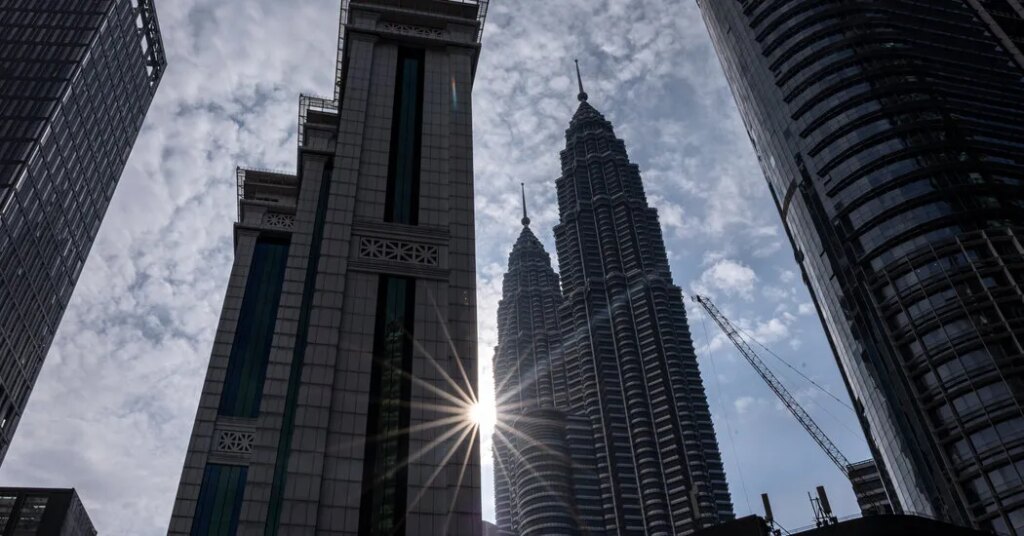
More than any other form of architecture, glass skyscrapers testify to the human desire for sweeping views and a sense of rising above the fray. In some of the world’s fastest developing places — Dubai, Mumbai, Jakarta, Kuala Lumpur — they have become city-defining showpieces, signaling sophistication and rising financial clout.
Those places also all happen to get very hot.
Glass tends to be ill-suited for keeping out heat. Its overuse often makes buildings more energy intensive to cool. One woman I talked to, who lives on the 74th floor of an apartment in Kuala Lumpur, talked about the “wall of heat” she felt emanating from her windows on sunny days.
That relationship between glass and heat is now fueling a debate about whether these symbols of modernity make sense in a world growing hotter because of climate change.
Some argue that the ambition and innovation that spawned the high-rise era can also develop technology to help modern skyscrapers fend off rising temperatures while maintaining the million-dollar views.
Others say these shiny behemoths are at odds with the goal of reducing greenhouse-gas emissions. They say it is time to rethink city skylines.
Natural light, equatorial heat
In the spaces where we live and work, few amenities are more desirable than natural light.
But glass can make rooms hotter in two ways. It lets in more heat from the air outside than solid walls. It can also admit more than half of the energy from sunlight as heat inside.
That means wrapping skyscrapers in glass can significantly increase the need for air-conditioning when it’s warm or sunny out. And some parts of the world are warmer and sunnier than others.
In cities like New York and London that have pioneered this style of architecture, glass can reduce heating costs in the winter months. But the form has now spread across China, the Middle East and Southeast Asia — sometimes in cities close to the Equator that experience direct sunlight and intense heat year round.
Over the past decade, the world has constructed 25 times the number of buildings 200 meters or taller that it did in the 1980s. The “vast majority” have facades largely of glass, one expert told me.
Malaysia, in particular, has gone on a building spree.
The country started in 1996 by completing the Petronas Towers, the tallest buildings in the world at the time. Then it kept going, constructing hundreds more skyscrapers. Malaysia now has more buildings 200 meters or higher than any country but China, the United States and the United Arab Emirates.
Some of these buildings have good energy efficiency numbers. Proponents of glass-dominant design say these buildings can be environmentally responsible, with the right choices: fins or undulations to prevent sunlight hitting glass directly, for example, or metal coatings on the glass to reflect away radiation.
But the overall quality of Malaysia’s towers is “still not so good,” said Sarly Adre Sarkum, an architect and the chief executive of Malaysia’s Green Building Index. He said that in Malaysia’s climate, extensive glass facades carry “significant energy consequences.”
The air-conditioning trap
The glass skyscraper became viable only with the advent of air-conditioning. Today, critics of the approach say that technology effectively led architects to ignore other design lessons about contending with heat, including techniques honed over centuries, such as the white, sun-reflective facades of Greece or the open, traditional homes of Southeast Asia.
In Malaysia, the first modestly tall buildings looked as if they were in an almost defensive stance against the sun. The country’s 18-story Parliament building, built in the 1960s, came wrapped in a honeycomb-like lattice. Another early skyscraper, the Dayabumi Complex, built in the 1980s, had its windows shrouded behind an ornate white veil inspired by Islamic motifs.
I also visited a neighborhood called Kampung Baru, in the center of Kuala Lumpur. Surrounded by high rises, it is an island of one- and two-story homes, preserved almost by accident because of colonial-era laws.
Today it is an architectural time capsule. People hang out in open-air restaurants under ceiling fans, and many homes have large overhangs that ward off the sun. Small windows are covered by horizontal louvers.
One of the oldest homes in the neighborhood belongs to Jamiyah Kesot, 71. Constructed of dark timber with a high-pitched roof, it relies on the cooling features from a different time. It’s built on stilts, allowing airflow from below. Kesot uses two floor fans and no air-conditioning.
Most days last summer, the outdoor temperature rose above 32 degrees Celsius. And Kesot’s home, at least to me, an unacclimated visitor, still felt punishingly humid. But one afternoon, a thunderstorm rolled in. Wind rippled through the louvers, flapping the curtains, and the home filled with fresh air.
To fully appreciate Chico’s piece, read it online.
U.S. MIDTERM ELECTIONS
Stacking the ballot in Alaska
Operatives aligned with Mary Peltola, the Democrat running for Senate in Alaska, recruited another candidate to siphon off votes from her Republican opponent, Dan S. Sullivan, according to a Times investigation. The candidate’s name? Dan J. Sullivan.
Same-name ballot-stacking tactics are surprisingly common in U.S. politics, and courts have generally found them to be legal. But Republicans are now calling for an investigation into the race, which could potentially decide control of the Senate. Peltola, who holds a narrow lead, has denied any involvement in Dan J. Sullivan’s candidacy.
-
A grim mood is taking over the White House as President Trump faces the possibility that his Republican Party could lose both chambers of Congress.
-
Is a Democratic “blue wave” coming? Our chief political analyst looks at four scenarios.
We’re making our U.S. politics coverage free in The New York Times app through the Nov. 3 midterm elections.
MORE TOP NEWS
-
Patrick Stewart, the Shakespearean actor who achieved stardom playing Capt. Jean-Luc Picard on “Star Trek: The Next Generation,” died at 86. Here are his most memorable performances.
-
Investigators in Spain are focused on the role of train traffic controllers as the possible cause of this week’s high-speed train collision that killed at least 69.
-
China’s ruling Communist Party expelled 33 senior officials, including a military secretary of Xi Jinping.
-
Christine Lagarde will step down as president of the European Central Bank.
-
The U.S. expelled a Cuban diplomat after a confrontation at the United Nations. Watch the video.
-
Trump and his aides helped Flávio Bolsonaro, who lost a presidential election in Brazil, flee to the U.S.
-
At least 14 people were killed when a Russian drone slammed into a train platform in the Ukrainian city of Dnipro.
-
Hong Kong’s leader apologized for a deadly fire last year and said his housing secretary had resigned.
-
Exclusive: A Chinese businesswoman with close ties to Nvidia’s chief executive, Jensen Huang, was found to be passing intelligence to Beijing. Trump was briefed and took no action.
TOP OF THE WORLD
The most clicked link in your newsletter yesterday was about how the train crash in Spain happened.
WORD OF THE DAY
Race-cation
The New York City Marathon is this weekend, and it’s a great way to see the city. In fact, as my colleague Amisha Padnani points out, a race is a great way to see just about any place. Amisha ran a half-marathon in Cambodia to see Angkor Wat. Read her planning tips.
MORNING READ
During his victory speech in Brazil, President Luiz Inácio Lula da Silva explicitly thanked André Janones for his support.
Janones, a leftist congressman, was a key architect of Lula’s 11th-hour victory: He turbocharged a slow-growing WhatsApp channel called Lula’s Army to help organize millions of Brazilians online. Read more about Janones and Lula’s comeback.
WHAT IN THE WORLD?!
Can’t stop grooving: Japan’s “dancing salaryman,” Toru Utsumi, is a social media sensation.
Robot-dog walker: A start-up offered $20 an hour to take a mechanized dog for a stroll.
Sci-fi housing: Who wouldn’t want to live in a flying saucer? This one will cost you $1.5 million.
RECIPE
Pastillas de leche are Filipino candies traditionally made by cooking down carabao (water buffalo) milk for hours. Try this no-cook shortcut.
WHO IS THIS?
This celebrity is known for elaborate Halloween costumes. Who is it?
BEFORE YOU GO …
Last week, John Geddes, a legendary New York Times journalist, died. You may not have heard of John. His byline wasn’t on the front page. He was a managing editor who did his magic behind the scenes.
I first met John in 2004. I was a young wire reporter dying to work for The Times. He was my final interview in a lengthy hiring process. Sitting across from me in his office, he looked at me over his glasses and asked me the toughest interview question I’ve ever gotten: What’s the biggest mistake you’ve made as a journalist?
As it happened, I did have a big regret.
The first election I ever covered was the French presidential election two years before. The two main candidates, a conservative and a socialist, were neck and neck heading into the first round, as usual.
Like any good wire reporter, I had written stories in advance for what I thought were the two possible outcomes — the conservative coming first and the socialist coming second, or the socialist coming first and the conservative coming second. After all, that’s what always happened.
That, of course, was the election when Jean-Marie Le Pen, the father of Marine Le Pen, a far-right nationalist, came in second, and made the runoff. No pre-written story for that one.
My mistake had been to expect the expected. (Luckily for me, most of my competition did the same thing.)
The Times gave me my biggest professional break by hiring me. John’s question also taught me an important lesson: Good journalism requires being radically open-minded. These days, Marine Le Pen is the front-runner. Does that mean she will win? Judging by this week’s election surprises in Brazil and Serbia, not necessarily.
Speaking of which: As Serbia’s students have been on my mind this week, here’s their anthem, “Tri poljupca za srecu” (three kisses for luck), by Snezana Savic.
Have a great weekend! — Katrin
TIME TO PLAY
Here are today’s Spelling Bee, Mini Crossword, Wordle and Sudoku. Find all of our games here.
Chico Harlan was our guest writer today.
We welcome your feedback. Send us your suggestions at [email protected].
The post The Perils of Glittering Skylines appeared first on New York Times.