Geo Rutherford is the creator of Spooky Lake Month and the author and illustrator of two “Haunted Hydrology” books.
My face was dripping sweat as I stood alongside the Boiling River, or Shanay-timpishka, in the Peruvian Amazon. Its 212-degree water frothed and roiled at my feet, releasing billows of steam that obscured the overhanging rainforest. Two months earlier, a Canadian woman had died after falling into the scalding water near where I stood. And now here I was dipping my mug into the torrent to make a cup of tea with water boiled by the river itself.
That was in June 2025, during one of my many journeys to explore some of our planet’s strangest, most mysterious, and sometimes horrifying lakes and rivers. I don’t always get to visit these places in person, so I spend a lot of time researching them. Then every day in the month of October, I share what I’ve discovered through Spooky Lake Month, an online series I’ve produced since 2020. The Boiling River was featured in Sunday’s episode.
One of the Congo’s strangest inhabitants is Lamprologus lethops, a pale, blind fish whose eyes are covered by a thick layer of skin because it has evolved to live in the perpetual darkness 700 feet below the surface. Local fishermen call it mondele bureau, or “white man in an office,” because its pale, nearly translucent body apparently reminds them of a pasty-faced drudge hunched over a computer. When these fish are swept to the surface by the Congo’s powerful currents, the sudden change in pressure can give them a fatal case of decompression sickness – commonly known as the bends.
Or consider Spain’s neon-orange Rio Tinto, stained by thousands of yearsof mining runoff, where the water is so intensely acidic that few organisms can survive. Among those that thrive are bacteria that help break down sulfur-rich minerals, producing corrosive sulfuric acid, and iron-oxidizing microorganisms that give the water its otherworldly color. These extremophile species have adapted to such bizarre conditions that NASA has studied them for clues about how life might survive on Mars.
Then there are the preserved corpses at the bottom of treacherous Lake Superior, famed for its hundreds of shipwrecks. For centuries, violent storms with towering waves have sent ships and their crews plunging to an underwater graveyard. Many of the drowned bodies have been essentially embalmed in a process called saponification, a chemical reaction where minerals in near-freezing fresh water turn human tissue into a waxy substance called adipocere. These “soap mummies” can stay mostly intact for hundreds of years.
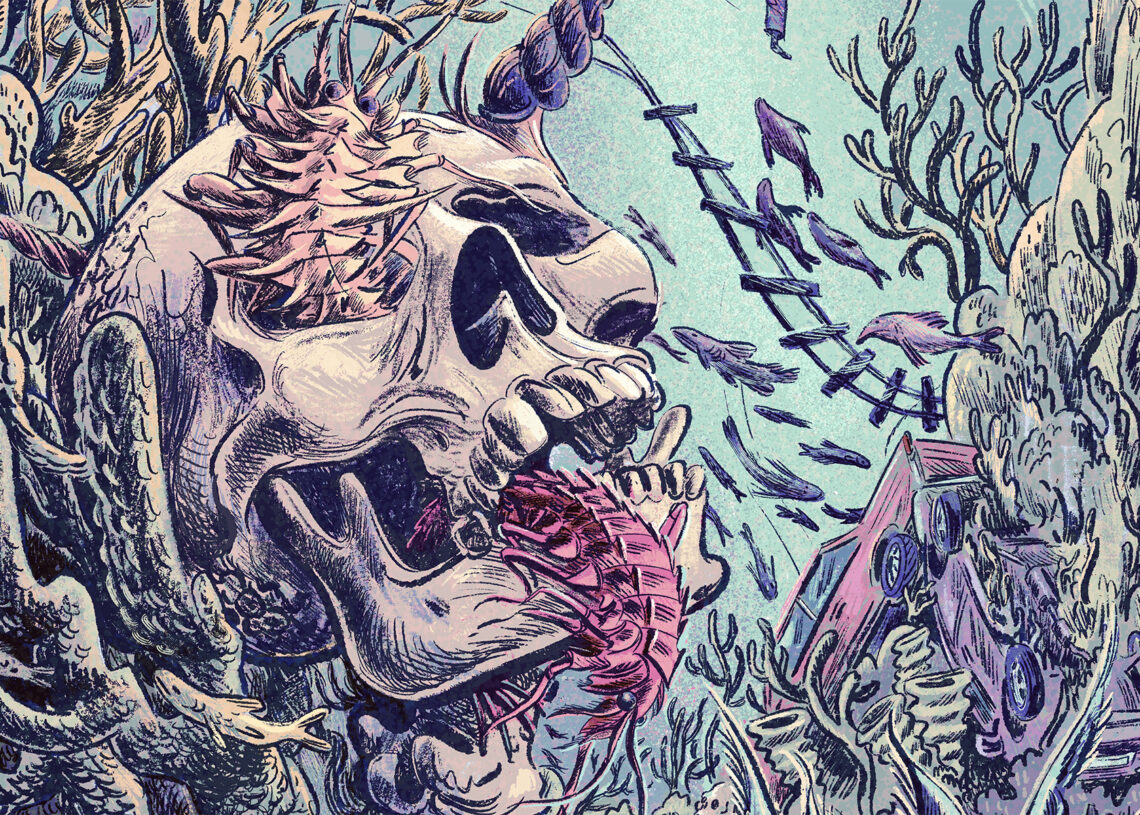
Allow me to warn you what might happen to your body if you die there. It could become dinner for Baikal’s 350 species and subspecies of flesh-eating amphipods — shrimp-like crustaceans, many of which have evolved into bizarre shapes and sizes. Some are tiny scavengers that swarm the dead by the thousands, while others have grown into spiny creatures as big as your hand that are more than happy to make a meal out of whatever sinks to the bottom of the lake.
After six years of exploring haunted hydrology, I feel like I’ve barely scratched the aquatic surface. Our planet, mostly covered by water, is positively swimming in nightmare fuel.
Maybe this Halloween, with the 31st episode of Spooky Lake Month completed, I’ll wander the costume-filled streets, visit a haunted house or stay home and binge-watch Ellen Ripley movies. But I doubt any of them will deliver the same spine-tingling thrill as the horrors lurking in the deep end of the natural world.
The post I explore the world’s scariest lakes. Ghosts can never compare. appeared first on Washington Post.