Leading up to these midterm elections, there has been uncertainty on how to vote — and what could happen after everyone has cast ballots.
Election officials have been preparing for potential interference from the federal government, and courts are already weighing lawsuits from the federal government about the results. Polling shows that most Americans think President Donald Trump will refuse to accept the results if his party loses.
Yet election experts expect that a free and fair election will absolutely be held. “My hope is very few voters will ultimately be impacted by all this, by the ups and downs and twists and turns,” said former Kentucky secretary of state Trey Grayson, a Republican.
Here’s what they want you to know about voting.
Get The 5-Minute Fix in your inbox
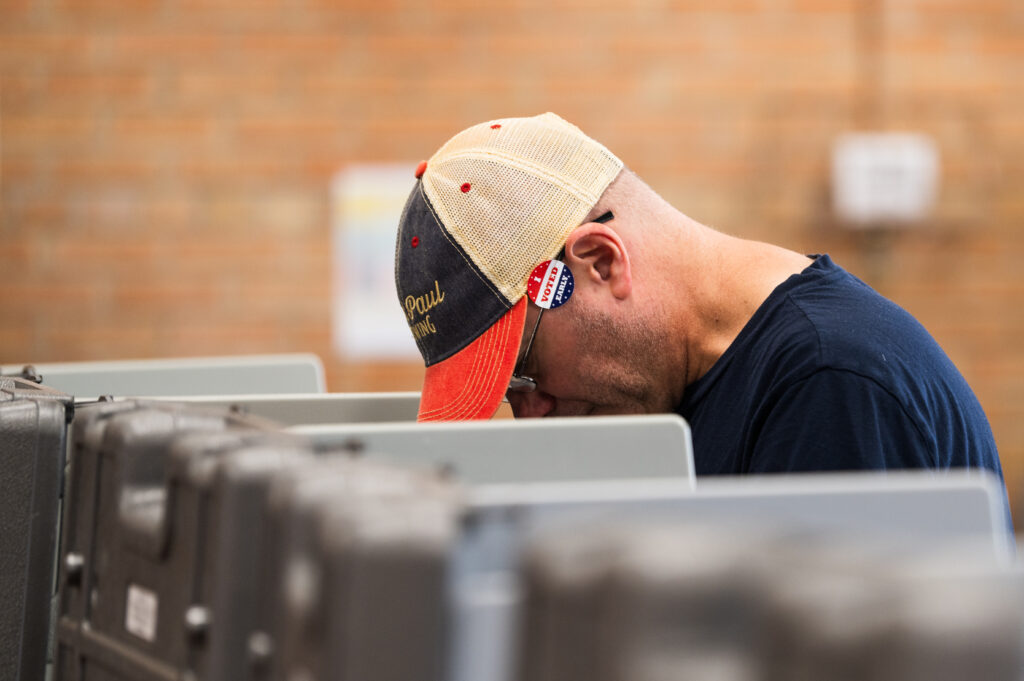
Vote in person with confidence
There’s a perception that polling places will be a hot bed of political activity in this election: The Justice Department plans to send 1,000 monitors to polls and has been vocal about it. A coalition of civil rights and advocacy groups, meanwhile, is training community members to welcome people to the polls. Immigration and Customs Enforcement hasn’t ruled out having agents near polling places if the agency is conducting a raid. Some current and former national security officials are quietly advising states on what to do if there is meddling by the Trump administration on Election Day.
But no one can legally do anything but watch the voting process. Almost all states have laws requiring political activities to stay dozens of feet away from a polling place. It’s also illegal for noncitizens to vote.
Tens of millions of voters have already cast ballots — many in person in early voting — without any problem.
But double check your polling place ahead of time: Some communities have reduced or changed polling locations.
Mailing your ballot within a week of Election Day could be risky
Mail voting is continuing as normal in this election after the Supreme Court stopped Trump’s plan to use the U.S. Postal Service to make it harder to vote by mail.
But know that ballots mailed within a week of Election Day could struggle to arrive on time. Tammy Patrick, a former election official in Arizona who is now with the nonpartisan Election Center, said there have been cuts to how the Postal Service operates that could delay the delivery of ballots.
She and others recommend finding a drop-off location, if your community provides those, or even dropping your ballot off at the polling place (which admittedly defeats the purpose of mail voting but ensures your ballot will be counted).
If you received a mail ballot but would rather vote in person, you can. Most states require you to surrender your mail ballot, or fill out a provisional ballot that is then counted once it’s confirmed you never mailed a ballot.
Getting results could take awhile
Some states, including California and Alaska, take days or even longer to count ballots. Many states accept mailed ballots that are postmarked by Election Day but arrive later. And stuff just happens that can delay the polls and the counting process, said Grayson.
“Hurricanes hit. Power goes out. There is a natural gas leak. There’s a car wreck close to a polling place and causes traffic to back up. Precinct officers oversleep. Somebody’s name is left off the ballot. There is a whole human process behind this,” he said.
Mistakes are corrected quickly. But beware of politicians or even the federal government seizing upon the time between when polls close and when results come out to claim fraud.
“If you hear any candidate or campaign start questioning the results then, you know that person thinks they lost,” said David Becker, a former Justice Department voting rights attorney who is head of the nonpartisan Center for Election Innovation and Research.
Trump may try to allege fraud, but that will fail, election experts predict
Many early efforts are playing out in the Justice Department, which has been extraordinarily politically active leading up to the election: The department has been trying for almost two years now to collect voters’ personal information (a number of states have successfully fought in court not to hand over this data).
The department sued to try to block the certification of results in the Alaska Senate race if the Republican narrowly loses, and it sued some Democratic-led states, alleging there are noncitizens on their voter rolls. It’s executed search warrants and filed criminal charges against some of Trump’s political foes. The president and his allies have raised unsubstantiated allegations of foreign interference.
But election experts predict that the federal government’s court challenges on how states run their elections will fail because the Constitution gives states and Congress — not the executive branch — authority over how to run elections.
Noncitizen voting is rare, and so is election fraud in general. Trump has been claiming voter fraud consistently for six years now when he or his party loses, and for the past 21 months, he’s had the full power of the federal government to search for it.
“In that time they’ve found virtually nothing,” said Becker. “The winners of the election will take office.”
Amber Phillips writes The 5-Minute Fix newsletter, a quick analysis of the day’s biggest political news. Send her an email here, or ask a question that could be featured in an upcoming newsletter.
The post What to know about voting in these midterm elections appeared first on Washington Post.