Ruy Teixeira, a Post Opinions contributor, is a senior fellow at the American Enterprise Institute.
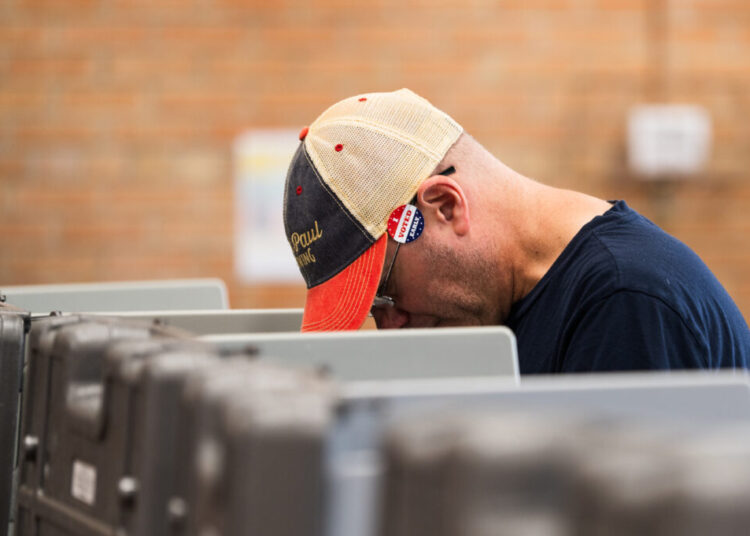
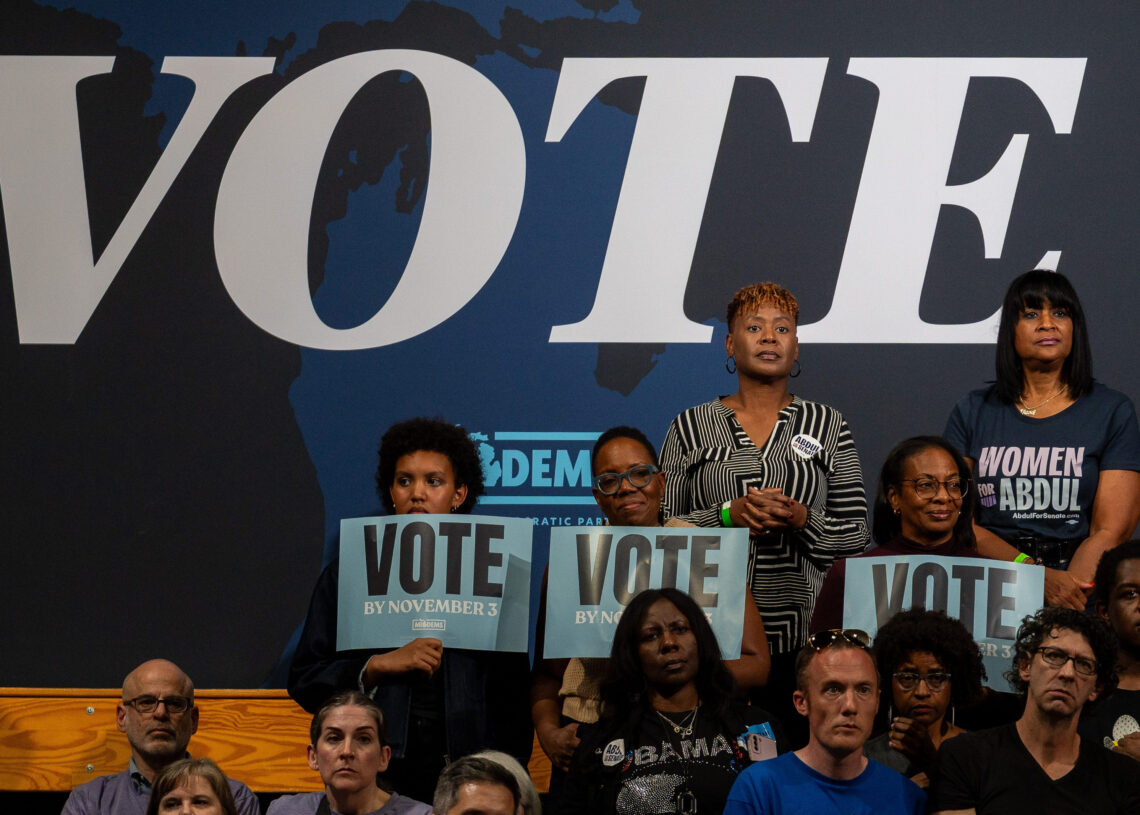
Democrats are on course to have a stunningly good 2026 election. They are the out-party, President Donald Trump is unpopular, Democratic voters are motivated and there is widespread voter discontent, particularly about the economy and cost of living. Democrats are almost certain to take back the House. And while a significant polling error is always possible, Democrats are favored to take the Senate as well. They are also likely to make significant gains in governorships and state legislatures.
That’s the good news. The bad news for the party is that this very success may cripple it just as it faces the all-important 2028 election and beyond, when unfavorable population trends will start to bite. The Democrats’ job as a national party will soon become much more difficult.
The populations of red states are growing faster than those of blue states, which will give Republicans an electoral college advantage after the 2030 Census. By the 2032 presidential election, many of the swing-state combinations that currently deliver Democrats an electoral college victory will go the other way. Now, winning Minnesota, New Hampshire, Wisconsin, Michigan and Pennsylvania (while losing Georgia, Nevada, North Carolina and Arizona) would put Democrats ahead by one electoral vote. But in six years, it would put Republicans up by eight.
Democrats don’t have an easy road ahead. But, paradoxically, the better they do in 2026, the more likely they are to ignore their party’s weaknesses with working-class and rural voters. Those weaknesses led to Trump winning the 2024 election, but they are likely to fade from the party’s memory as Democrats, buoyed by the fool’s gold of midterms success, attempt to placate an energized left.
Celebration is easy; confronting underlying problems is hard. Thus, when Republicans get shellacked on Nov. 3, expect Democrats to see the result as an enthusiastic endorsement of the party rather than a repudiation of the GOP — a far more plausible explanation.
Voters have intensely negative feelings about Trump, his administration and his stewardship of the economy, sentiments that have (finally) pushed Americans to prefer Democrats’ handling of the economy. According to a recent Washington Post-ABC News-Ipsos poll, this is the first time Democrats have held an advantage on the economy in 12 years. Otherwise, the Democrats would not be nearly as successful as they are likely to be.
The Democratic “brand” also continues to be stubbornly negative. A New York Times–Siena poll in September surveyed five red-state Senate battlegrounds — Alaska, Ohio, Texas, Kansas and Iowa — where Democratic campaigns are doing well. In each state, despite the strength of these candidates, the party’s image continues to be very poor. Voters were more likely to say the Democratic Party is too far left than to say the Republican Party is too far right, which is remarkable after two years of the second Trump administration. Moreover, the contrast between the two parties is especially strong among working-class (non-college-educated) voters. In Ohio, 54 percent of these voters said Democrats are too extreme compared with 39 percent who said the same about Republicans.
More broadly, national polls continue to show that Democrats are just not well liked as a party. In an NBC News poll from September, voters’ view of the Democratic Party was actually worse than that of the Republican Party (and even U.S. Immigration and Customs Enforcement). The Democrats’ rating is roughly on par with that of the MAGA movement and significantly better than only those of socialism and the Democratic Socialists of America — both of which are becoming more closely associated with Democrats.
None of this prevents Democrats from making big gains this November, including shifts in their favor among working-class and Hispanic voters. But the data indicate that most of these voters will be “just visiting” rather than locking in their support.
Democrats need to turn their good fortune into a lasting political advantage, but the party’s midterms strategy indicates this could be a challenge. Democratic candidates have adopted the “affordability” slogan, seasoned with a generous helping of economic populism. This has been a successful formula for this cycle. Post-election, it could have diminishing returns.
Democratic candidates have put forward a confusing smorgasbord of measures on affordability. Besides undoing Trump’s tariff regime and reversing his health care cuts, there is a grab bag of price controls, subsidies and new regulations that may or may not be successful. Democrats have also suggested an array of ideas for new social welfare programs (from universal child care to Medicare-for-all) and expansions of old ones — expensive and extremely difficult, if not impossible, to implement in today’s fiscal climate. And there are traditional favorites such as taxing the rich and raising the minimum wage.
There is nothing particularly new about this program. Indeed, it seems suspiciously similar to the laundry list of progressive economic priorities that defined the Biden administration. Those didn’t work, and proposing a do-over is unlikely to win back many working-class voters.
Besides, with Trump as president, these ideas have no chance of becoming law. They will, however, provide material for the inevitable tsunami of aggressive messaging bills from progressives charged up by the 2026 results. That certainly won’t do anything to convince voters that Democrats are not still “too far left.”
Democrats should keep a lesson from the second Trump administration firmly in mind: If you promise to fix the economy, make life affordable and get things back to normal, you’d better do it.
Of course, Democrats will argue that voters understand that the party isn’t really in control, given the Republican White House, and will give them a mulligan leading into the 2028 presidential campaign. Then, the thinking will go, their economic ideas will get a fair hearing. But that presupposes the party can unite behind a plausible centrist economic program. The lead-up to the 2020 presidential election, when the primary process was similarly open, does not inspire confidence.
It also presupposes that voters won’t mind a post-2026 Congress defined by Democratic grandstanding. There’s reason to doubt this, too.
New findings from a Blue Rose Research survey from this month indicate that voters’ patience is wearing thin. By an overwhelming 65 percent to 23 percent margin, voters said it was more important to them that “things in America change” after the election than that their party controls Congress.
This desire for politics beyond simple partisanship is palpable. Voters agreed (70 percent to 18 percent) that almost all members of Congress vote the party line regardless of what benefits their district. Even more tellingly, by almost 2 to 1 (53 percent to 28 percent), voters said they hope the 2026 elections produce more leaders who are willing to break with their party to make bipartisan progress rather than have their party control Congress and pass a partisan agenda.
Could Democrats speak to this mood? They could. There is a golden opportunity in the current bipartisan permitting bill. This is an excellent piece of legislation, which has the twin virtues of plausibly improving both affordability and the Democrats’ image.
Congressional Democrats will, however, have to face down objections from members of the party’s left who think the bill hurts the environment. Democrats who realize how precarious voters’ support is — and how population trends aren’t moving in their favor — should welcome the opportunity to move the party toward the center. We’ll see what happens once the sugar high from their big victory wears off. If it does at all.
The post How a ‘blue wave’ ultimately could cripple the Democratic Party appeared first on Washington Post.