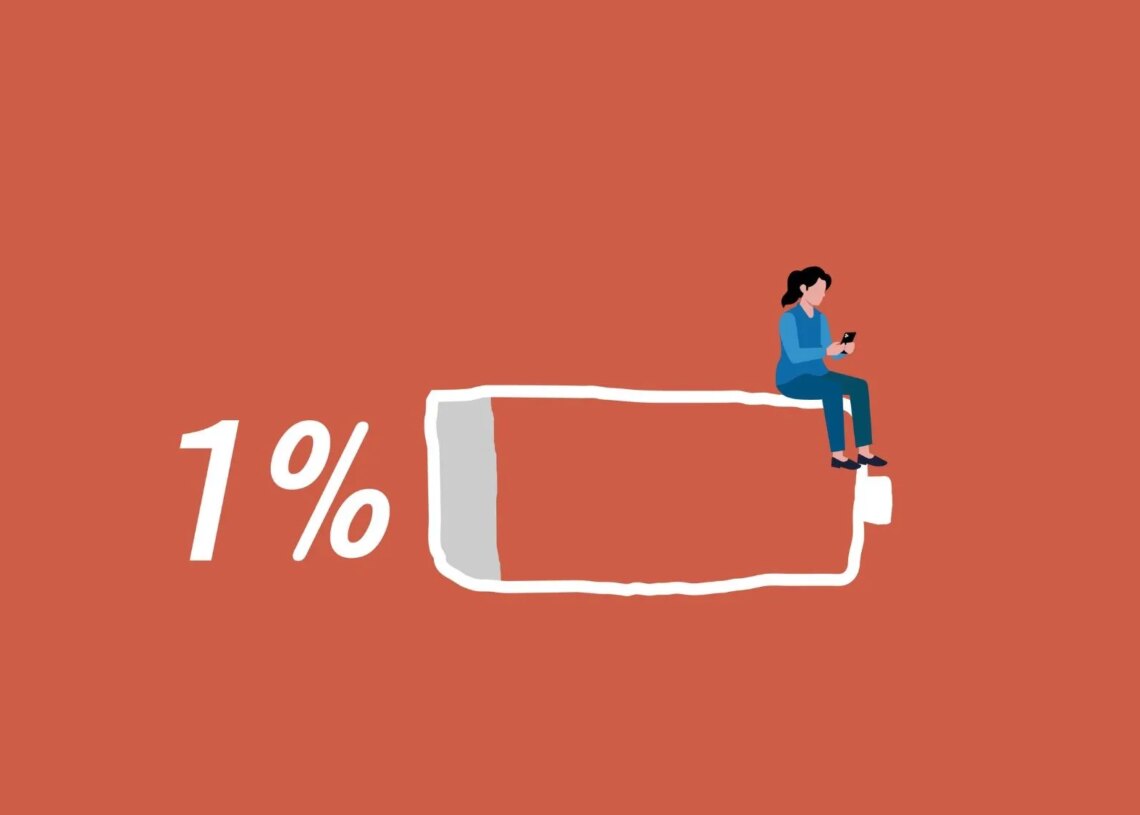
I don’t know about you, but I quite possibly have the world’s smallest social battery. I’m a great time…but only for a very short time. And once the energy drains from my body, I might as well be comatose, even if I’m in the middle of a crowded dance floor.
I’ve always been this way. In childhood, I’d come home from school and immediately race up to my room, decked with string lights and cozy pillows. I’d lock my door, cuddle up in my reader’s nook, and refuse to socialize until dinner.
In adulthood, I still find myself wanting to Irish-exit every party or event by 9 p.m. The phrase “go big or go home” has never made sense to me, as I will always choose the latter option.
That being said, not everyone has such a fragile, easily depleted social battery.
“Several factors influence the size of our social batteries,” says Whitney Polich, LICSW, trauma psychotherapist. “First, everyone’s is different, shaped by personality, biology, genetics, and social context. Introverts, people with chronic mental or physical illness, and people with interpersonally demanding jobs, for example, may find their batteries drain more often.”
Of course, even social butterflies need to recharge after too much time around others. Our social batteries might ebb and flow throughout lives as well, impacted by stress, burnout, certain types of interactions (large gatherings vs. 1:1 hangouts), changing seasons, and physical changes/health, Polich explains.
“The good news is that social batteries can be bolstered, and they can become more durable with practice,” she says.
According to Polich, here are three ways to make your social battery last as long as possible.
1. Check In With Yourself
You know what they say: If you don’t listen to your body, it will eventually scream to get your attention. You don’t want to wait until you’re sick, in pain, or completely depleted to finally rest.
“We often don’t realize we’re drained until we’re exhausted and burned out,” says Polich. “All too often, people come into my office well past the point of overwhelm, when they’ve already started to see an impact on their relationships.”
This is why it’s crucial to tune into your body’s signals and set boundaries to protect your energy.
“Periodically check in with how your body feels, especially when you’re deciding whether to accept a social invitation,” Polich says. “Simple questions can help, such as ‘How much energy is in my social battery today, on a scale from 0% to 100%?’”
2. Say No to What Drains You
As a small-social-battery person myself, I often have a hard time saying “no.” I feel obligated to do most things I’m asked, like grabbing dinner after work even though I’m exhausted from the day or attending yet another family party for the fourth weekend in a row, even though I desperately need some alone time outside of my workweek. I have a growing suspicion this is the root of my chronically low social battery—perhaps I can learn a thing or two from younger me.
“While we don’t always have a choice about our social interactions, we can use our batteries wisely, especially around interactions we find exceptionally draining,” says Polich. “Practice saying no to non-obligatory events, such as the optional workplace happy hour or a two-hour call with a chatty relative. Another helpful litmus test is to ask, ‘Am I doing this because I have the space, energy, and time, or because I feel like I should?’”
3. Find What Refills Your Battery
I know exactly what refills my social battery: staying in with a good book, ordering some takeout, practicing self-care, and spending a few nights all by myself.
“Everyone recharges differently,” Polich says. “Some people recharge in nature, through exercise, or in quiet. Others need to connect with new people or trusted loved ones. Whatever leaves you feeling grounded and rested is the right strategy for you.”
The post 3 Ways to Recharge Your Social Battery When You’re Constantly Feeling Drained appeared first on VICE.