Editor’s Note: This story is one in a three-part series commemorating the 10-year anniversary of Pizzagate, a conspiracy theory that led to a shooting at the Washington, D.C., restaurant Comet Ping Pong in 2016. Read Kaitlyn Tiffany’s analysis on the legacy of Pizzagate and Charlie Warzel’s profile of the Pizzagate shooter, Edgar Maddison Welch.
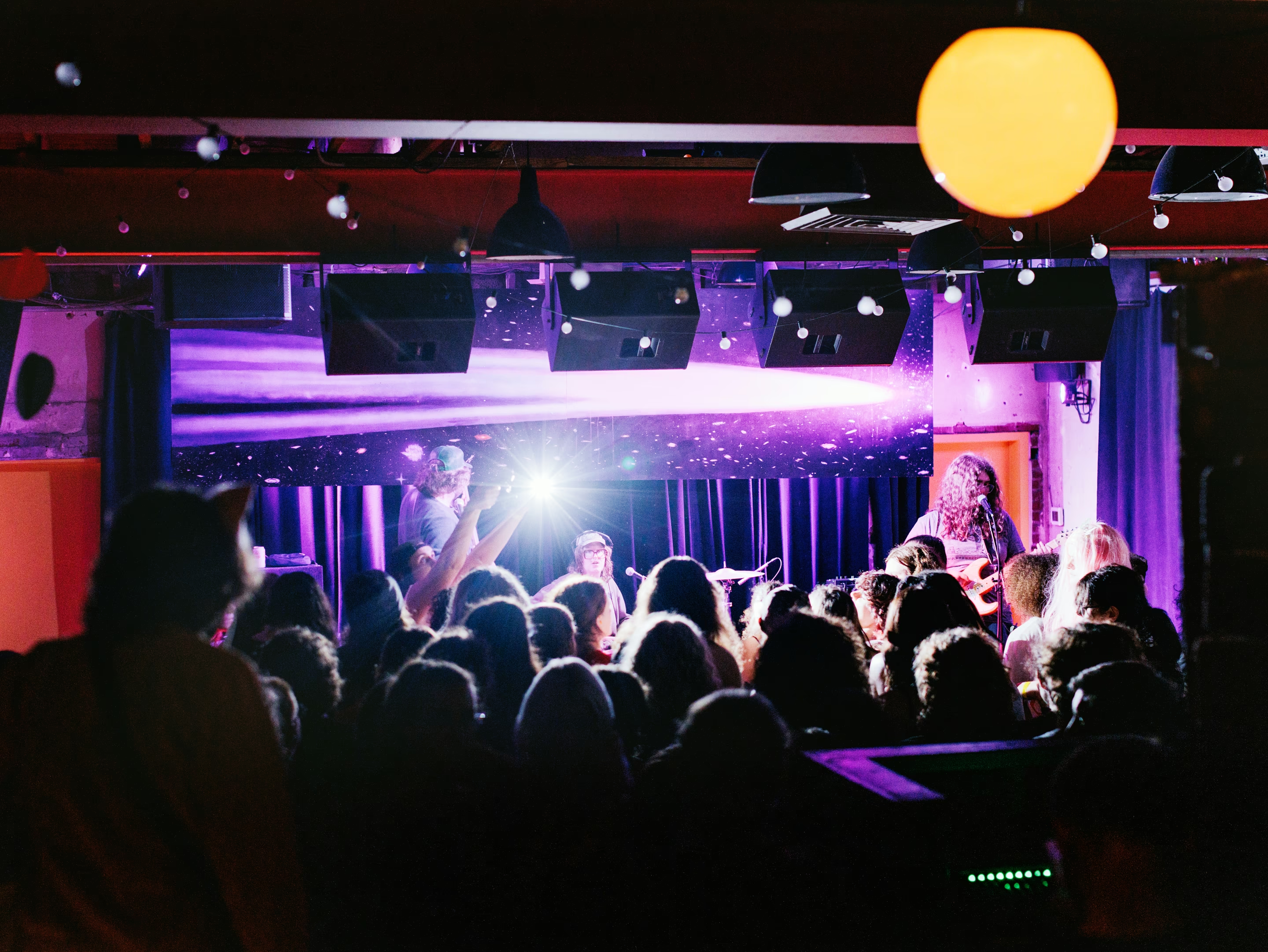
James Alefantis had an excruciating hangover when he first learned that his restaurant, Comet Ping Pong, was the suspected site of a global sex-trafficking organization. It was late October 2016, and he’d just thrown a 10-year anniversary party for the Washington, D.C., pizzeria. There had been much to celebrate: After grinding through a few slow years, Comet had become a favorite among families in the city’s prosperous Northwest quadrant and also, improbably, an important venue for punk bands. Alefantis had hired a band to play the party and, like many of the hundreds of guests who showed up, he overindulged at the open bar. The next morning, he was barely conscious when his general manager called to say that a reporter had been in touch with some questions about a thing called “Pizzagate.”
Alefantis was, as you might imagine, surprised to hear that people on 4chan and Reddit had identified Comet’s basement—which does not exist—as the headquarters of a pedophilia ring run by Bill and Hillary Clinton. “It sounded like the dumbest thing ever,” he told me earlier this month. The theory was based on a bizarre reading of leaked emails sent by John Podesta, who was the chair of Hillary Clinton’s presidential campaign at the time, and knew Alefantis socially. Cheese pizza was said to be Podesta’s code word for “child pornography,” and pasta his word for “little boy.”

Alefantis’s first instinct was to brush it off. He figured that Pizzagate was just another one of those downs that tend to follow ups in the restaurant business, like when you have a great weekend and then on Monday, your hood fan goes on the fritz. People say lots of crazy things online, especially when the national mood is inflamed by a presidential election. After Donald Trump won a few days later, Alefantis allowed himself to hope that the fever would break.
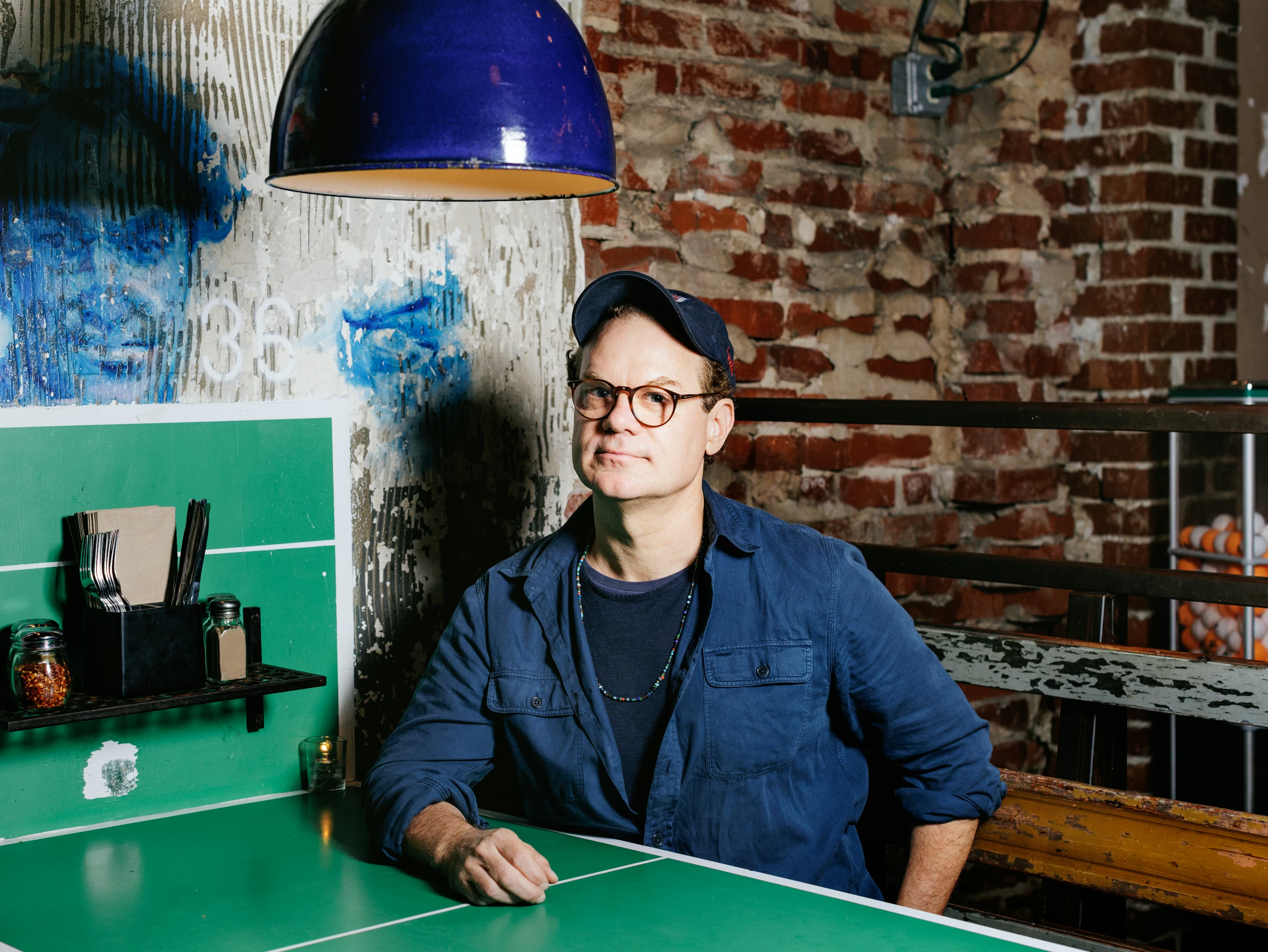
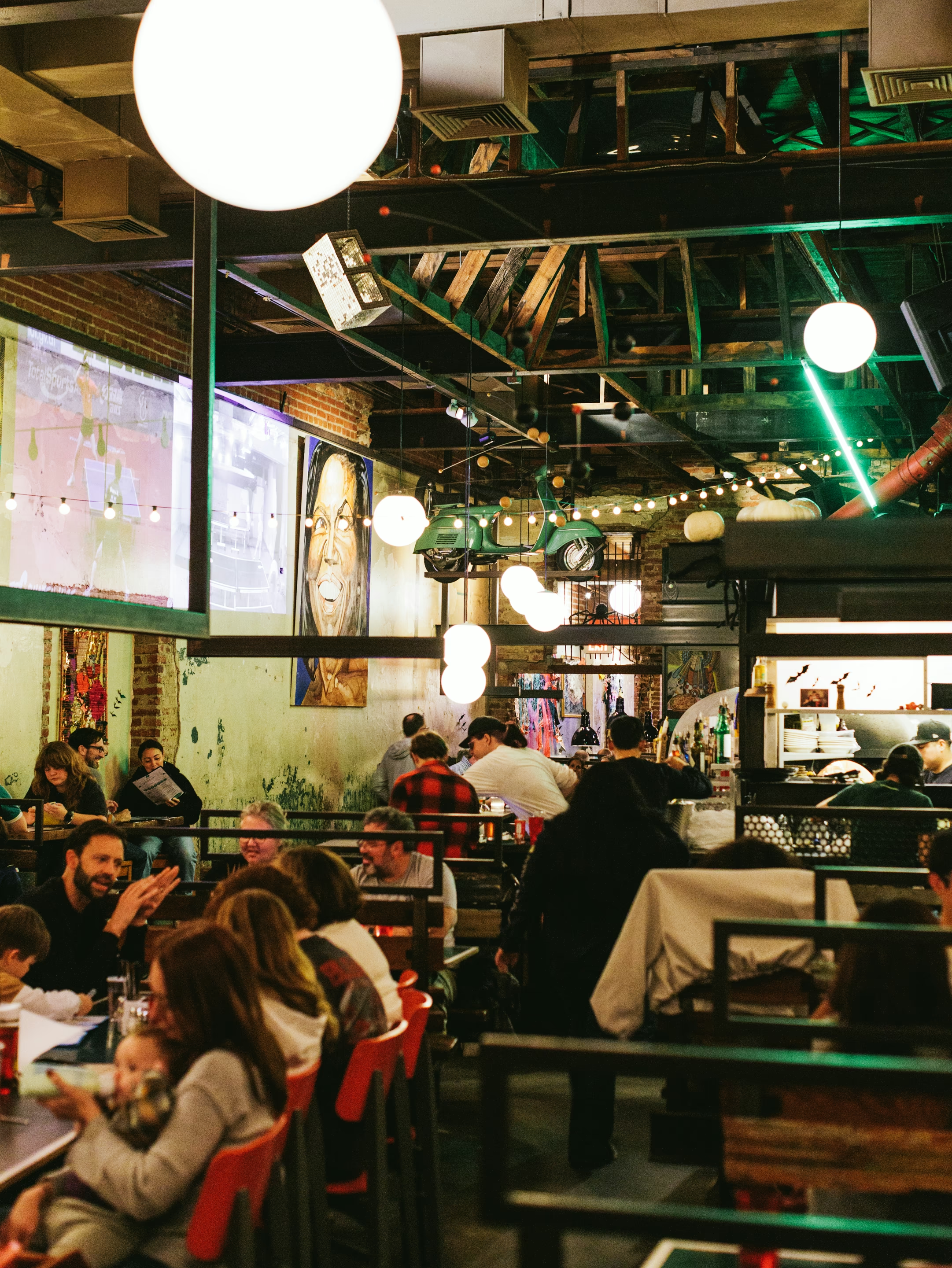
The decor at Comet can be bewildering for first-time visitors. The dining room is dominated by an enormous, fire-breathing pizza oven. A mint-green Vespa hangs, inexplicably, from the ceiling, alongside glowing neon tubes and globe lights. The densely packed two-tops and four-tops beneath it are painted green and white to look like miniature Ping-Pong tables. Alefantis has two actual Ping-Pong tables in the back; he put them in when, after leasing the space, he realized that he could afford to renovate only its front half.
In a room behind the Ping-Pong area, I sat down with Erika Mendoza, Comet’s general manager. Through the wall, we could hear a ball bouncing back and forth between a father’s and son’s paddles, and their occasional yelps of frustration or triumph. Mendoza, who is 35, has worked at Comet since she was 19. She was working as a host when the Pizzagate theory first surfaced, and she remembers the staff joking about it. But then, over the course of November, their mood darkened.
Trump’s victory didn’t placate the conspiracy’s true believers, as Alefantis had hoped. Instead, it seemed to embolden them. The restaurant’s phone line was deluged with fake orders, screamed obscenities, and threatened violence. A few people came in and started nosing around. The far-right influencer Jack Posobiec was thrown out after he tried to record a child’s birthday party. For some, being visibly connected to Comet meant becoming a target on social media. The married lesbian couple who supplies the restaurant’s pickles were accused of kidnapping their own child. Regular customers who interacted with Comet’s social accounts suddenly found hateful comments directed toward them. Mendoza remembers a staffer openly wondering whether someone might soon come in with a gun.
On Sunday, December 4, Mendoza was getting ready for her evening shift when her phone rang. One of Comet’s servers was on the line, who told Mendoza not to come in. Pizzagate had roused powerful feelings in a troubled man named Edgar Welch, and earlier that day, he had driven all the way to Comet from North Carolina on a mission to find and liberate the restaurant’s purported child sex slaves. Welch had parked nearby and walked in with a loaded Colt revolver in a holster and a black assault rifle strapped across his chest. As he made a beeline toward the back, a Comet staffer caught a glimpse of the AR-15 and proceeded to shoo his colleagues and customers out the front door.
The police arrived and barricaded off an entire block of Connecticut Avenue. Welch roamed the restaurant until he found a locked door. It led to a closet containing Comet’s soda system, point-of-sale computer, and some light bulbs, but he didn’t know that. He fired his AR-15 into the door, splintering the wood. By the time Alefantis, who had been grabbing coffee across town, arrived at the neighborhood firehouse where his employees had been evacuated, Welch had already surrendered. “The intel on this wasn’t 100 percent,” the gunman later said.
That evening, when the police took crime-scene photos in Comet, the restaurant looked downright eerie. On the tables and at the bar, pizzas sat half-eaten next to translucent red cups full of water, the ice in them having melted hours before. After night fell, a detective let Alefantis inside. He was unsettled by the stillness. He remembers thinking that Comet would probably have to close its doors for good. Miraculously, no one had gotten hurt, but this conspiracy theory had unleashed real-world forces that were powerful enough to stamp out his little restaurant. Who would want to come eat at a place where another gunman might soon show up?
A lot of people, it turned out. That night, the phone was already starting to ring, and when Alefantis picked up, he found customers on the line. They wanted to know when the restaurant would reopen. The next day, Alefantis held a meeting with the staff. Friends had urged him to make a trauma therapist available, and he took their advice. He asked everyone whether they wanted to keep Comet operational. One by one, servers, bartenders, and runners said yes. Mendoza told me that she offered to host. She remembers the phones ringing off the hook during the meeting. Still more people were calling to ask when they could come in.
“I was like, ‘I guess we’ll fucking open!’” Alefantis told me. His voice still cracks when he talks about the next day. Overnight, customers had dropped off signs, flowers, and cards, including some containing cash that was earmarked for staff drinks. For the first dinner shift, they massed outside, forming a line that stretched down the block. Human group behavior exists on a spectrum, and for a month, Comet’s staff had experienced the hateful end of it. During the reopening, they experienced the other end. “I saw all of these regulars,” Mendoza told me. “They waited hours just to get a table, and then they waited another hour to get their pizza because we were so overwhelmed.”

How nice it would be to end this story right there, to report that this bizarre upwelling of conspiracy and violence culminated in a happily-ever-after for all involved. But that’s not what happened. After Welch was arrested, few of Pizzagate’s true believers issued mea culpas and abandoned their darker imaginings about the restaurant. Instead, they incorporated his arrest into the conspiracy theory, as true believers are wont to do. On online forums, they would later suggest that the whole episode was a staged hoax, a false flag intended to throw them off the scent.
Within days of Comet’s reopening, the hostile phone calls started up again. The staff were so often told that they would burn in the fires of hell that they stopped answering out-of-state numbers. Then they started receiving robocalls from local lines. When Mendoza was away from work, even in her sleep, she would hear phantom ringing. Alefantis decided to disconnect the phones altogether. Many staffers had to lock down their social-media accounts too. Alefantis changed his cell-phone number. In his email inbox, he continually received security alerts, triggered by attempted hacks of Comet’s website. One anonymous emailer sent Alefantis shaky video footage of the exterior of his house.
The restaurant entered its fortress era. Alefantis hired a pair of armed guards for the front door and locked the back entrance, which had previously been open to a parking lot. He had panic buttons installed inside the restaurant, and security cameras placed in each of its rooms. He called D.C.’s chief of police and arranged for squad cars to be parked at two locations near the restaurant, to deter any Welch copycats. In a sop to conspiracy theorists who might show up, the staff started keeping the door to the back room open, and they made sure the lights were always switched on. That way, anyone could see that no child torture was taking place.
Ahead of Welch’s sentencing, in June 2017, several staffers gave victim statements to the court. One reported having frequent flashbacks, and said that they couldn’t help obsessing over how differently things might have gone that day if they hadn’t been able to escape the restaurant. Another said that their family and friends had only recently resumed speaking to them like a normal person, “and not some spectacle to gawk at.” According to Mendoza, several employees quit.
There was no lasting fix for problems of this sort. Comet’s staff could only treat them one by one, with short-term interventions. During the Women’s March in 2017, members of the Westboro Baptist Church launched a protest outside the restaurant. They held up signs with homophobic messages, including one that said GOT AIDS YET? They used a megaphone to call Alefantis an anti-gay slur. This gave him an idea. Being a small concert venue, Comet has some pretty serious loudspeakers. The staff wheeled them out and played Lady Gaga loud enough to drown out the protesters. (Alefantis also brought them flutes of champagne, but this peace offering was refused.) The tactic worked so well that Comet would use it again when the Official Street Preachers, another hate group, later picketed the restaurant. It was a big hit with customers.
In January 2019, violence struck Comet again. A young man named Ryan Jaselskis came in and ordered three beers at the bar. (An hour before arriving, he’d uploaded a video to YouTube in which he proclaimed that the world is run by a satanic global pedophile ring.) After finishing his last beer, he left a generous tip, alongside a diaper and some baby food. Then he walked to the back of the restaurant, poured lighter fluid on its curtains, and set them on fire. Two staffers doused the flames with help from a customer.
Like other restaurants, Comet faced tough times during the pandemic, but the intense public focus on the coronavirus at least seemed to draw away some of the negative attention. For months, only staff were allowed inside; as a consequence, security became less of a concern. Employees busied themselves with to-go orders, making Comet’s signature pizzas, such as the hottie (pepperoni and jalapeños) and the smoky (smoked mozzarella, smoked bacon, and smoked mushrooms). When Comet finally reopened for dine-in, the atmosphere wasn’t as charged. Many of its former tormentors seemed to have moved on.
But even now, the staff is vigilant. They still get calls here and there, Mendoza told me. People will ask, “Where’s the basement?” or something similar. In place of full-time security, the restaurant has developed certain protocols. New employees are told to stay cognizant of their surroundings. They try to discourage Pizzagate tourism. Anyone who walks in and starts recording video is quickly approached, and many are asked to leave. Comet’s booking agent asks the bands and stand-up comics who perform to refrain from riffing on Pizzagate from the stage.
Sometimes people still show up looking for trouble. Last year, a few men rolled in, and Mendoza felt that something was off about them. (A decade of such incidents has trained her senses.) Sure enough, one in the group was wearing a shirt that said Pizzagate is real. After they started saying offensive stuff to a waiter, Mendoza threw them out and called the police. Then she called Alefantis. He picked up right away. He told me that he’s never without his phone.
Alefantis emphasized that Comet’s story isn’t a sad one. These days, mean-spirited visitors don’t show up as often. Staffers are no longer constantly besieged by callers who wish them ill. Nor is the restaurant a haunted or tragic place. The people who work there seem to care about one another. Several employees and former employees have had their wedding ceremonies and receptions at the restaurant. For them, the place is so much bigger than this crazy invented story about it. And the Pizzagate anniversary isn’t the only one on their calendar. As of this month, Comet has been in business for 20 years. Alefantis told me that planning for the party is already under way.
The post The Long, Weird Tale of Comet Ping Pong appeared first on The Atlantic.