Americans don’t trust price tags anymore.
Digital labels on shelves enable retailers to alter prices in an instant and artificial intelligence has made it easier for stores to set rates as demand fluctuates. That’s led to greater scrutiny from shoppers and regulators.
Even the old analog methods have come under fire.
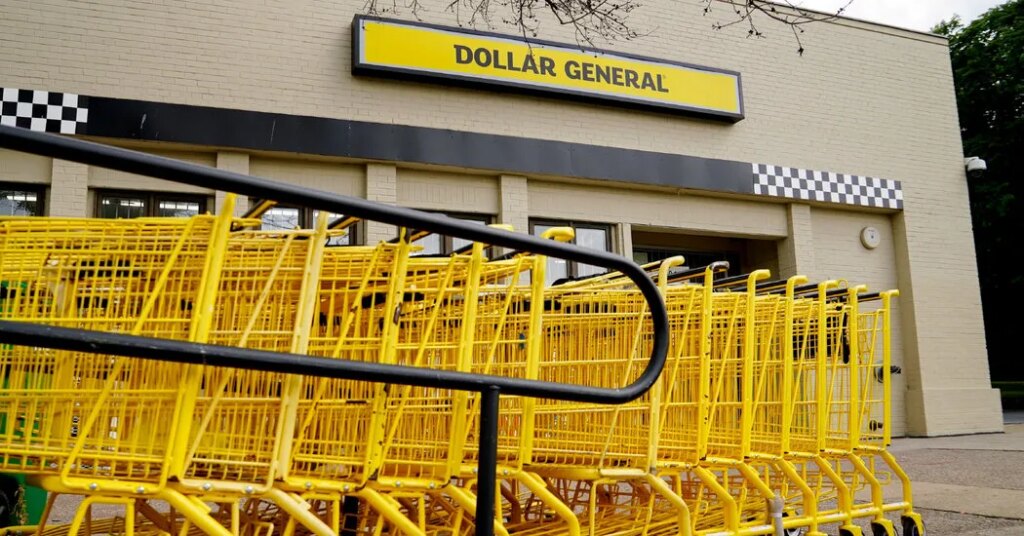
On Monday, the Federal Trade Commission sued Dollar General, the nation’s largest dollar store chain, and accused the retailer of charging consumers more than advertised. The agency’s suit was joined by 20 states, including Tennessee, where Dollar General is based.
In the complaint, the F.T.C. said Dollar General’s stores had not employed enough staff to manually update the labels on shelves quickly enough to ensure that all prices are accurate. It also said that prices at the cash register often differed from the weekly circulars that the retailer had distributed.
“The company has routinely charged customers more at the register than the prices displayed on shelves, price tags and advertisements,” the F.T.C. said in its lawsuit. “This pattern of inaccurate pricing has persisted for years and affects millions of purchases across the country.“
Dollar General denied the allegations in a statement and said it was surprised to see the lawsuit after attempting to resolve the matter with the F.T.C. without litigation. The company said it would “defend this litigation vigorously.”
The situation at Dollar General reflects a broader distrust of price tags among Americans, who have become more skeptical and vigilant about prices as they try to manage rising grocery and fuel costs.
“Consumers have this experience of seeing prices rise before their very eyes,” Kate Muhl, an analyst at Gartner, a research and advisory firm, said of shoppers who have seen their grocery bills climb in recent years. “Trust erodes when they see examples of prices that don’t feel fair.”
Only 32 percent of consumers in the United States trust retailers to offer fair prices, and the majority would trust stores less if they found out that prices changed based on their personal data, according to an August survey by Akeneo, a product information management firm.
Tactics such as surveillance pricing, in which personal indicators and location data are used to adjust prices based on what an individual may be willing to pay; and surge pricing, where rates rise in response to high demand, have increased consumer skepticism.
Last month the chief executive of Walmart, John Furner, wrote an open letter to customers to try to convince them that they could trust the digital price tags displayed by the world’s largest retailer.
“I’ve heard concerns about companies using that information and technology to charge you more,” Mr. Furner wrote. “I want to tell you where we stand: We price the product, not the person.”
The Dollar General suit followed several other high-profile pricing sagas. In July, Gov. Mikie Sherrill of New Jersey signed the Fair Price Protection Act, which aimed to protect shoppers from surveillance pricing. In September, the Justice Department said that it had expanded an investigation into meat pricing to additional retailers including Walmart and Costco.
In California, the state’s attorney general has been wrestling with Amazon for several years over a major antitrust lawsuit that accused the online retailer of price fixing. A civil trial is set to begin next year. Amazon has denied that it engaged in any price fixing.
Walmart, Costco and Amazon didn’t immediately return requests for comment.
There have been few class-action lawsuits from consumers regarding prices, but that may soon change, according to Ceren Canal Aruoba, a managing director at the Berkeley Research Group, a management consulting firm.
“A storm came together,” Ms. Canal Aruoba said. “The persistent consumer frustration with the cost of living. Prices are top of mind for everyone.”
The post Price Tags Everywhere Are Under Scrutiny. Shoppers Don’t Trust Them. appeared first on New York Times.