History’s most beautiful film scores always find a way to escape the cinema. They weave their way into our lives, dissolving the boundary between the screen and our collective memories.
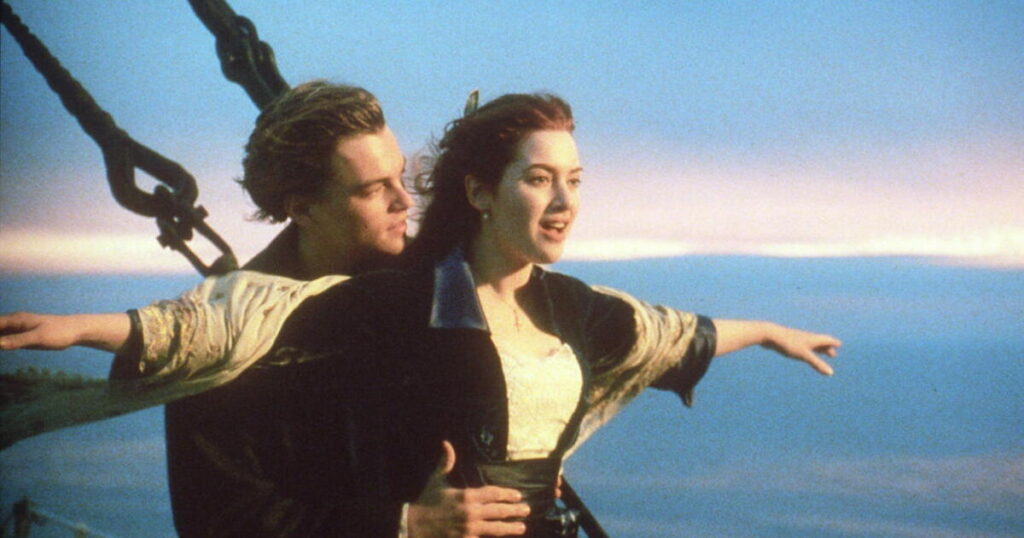
Imagine Rose and Jack embracing on the edge of the Titanic without James Horner, Kevin McCallister’s Christmas adventures without John Williams or Simba’s return to Pride Rock without Hans Zimmer. For me, John Barry’s score for 1985 Best Picture winner “Out of Africa” transports me to a place I’ve never been, to a life I’ve never lived.
These are just a handful of the extraordinary composers whose orchestral sweep of storytelling has shaped our collective memory. The catalogue is infinite.
But today, cinema sounds very different. The grand, soaring strings and unforgettable brass motifs have largely given way to atmospheric sound design, exemplified by the electronic textures of composers like Trent Reznor and Atticus Ross. Modern film scores appear less interested in melody than in establishing mood, often designed to unnerve an audience without drawing attention to itself. And with so little music to hum, we no longer leave the theater with the main title theme echoing through our subconscious on our walk back to the car.
Once upon a time, a film score didn’t merely accompany a story. Ennio Morricone, who composed the unforgettable soundtracks for “The Good, the Bad and the Ugly” and “The Mission,” believed music should become “another character” in a film. The most memorable scores did exactly that before becoming part of our shared cultural vocabulary.
Yet no composer creates a score like that alone. Those masterful works depend upon an entire ecosystem of musicians. And therein lies another casualty we rarely talk about.
Every time a score that might once have called upon a 90-piece orchestra gives way to a handful of artists huddled around a laptop, another opportunity disappears for musicians who’ve spent a lifetime mastering instruments to give voice to stories that words alone never could.
Some of the finest musicians and artists in the world found their purpose on soundstages and in film recording studios, helping audiences fall in love, mourn, dream and believe. With every passing generation, there are fewer opportunities for gifts like theirs to be heard.
That breaks my heart.
Perhaps this retreat from big orchestral themes is intentional. Contemporary filmmakers often seem wary of allowing music to tell us how to feel, as though a sweeping score might manipulate the audience. Yet an electronic score can be just as manipulative. In the Safdie brothers’ “Uncut Gems,” Daniel Lopatin’s relentless, discordant music became such an assault on the senses that I found myself repeatedly distracted by it, rather than drawn further into the film. Realism has become the ambition. But cinema was never meant to mirror the flat, often brutal cadence of everyday life. The entire art form exists to magnify it. To minimize the score is to reduce the scale of our stories and with it the emotional landscape of cinema.
Of course, orchestral scores are still being written. Ludwig Göransson’s escalating strings in “Oppenheimer,” Daniel Pemberton’s frenetic flourishes in “Spider-Man: Across the Spider-Verse,” Daniel Blumberg’s haunting brass in “The Brutalist” and Justin Hurwitz’s raucous jazz-infused compositions in “Babylon” prove that the art form is alive.
But how many of those themes have you heard in the years since their runs in cinemas ended? Will any theme from the past decade command the same instant recognition as Bernard Herrmann’s chilling score for “Psycho,” or Nino Rota’s iconic theme from “The Godfather”?
Cinema has never been a medium for restraint. Now, it’s as if we’ve become suspicious of the very feelings and passion the art form once celebrated. Wonder and romance, hope and loss. The pain of heartbreak and the exhilaration of triumph. So why has the big orchestral film score fallen out of fashion? Have we come to confuse subtlety with sophistication, forgetting that the power of great cinema lies in its willingness to draw from the deepest wells of humanity?
Consider Marvin Hamlisch, a composer so committed to the emotional resonance of a story that he returned $15,000 of his salary to the studio simply to re-record a single cue.
The final scene of the Barbra Streisand-Robert Redford love story “The Way We Were” wasn’t quite working, and Hamlisch knew the problem was his music. He believed the cue needed to begin the moment Katie touched Hubbell’s hair. The studio refused to bring the orchestra back, so Hamlisch paid for the session out of pocket. That single decision transformed the emotional rhythm of the moment and helped create one of cinema’s most enduring endings.
We often say they don’t make films like they used to. I wonder if what we’re really saying is that they no longer sound the way they used to.
We remember dialogue. Performances. Faces. Places. Yet it is often the music underneath that stitches it all together, lying dormant for years until a handful of notes transports us back to a particular summer, a first kiss, a goodbye or even the person we once were. The greatest film scores were never confined to the films and the moments they were written for.
Perhaps that’s why we still long for the big film score. At its very best, cinema doesn’t simply entertain us. It becomes part of our lives, making us feel so deeply that decades later, all it takes is a melody to bring those memories rushing back. I have a feeling the orchestra has been waiting for its cue all along. Perhaps it’s time we gave it one.
Alixandra Kupcik is a writer and performing artist based in Los Angeles.
The post Whatever happened to the big film score? appeared first on Los Angeles Times.