Five minutes into “Closure,” I had to check my notes, briefly — this was a documentary, right? The sweeping, achingly beautiful cinematography and moody pizzicato score made it feel more like an art-house thriller, and I wondered if I had misremembered the mode of filmmaking.
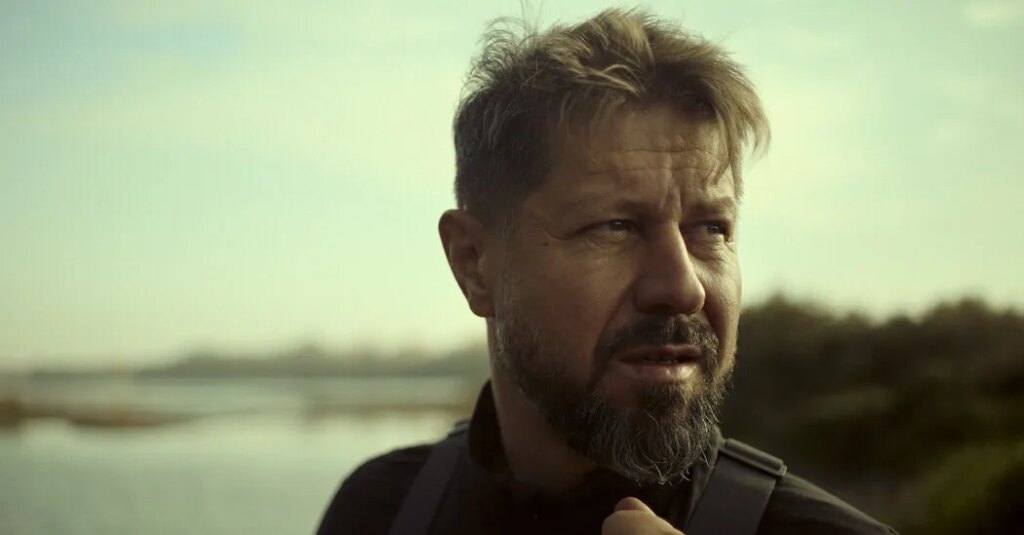
But no: “Closure” is nonfiction, an exceptional portrait of a grieving father’s obsessive quest and, almost by accident, a meditation on the meaning of existence. The man at the center is Daniel Dyminski, whose 16-year-old son Krzysztof (or “Chris,” as everyone calls him) went missing in 2023. Video showed him on a bridge in Warsaw, but in a brief moment while the camera was turned away, Chris disappeared. Did he jump? Did he run? Nobody knows.
The film picks up in 2024. For a year, Daniel has been meticulously searching the Vistula River for Chris’s body, afraid he’ll never find him. Yet he’s almost as afraid that he will find the body, or some fragment: As long as Chris is missing, there’s a chance he may still be alive.
Chris’s disappearance is a well-known case in Poland, but the director Michal Marczak approaches it not with the often salacious tools of true crime, but with deep empathy for the nightmare in which Daniel and his wife, Agnieszka, find themselves. They combed through Chris’s room, looking for clues, but otherwise preserved it as he left it, full of “Star Wars” figurines and other preoccupations of a teenage boy. His presence hovers over their holidays and family dinners. They jump when the telephone rings.
Most of all, they talk, unceasingly, about what could have happened to their son. Daniel says it’s impossible that Chris would have jumped, that there was no indication he might have contemplated ending his life. It’s inconceivable.
And yet, is it? Watching the parents talk, along with others who knew Chris, you start to realize the lengths to which we all go to stave off a possibility too painful to accept. Daniel initially doesn’t watch the TikTok videos that Chris reposted, but eventually he does, and some seem warningly obsessed with finding an end to one’s life. But is that really a clue or just Chris being a teenager?
At times, Marczak makes use of underwater shots to let us experience Daniel’s quest, filming beneath the river’s surface as Daniel searches with cameras and other techniques of his own. Those sequences are braided with frank conversations between Marczak and Daniel, which turn more philosophical as time goes on. “You have to answer the question: Do I keep on looking for my son? Do I quit?” Daniel muses. “Do I devote myself to my family that’s right here, here on Earth?” If he stops looking for his son, he wonders, is it like telling him that he’s abandoned him?
At one point, Daniel responds to a question from Marczak regarding what is on his mind. He’s thinking, he responds, about what matters in life and what he might have done differently. It is a gutting moment, but rings true: Losing a loved one often makes us reflect on our own existence, but in this case, Chris’s parents are consumed by the question of motive.
There’s a dreaminess to “Closure,” furthered by Marczak’s gliding camera, which sometimes comes very close to the subjects and sometimes flies high above, giving a top-down view of the serpentine river’s banks. For most of the film, the colors are a little desaturated as well, matching the mood.
As time wears on, closing in on the second anniversary of Chris’s disappearance, others more frequently hint to Daniel that it might be time to reconsider the intensity of his quest. One friend worries that he will “cross the line, beyond which there is nothing but this river.” When Marczak asks if that line hasn’t already been crossed, the man looks thoughtful. “That’s a tough question,” he says. “Maybe.”
This question, of where love draws the line in times of grief, animates “Closure.” It turns out Daniel is not the only parent in Poland — or anywhere — wondering what happened to their child and looking for them in places where hope has nearly vanished. The question is whether joy can return and how one moves forward. With compassion, Marczak lets us watch a man start to find his answers.
Closure Not rated. In Polish, with subtitles. Running time: 1 hour 48 minutes. In theaters.
The post ‘Closure’ Review: Looking for Hope in a River appeared first on New York Times.