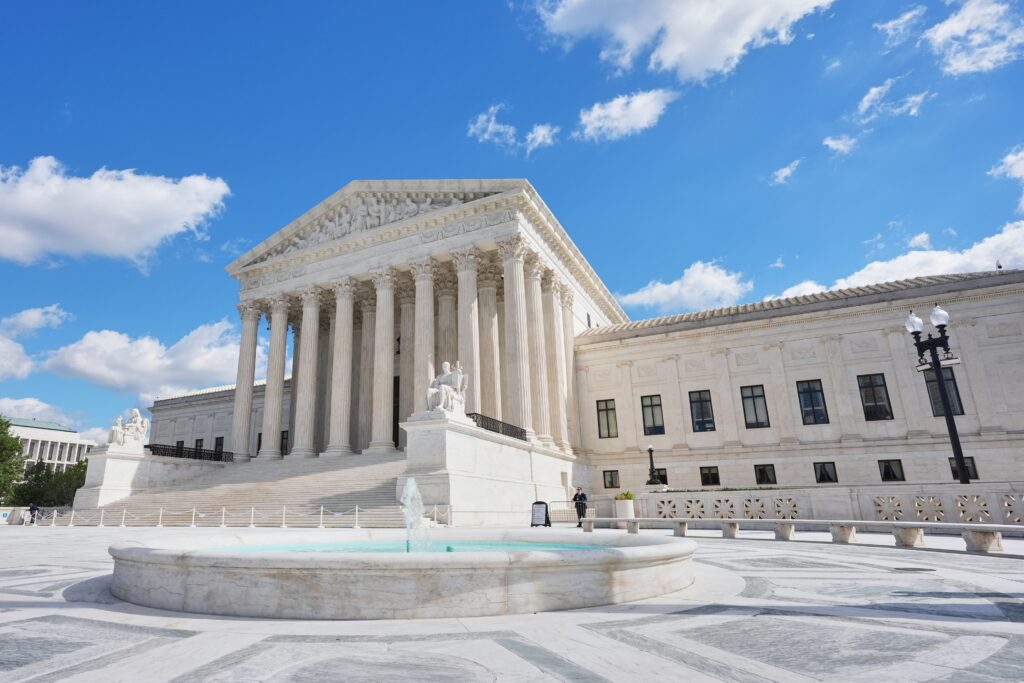
The Supreme Court on Tuesday cleared the way for the Trump administration to restrict a Biden-era policy that allows immigration judges to use their discretion to close thousands of deportation cases each year.
Immigration advocates say the practice allows judges to ease loads on strained immigration courts and spare some migrants — such as crime victims or neglected juveniles — from going through removal proceedings if they have a good case for remaining in the United States.
Critics call the procedure, known as “administrative closure,” a form of backdoor amnesty.
After the first Trump administration tried to bar judges from using administrative closure, the Biden administration codified the practice in 2024. It has been going on in some form for decades, with roughly 360,000 migrants granted administrative closure since 1990, according to government statistics.
The cases are closed, but not dismissed, so they could now be reopened.
When Trump returned to office last year, the administration announced it would no longer defend the Biden-era policy. Texas then challenged the rule in a federal court in that state.
The Department of Justice told the judge it supported a judgment favoring Texas. The judge entered a permanent injunction blocking the policy allowing administrative closure.
Three cities with large migrant populations — Baltimore; Columbus, Ohio; and New Haven, Connecticut — and an immigrant rights’ group sought to intervene in the case to defend the Biden rule and overturn the judgment. Courts denied those moves, giving way to their appeal to the Supreme Court.
The justices did not explain why they were rejecting the appeal by the cities and immigrant rights’ group. The opinion was unsigned.
The post Trump administration can block immigration judges from closing deportation cases appeared first on Washington Post.