content=”https://www.washingtonpost.com/wp-apps/imrs.php?src=https%3A%2F%2Fcloudfront-us-east-1.images.arcpublishing.com%2Fwapo%2FWXYQAS6PAAUVXCHETUFJJSCG64.JPG&w=1200″
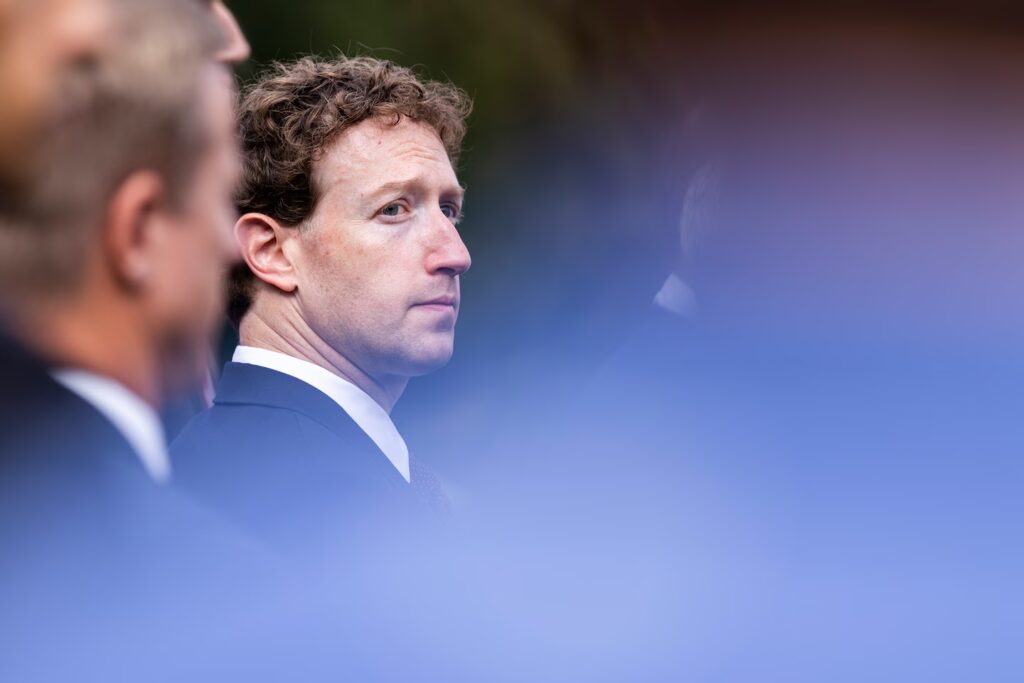
A recent securities filing spotlighted what triggered Mark Zuckerberg’s months-long power battle with board directors at Meta — a fight that sparked not-so-veiled threats from Zuckerberg and led board members to contemplate quitting.
Zuckerberg and Meta officials wanted to create a new type of stock to fund Meta’s titanic bet on artificial intelligence. Board members tasked with negotiating the deal wanted something from Zuckerberg in return.
In June, directors proposed dissolving, under some circumstances, Zuckerberg’s special stock that lets him effectively rule Meta by decree — including from beyond the grave.
As it stands now, Zuckerberg can pick someone to take over his superpowered Meta stock when he dies or if Zuckerberg is fired or becomes disabled. The directors proposed that Zuckerberg relinquish his absolute power over Meta without transferring it under those circumstances. He’d also have to do so if it reached a point where Zuckerberg owns less than half of the Meta stock he held at the time the new type of shares were issued.
Zuckerberg balked at those conditions. His lawyer relayed that Zuckerberg didn’t want to lose power in a “proposal intended to strengthen the company,” the document said.
After that, already thorny negotiations over Meta’s new stock deteriorated into war between Zuckerberg and board members.
Additional Coverage
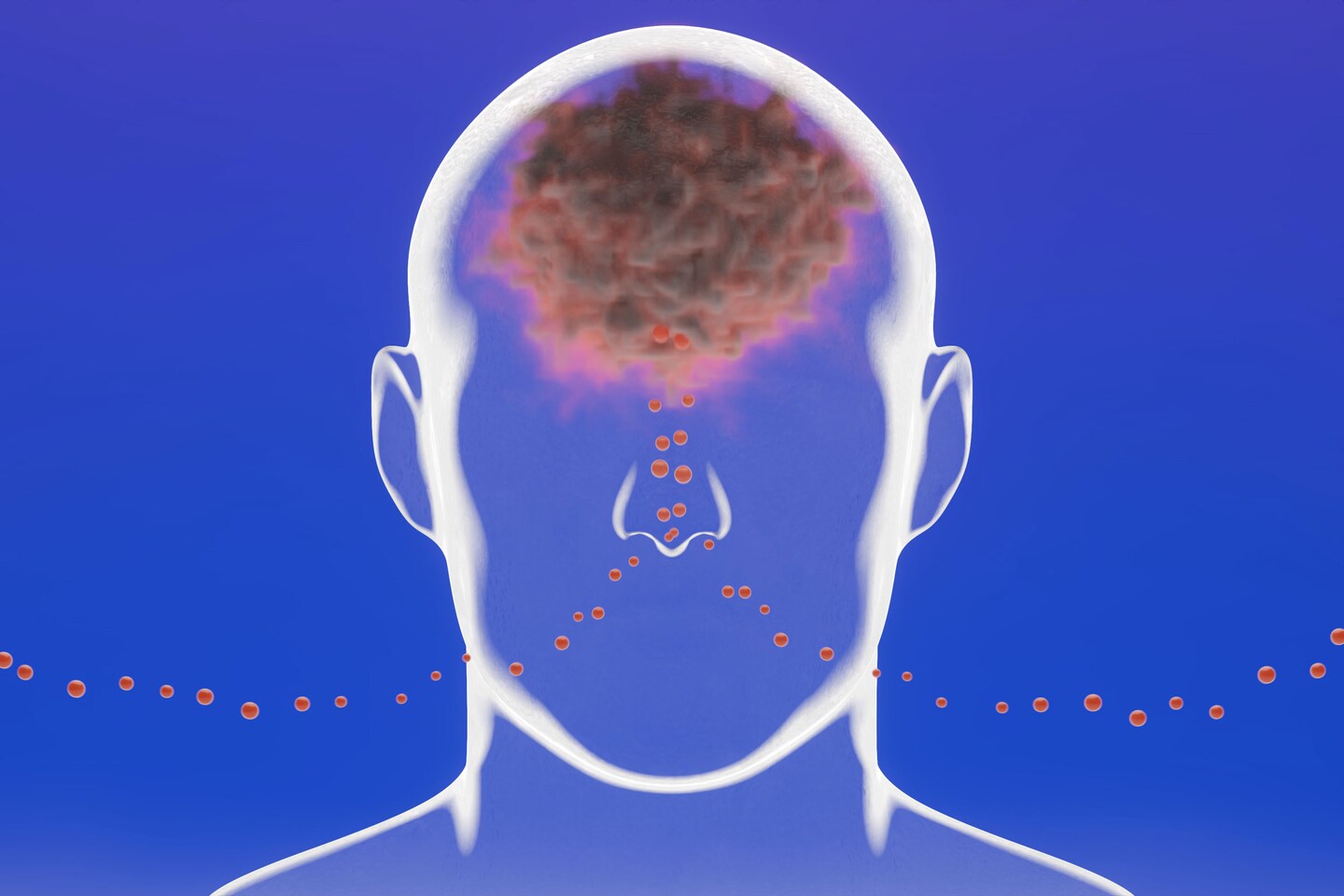
Scientists have known for decades that dirty air and dementia seem to be connected. But new research is exploring whether the materials it carries, such as silica, metals, soot and other debris, could be physically reshaping the brain.
I wrote about varying studies looking at the field. Though there are still many questions in the science that need to be answered, researchers say there are things worth doing to protect yourself.
Here are some life tips from Xiaobo Mao, a professor of neurology at Johns Hopkins University, who is leading some of the largest studies on the brain and pollution today:
- Be mindful of indoor air. Cooking, especially without adequate ventilation, can generate surprisingly high concentrations of particles.
- Try to avoid living directly on a major road. Traffic-related pollution tends to be higher along such areas.
- Change HVAC filters regularly.
We can’t control everything that enters the air around us, but we can try to control what we can, said Mao, who will begin a new job in January as the director of the Houston Methodist Center for Translational Precision Dementia Research.
Mao said that, knowing humans face a near-constant onslaught of particulate matter, he tries to put himself in the best position to withstand its effects. That means taking care of his brain in more ordinary ways, too: eating a balanced diet, exercising regularly and spending time outside in the sunlight.
Additional Coverage
Good morning. It’s Monday, Oct. 26, and both teams in this year’s World Series are full of short kings. Reporter Stephanie Apstein went looking for an explanation.
The presidential election in Brazil leads today’s edition of The 7 briefing. President Luiz Inácio Lula da Silva completed a stunning political comeback, defeating Sen. Flávio Bolsonaro to win reelection and keep Latin America’s largest democracy from joining the region’s rightward shift.
In the U.S., there is just over one week to go until Election Day. Yesterday, President Donald Trump hit the campaign trail in Michigan. He repeatedly called Democratic Senate nominee Abdul El-Sayed a “jihadist” and invoked 9/11. El-Sayed dismissed Trump’s remarks as a weak diversion.
Elsewhere in the briefing, we take a look at some wild winter weather ahead. We unpack at the latest science on the threat of microplastics. And legendary reporter Bob Woodward is sharing his secrets.
Read today’s edition of The 7 briefing here.
It was an off-the-cuff comment Joe Mitchell made to President Donald Trump during a Republican campaign rally Thursday.
“We don’t ride bicycles in Iowa. We ride Harley-Davidsons, isn’t that true,” said Mitchell, a former Trump administration housing official who’s vying to represent the state’s 2nd Congressional District.
Iowa’s roughly 900,000 cyclists, many of whom have participated in an annual cycling tour that’s made the state synonymous with biking, weren’t amused.
“I think the idea that Iowans don’t ride bicycles would just really surprise a lot of people here,” said Rose Willey-Farver, board president of the Iowa Bicycle Coalition. “Cycling is part of Iowa’s identity.”
In a statement to The Washington Post, Mitchell said, “Some people have lost their sense of humor.”
Every summer, the state plays host to the largest, longest-running citizen bike tour in the world. Called the Register’s Annual Great Bicycle Ride Across Iowa, or RAGBRAI, the ride attracts thousands of cyclists from throughout the nation and world. The cyclists cross the state, generating an economic impact estimated at $25 million.
The RAGBRAI was started by and continues to be organized by the Des Moines Register newspaper. In July, the west-to-east ride across the state passed through a significant stretch of the northeastern Iowa district Mitchell hopes to represent.
“I know you’ve been spending a lot of time at Mar-a-Lago recently Joe, but we’re pretty proud of our bikes here in Iowa,” Lindsay James, Mitchell’s Democratic opponent, wrote on X, referring to Trump’s Florida estate.
The race to represent Iowa’s 2nd District is rated a toss-up, according to the nonpartisan Cook Political Report.
Amid backlash to GOP gubernatorial candidate Vivek Ramaswamy’s explosive campaign ad featuring his opponent’s mother, handicappers say the race could be shifting toward Democrat Amy Acton.
The influential Cook Political Report, which had previously ranked the contest a toss-up, on Friday moved it to “Lean D.”
“It’s an inescapable law of politics: Money can only propel a campaign so far when its candidate’s flaws act as an anchor,” the nonpartisan ratings organization wrote.
In the ad, Acton’s mother, Donna Arthur, calls her “a liar.” Arthur and her daughter have not had contact since 1978, when Arthur’s second husband, Cledith Arthur, was indicted and charged with raping his 12-year-old stepdaughter. Acton and her brother were removed from the couple’s home.
Ramaswamy’s campaign plans to spend $4 million airing the ad, despite the bipartisan denunciations it has received, including from Ohio’s Republican governor, Mike DeWine.
Two strategists close to Acton’s campaign, granted anonymity to discuss its internal assessment, urged caution about the more optimistic assessment of where the contest now stands. They insist it remains a toss-up.
Not only has Acton, the former Ohio health director, been vastly outspent by Ramaswamy, but Ohio, once a swing state, has been deeply red for the past decade. Recent history, the Acton strategists noted, has shown GOP voters tending to migrate back to the party in the final days before an election.
Ohio has not elected a Democratic governor in 20 years.
Vice President JD Vance will head to Kansas next week for the second time in two months, seeking to boost the Republican candidate in what has become an unexpectedly competitive race for the U.S. Senate.
He will rally in Topeka on Monday afternoon for Sen. Roger Marshall (R), a first-term incumbent facing a tough challenge from Adam Hamilton, a Methodist minister looking to court independents and moderate Republicans with a pitch to “lead from the middle.”
Kansas hasn’t elected a Democrat to the Senate since 1932, but Vance’s return visit underscores just how close the race has become. He previously rallied with Marshall in the Kansas City suburbs, and President Donald Trump recently joined the senator outside Wichita.
The GOP’s Senate Leadership Fund super PAC pulled millions away from another competitive race in North Carolina and redirected it to ads to boost Marshall in Kansas.
A veteran Trump strategist also has been tapped to join Marshall’s campaign in another sign of growing anxiety over the contest.
Hamilton and Marshall held their second and final debate Wednesday, clashing over Trump’s tariffs and the rising costs of diesel, fuel and fertilizer that have hampered the state’s agricultural industries.
Homegrown hardcore band Turnstile returns to the DMV on Saturday for a final tour stop, and the venue might feel familiar to old-school D.C. punks.
The Washington Post watched the construction of a stage Friday near the Washington Monument bearing a familiar backdrop — a muted rainbow banner that also appears in the band’s music video for “Birds.” That song nabbed the Baltimore band — the world’s most-streamed modern hardcore band — one of two Grammys in February.

The band said Friday that it had already raised more than $100,000 for the aid organization Human Concern International more than 24 hours before the show.
Saturday’s performance and fundraiser hark back to shows that D.C.’s beloved post-hardcore band Fugazi played at the Mall’s Sylvan Theater in 1993 and 1995. The 1993 benefit concert, on the 30th anniversary of the March on Washington, drew about 5,000 people. It was one of the largest crowds in the band’s history.
Because of crowd expectations, Turnstile is setting up its own stage instead of using the Sylvan. It’s the latest buzzy moment for the 16-year-old group: It played its “Saturday Night Live” debut earlier this month, and last year, singer Brendan Yates made NPR Tiny Desk history as its first stage diver.
Fritz Hahn contributed to this report.
The post Zuckerberg can control Meta after death. He refused to give up that power. appeared first on Washington Post.