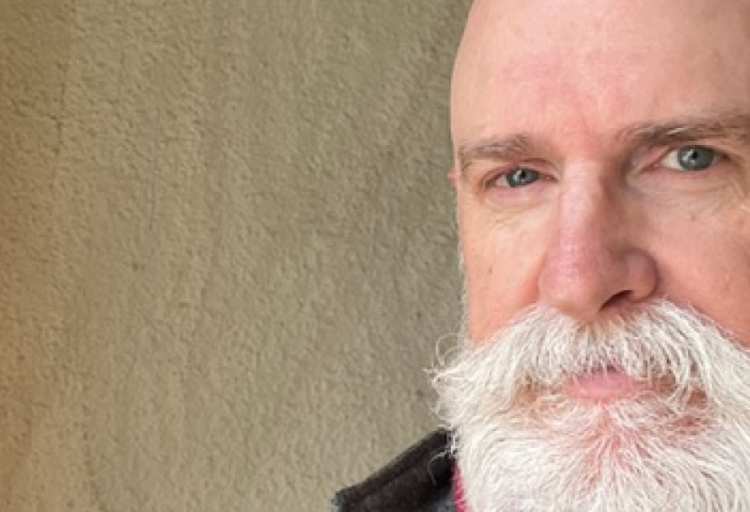
Rick Jackson, a billionaire entrepreneur with almost no name recognition and even less political experience, called a longtime friend and adviser in February to bring him in on his plans: He wanted to run for governor of Georgia.
Eric Tanenblatt, who had known Mr. Jackson for nearly two decades, was taken aback. The Republican primary race was well underway, and the field was stacked with experienced candidates, including a lieutenant governor with President Trump’s support. Mr. Jackson had just a few months to close an enormous gap.
Mr. Tanenblatt laughed. Mr. Jackson did not.
Mr. Jackson told him he had already set aside $50 million from his personal fortune, and he was willing to pour in much more. By the end of the conversation, Mr. Tanenblatt was convinced Mr. Jackson was approaching the campaign as he did just about everything else.
“He is all in,” Mr. Tanenblatt said. He closed that gap, becoming the Republican nominee.
A pattern of bold gambits, with hard work and confidence pushing up against long odds, has defined much of Mr. Jackson’s life. That willingness to take risks lifted him from a childhood of poverty and neglect to wealth and influence — a pulled-up-by-his-bootstraps story that has been central to his pitch to voters.
“God has blessed me beyond anything I imagined,” Mr. Jackson said during a televised debate in early October. “I know what it means to struggle. I know what it means to get a second chance.”
The campaign has brought intense new scrutiny to how Mr. Jackson has amassed and maintained his fortune.
He has been dogged by claims that his business had resorted to dubious financial maneuvers to avoid paying tens of millions in taxes, leading to a protracted fight with the Internal Revenue Service that his representatives have characterized as “bullying” by the government.
Allegations about his companies’ business practices and the treatment of workers have also resurfaced. In one lawsuit, an immigrant nurse claimed that one of his companies had threatened to report her to the immigration authorities if she quit before her contract was up. (The company settled without admitting wrongdoing.)
Throughout the race, Mr. Jackson has argued that his money insulates him from outside pressure. “I can’t be bought,” he has said repeatedly on the campaign trail. Yet his opponents contend that he was seeking public office to enrich himself and his businesses, which rely on state and federal money.
“He’s spending millions of dollars trying to hold onto the billions he’s making off the taxpayers of Georgia,” Keisha Lance Bottoms, the Democrat in the race and a former Atlanta mayor, said at a campaign stop.
And in an election dominated by voter frustrations with affordability, Mr. Jackson’s opponents have sought to emphasize the distance between his humble origins and his reality now. Ms. Bottoms has repeatedly pointed out the features of his 47,000-square-foot mansion in the Atlanta suburbs, such as its 20 bathrooms.
The campaign declined a request for an interview with Mr. Jackson, but it responded to detailed questions about Mr. Jackson’s business history.
In the primary, Mr. Jackson succeeded in forcing the onetime front-runner, Burt Jones, into an expensive and deeply divisive runoff. Early on, while trying to persuade Republican voters, he pledged to be Mr. Trump’s “favorite governor.”
But in the general election, Mr. Jackson has shifted his focus away from Mr. Trump. He has instead relied on ads, campaign stops and a tightly focused message about his personal story of success and struggle.
He talks frequently about the turbulence of his youth — the absent father, the mother who struggled with alcoholism, bouncing between schools and foster homes. He never graduated college; he said he could not afford it.
But in the decades since, he has stitched together a sprawling portfolio of companies and investments encompassing real estate, a Texas data center and faith-based film productions. At the heart of it is Jackson Healthcare, composed of some 20 different companies that mostly provide some kind of medical staffing and consulting services.
That core business, a private entity, now has about $3 billion in revenues, with roughly 2,500 employees, and it has earned Mr. Jackson a place on Forbes’s list of billionaires.
Mr. Jackson, 72, remains chairman and chief executive, but his son Shane Jackson has been the company’s president for more than a decade and handles the day-to-day operations.
Over the course of his career, the elder Mr. Jackson has made blunders, been shoved out of companies he built and periodically run afoul of regulators.
“I have failed more than any human being you’ll ever meet,” Mr. Jackson said in a 2015 interview with The Atlanta Journal-Constitution. “You’re only seeing the businesses that survived. I think the definition of success is getting up one more time than you fall down.”
He has consistently bounced back, with longtime friends and business associates describing him as shrewd and relentless. Early on, to make up for a lack of formal education, he recruited a business professor from Georgia State University to tutor him.
“Because of where he came from, he had a certain drive,” said Dan Melson, who helped start Mr. Jackson’s recruiting business in the late 1970s and has known him for most of his life. He said that Mr. Jackson’s ambition was not about making money: “He was always looking for ways to help other people.”
Mr. Jackson spotted opportunity in a relatively obscure corner of the health care industry. He made a business by providing a steady supply of doctors, nurses and other health care professionals willing to work in out-of-the-way and often undesirable locations.
He started with a physician recruiting business called Jackson and Coker that sent doctors to rural hospitals and clinics in the South.
Mr. Jackson built a thriving staffing business. But he brought in outside investors to help him expand the company, only to have them oust him in the late 1980s. After the business floundered, he bought the assets out of bankruptcy and rebuilt it. He was also among the first to recognize an urgent need for anesthesiologists at smaller, often rural, hospitals.
Mr. Jackson’s businesses had run-ins with regulators, including the ongoing battles with the I.R.S. over the millions in losses that were claimed in his foray into independent filmmaking.
Two years ago, a business under the Jackson Healthcare umbrella and a physician it placed at a separate company reached a $700,000 settlement with the Justice Department over accusations involving a kickback scheme in which the doctor approved orders for unnecessary medical equipment and lab tests for Medicare patients.
Prosecutors credited the Jackson Healthcare business for cooperating with the investigation.
Another one of Jackson Healthcare’s businesses recently agreed to pay $3 million to settle a lawsuit brought by nurses who had been recruited from other countries to work in American hospitals.
The nurses, according to the complaint, said they had been wooed with promises of “the American dream” but were instead told they would have to pay tens of thousands of dollars in “damages” if they left their jobs before the end of their contracts.
Jackson Healthcare has benefited from state contracts, something Mr. Jackson’s political opponents have tried to link to his generous political donations.
One of the company’s businesses was paid more than $40 million through a no-bid state contract to staff Georgia hospitals that were desperate for doctors and health care workers during the pandemic, according to an investigation by Georgia Health News.
Both Mr. Jackson and state officials strenuously denied any connection between the contracts and his donations.
Garrison Douglas, a spokesman for the Jackson campaign, said the company responded to a public health crisis by mobilizing health care workers before the contract was signed.
“No one else could have done this,” Mr. Douglas said in a statement, “but Rick Jackson stepped up when Georgia needed him most.”
Jackson Healthcare has been awarded another contract, worth up to $2.6 billion, to provide medical staffing for federal immigration detention facilities, records show. There is no indication about the status of the work. The campaign said no services have been provided and no money earned on the contract.
Critics and good governance advocates have warned of a potential minefield of conflicts Mr. Jackson’s financial interests could present if he became governor.
Mr. Jackson has vowed to wind down his business with state government if he wins, wanting to avoid “even the appearance that there’s ethics impropriety.”
He said his businesses would terminate existing contracts with the state if he were elected governor and his company would not sign any new ones while he is in office.
He has also proposed enacting more stringent anti-corruption rules, including adding disclosures for conflicts of interest and outside income and adding penalties for self-dealing.
But his campaign declined to say whether he would place his assets in a blind trust, a measure that some ethics experts suggested.
One area of potential conflicts could come from his prolific history of litigation, which could carry over into his governorship. He is involved in a raft of lawsuits stemming from a failed banking venture. He swooped in and put himself in the middle of the legal fight with the company’s creditors.
But friends and associates say he did not enter politics for financial reward. His run for governor came as part of a larger transition in his life, they say, as he devoted more attention to charity work and advocacy for foster children.
He was motivated, in part, by a desire to make a positive difference grounded in his Christian faith. He was also growing older and becoming more mindful of his legacy.
Mr. Tanenblatt said the subject kept coming up more and more in their conversations, as he contemplated what else there was to achieve beyond material wealth. His question, Mr. Tanenblatt recalled: “How can I move from success to significance?”
Kitty Bennett contributed research.
The post He Took Big Risks to Make Billions. He Wants Georgia Voters to Bet on Him. appeared first on New York Times.