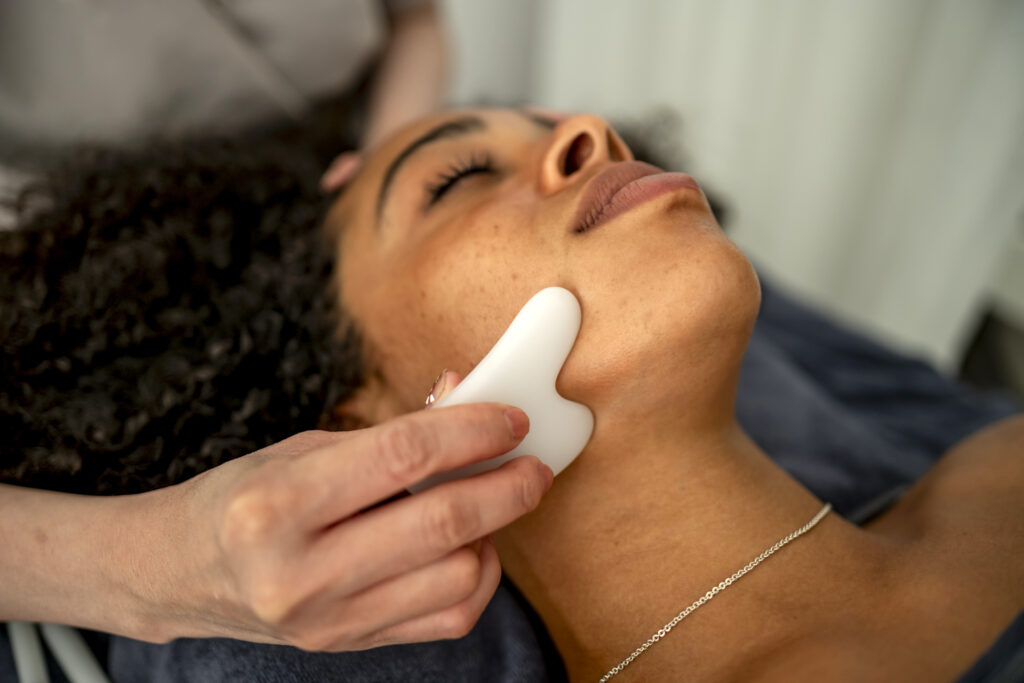
If you’ve spent any time on social media lately, you may have seen people practicing extensive gua sha routines — gently scraping their faces with a flat and smooth crystal-like tool — or standing on vibration plates, claiming they’re necessary for “depuffing” your face and “detoxing” excess inflammation from your body.
The message seems to be that your lymphatic system — the network of organs, vessels and tissues that balances bodily fluids and filters out germs and cellular waste — is clogged, sluggish and desperately in need of help.
But humans have survived and thrived for millennia without expensive technology promising to clear our lymphatic systems. So does a healthy body actually need external intervention like this, or are you just paying top dollar for a trend that ultimately does nothing to improve health?
What the lymphatic system does
The lymphatic system is a network of organs, vessels and tissues that work together to move lymph, a clear, watery fluid, from your tissues back into your bloodstream.
“The lymphatic system is essentially the body’s drainage and immune surveillance network,” said Sa Rang Kim, a cosmetic dermatologist at Yale Medicine and an assistant professor of dermatology at the Yale School of Medicine. “It collects excess fluid from our tissues and returns it to the bloodstream, helping prevent swelling. It also plays an important role in immune function by transporting immune cells and other substances to lymph nodes.”
Lymph nodes are small organs that trap and destroy germs and abnormal cells, effectively stopping them from circulating throughout your body. They’re clustered in the neck, armpits, groin, chest and abdomen, and you might notice they become swollen every now and then when you’re fighting off an infection.
Unlike the circulatory system, the lymphatic system doesn’t have a central pump like the heart, Kim explained. Instead, it relies on its own rhythmic contractions, along with muscle movement and breathing, to keep fluid moving.
Lymphatic drainage tools are mostly unnecessary
Proponents (and manufacturers) of lymphatic drainage tools — such as dry brushes, gua shas and face rollers, vibration plates and massage guns — say these products help boost lymph flow and drainage, clear toxins from the body and even melt fat and boost weight loss.
The reality is that in an otherwise healthy person, the idea of a “sluggish” lymphatic system is more of a marketing term than a medical diagnosis, said Nneoma Oparaji, a Houston-based physician who is board-certified in internal medicine, obesity medicine and lifestyle medicine.
“I often tell patients that a healthy lymphatic system isn’t a clogged drain that needs to be periodically flushed,” she said. “Our lymphatic system is constantly moving fluid and supporting immune function while the liver and kidneys handle most of the body’s processing and elimination of waste.”
Put simply: There’s no evidence that these products provide lasting improvements in lymphatic function in healthy people, Kim said.
One thing these tools might actually do, according to Shannon Markus, an emergency physician at Dell Seton Medical Center at the University of Texas at Austin, is temporarily change your skin’s appearance.
The pressure from a gua sha, for instance, shifts fluid from one area to another, and the tools’ friction against the skin dilates blood vessels, which can increase blood flow, Markus said. Both of these things may result in less swelling and a more contoured appearance. While these effects can last anywhere from a few minutes to a few hours, they don’t represent true fat loss, permanent contouring or “detoxification,” Markus said.
When lymphatic drainage help could be warranted
Certain medically indicated lymphatic therapies, like manual lymphatic drainage, can be useful for people who have been diagnosed with certain health conditions that cause problems with blood flow and fluid retention, said Markus. For example, chronic venous insufficiency, when your leg veins don’t allow blood to flow back up to your heart, or lymphedema, swelling that occurs when fluid accumulates in body tissue.
“Lymphedema typically causes persistent or progressive swelling, often in an arm or leg, sometimes with heaviness or skin changes,” Kim said. It can lead to chronic pain and swelling that affects everyday life. Lymphedema is often the result of cancer treatments involving lymph node removal — such as the armpit lymph nodes during breast cancer treatment — or radiation, Kim explained. It can also be caused by certain infections, physical trauma and injury.
“Medical manual lymphatic drainage is a specialized technique performed by trained therapists to redirect fluid toward functioning lymphatic pathways,” Kim said. “It’s typically combined with compression therapy, exercise and skin care, unlike brief at-home routines with gua sha or dry brushes.”
Manual lymphatic drainage can help people manage conditions like lymphedema, but it can’t fix the issue entirely. “Even in the right patients, the benefit is modest,” Markus said. A 2024 research article on manual lymphatic drainage in the British Journal of Community Nursing noted that the literature on its efficacy is often contradictory and it may not always be necessary.
Other techniques used to treat lymphedema include exercise, compression devices, elevating the affected limb, physical therapy or surgery.
What you can do instead
Minor fluid retention or puffiness that’s not due to a medical diagnosis and that improves soon after you’re up and moving for the day is typically no big deal. (Factors such as your sleep position, dehydration, excess sodium or alcohol or even allergies can all contribute.)
Rather than relying on expensive products, the most important daily habit for natural lymph circulation is physical activity, Oparaji said.
“During exercise, the lymphatic vessels contract, then the muscle contractions help move lymph through one-way vessels in the body,” she said. “I often tell my patients that any exercise regimen — walking, swimming, cycling — improves lymph circulation.”
Staying adequately hydrated is also important to help maintain overall fluid balance, Kim said, though there’s no evidence that drinking extra water will significantly boost lymphatic function in an otherwise healthy person.
While lymphatic drainage tools aren’t rigorously tested and their benefits are likely overstated, a gentle self-massage ritual each morning or night can still be enjoyable and low-risk, according to Markus.
“Taking a few quiet minutes for yourself can support relaxation and mental well-being, even if it does nothing for your lymphatic system,” she said.
The post What lymphatic drainage tools can and can’t do for your health appeared first on Washington Post.