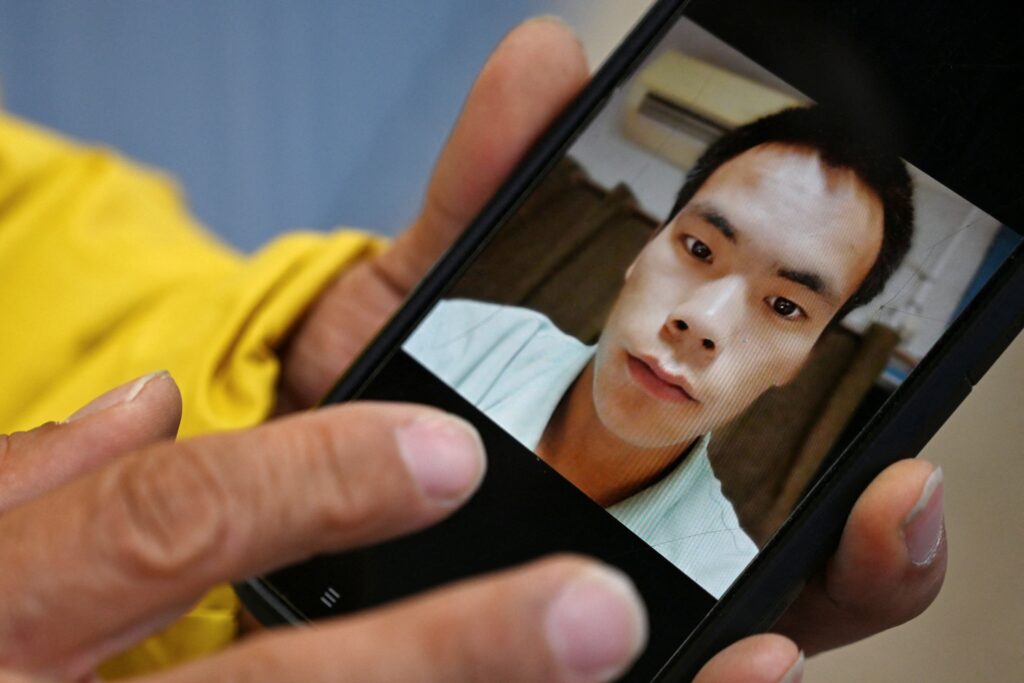
Chaofeng Ge had already attempted suicide before arriving at an immigration detention center in Pennsylvania on July 31, 2025.
But the 32-year-old Chinese immigrant’s medical paperwork from a previous incarceration was misplaced at intake, an internal review by U.S. Immigration and Customs Enforcement later found. As a result, he was screened by a nurse who was unaware of his history of attempted suicide and prior use of prescribed antidepressant medication.
Even after the paperwork was discovered hours later and entered into the system, medical staff at the Moshannon Valley Processing Center did not refer Ge to a mental health provider, according to the review.
Five days later, he was found hanging in a shower stall and later pronounced dead, leaving a note that thanked America for “a short, good life.”
The suicide was one of at least 55 deaths of people in ICE custody since President Donald Trump returned to office, including a single-year record in fiscal year 2026. Deaths have climbed as Trump has ramped up detentions and deportations, locking up many immigrants who previously would not have been a priority for arrest.
Immigrant advocates have accused detention centers of subpar medical care, lack of supervision and poor conditions. In another death in Texas last week, a 56-year-old Mexican immigrant was found unresponsive in his cell. A preliminary assessment by the local medical examiner’s office said he died of preexisting medical conditions.
The man, Emiliano Andrade-Covarrubias, was a longtime Dallas resident and legal permanent resident of the United States. His family said he should never have been detained, but the Department of Homeland Security said he fraudulently obtained his green card.
The death remains under investigation. On a fundraising website, Andrade Covarrubias’s daughter said her father did not receive the medical attention “he desperately needed” — an allegation that federal immigration authorities deny.
Of the 55 deaths since Trump took office, at least 10 were suspected suicides. Medical experts say suicides — like other deaths where detainees are found unresponsive — can raise questions about lack of oversight.
ICE has conducted several internal reviews of Ge’s death, which were obtained by attorneys for Ge’s brother and shared with The Washington Post.
The reviews showed multiple policy violations and missteps by staff at the detention center, which is operated by the Geo Group, a private prison company. Those included that guards did not make scheduled checks on the detainees as Ge was preparing to take his own life, and that they were delayed in responding to his situation once he was discovered.
DHS and ICE did not respond to a request for comment. Geo Group referred questions to ICE.
Yanfeng Ge, Chaofeng’s brother, in a statement called him a “kind and decent man.”
“Whatever his flaws, he deserved to be treated with dignity and care,” he said. “Instead, he was cast aside, isolated, and ignored.”
Yanfeng Ge’s attorneys, David Rankin and Jeremy Ravinsky, called for the Moshannon Valley Processing Center to be closed and for responsible parties to be investigated.
Ge crossed the U.S.-Mexico border without authorization in 2023 and was arrested by U.S. Border Patrol in California and released with a notice to appear in immigration court. He later moved to New York City, where he worked as a delivery driver.
He was arrested near Harrisburg, Pennsylvania, in January 2025 over an attempt to purchase $154.62 in gift cards from a CVS store using other people’s credit card numbers. He was convicted, sentenced to time served in the Dauphin County Prison and then taken into ICE custody for deportation proceedings on July 31, 2025.
At the Moshannon Valley Processing Center, he told detention staff that he felt isolated and twice requested to be moved into a dormitory with other Mandarin speakers, according to a psychological autopsy conducted by the ICE Health Service Corps.
He felt pessimistic about his immigration case and feared he would be deported back to China, it said.
During a call with a friend, he told the friend to retrieve his property from a police station and sell it, the psychological autopsy said. He said there was no longer a need to hire a lawyer.
In his second request to be moved to a dorm with other Chinese detainees on Aug. 4, Ge “expressed more detail of his distress than in his original request, noting how he sat alone with nobody to talk to, and that it was affecting his mental health,” the assessment said.
Hours later, beginning at 1:27 a.m. on Aug. 5, Ge spent two hours moving chairs, shreds of bedsheets and towels to the shower area for his dorm room, a timeline of the incident found.
While a handwritten logbook said guards performed rounds every 30 minutes during that time, an ICE review found that several rounds were skipped. When they did perform rounds, guards did not enter the shower area.
Ge had “an unreasonably extended amount of time to engineer his death,” the psychological autopsy said. “He was afforded multiple hours to stage and implement his hanging in an area that should have been observed approximately every 30 minutes.”
He went to the shower area with a white object draped around his neck at 3:24 a.m. and used a urinal a minute later, the timeline said. His body was not discovered until morning count at 5:19 a.m.
His arms and legs were hog-tied, which initially led guards to believe it had been a homicide, the ICE reports said. Once they decided to cut him down, the response was delayed by several minutes because the cutdown tool was in a jammed lockbox, the reports said.
An autopsy by the Mount Nittany Medical Center ruled the death was suicide by hanging, saying it was not unprecedented for a victim to be found with hands and feet bound behind their back.
The review by ICE’s Office of Professional Responsibility found that detention center staff violated standards when Ge’s medical records were misplaced and he was screened without knowledge of his history.
A corrective plan by the ICE Health Service Corps called it “inappropriate mental health care.”
The plan said guards did not perform timely and thorough rounds and did not check the shower area.
ICE initially stated in a public report that Ge arrived at the detention center without medical records. But in late September, that report was replaced on ICE’s website with a review that acknowledged the records had arrived, according to webpages archived on the Wayback Machine.
The psychological autopsy by the ICE Health Service Corps found that Ge’s sense of loneliness and negative view of his immigration case appeared to drive him to take his own life. The assessment said a note was found in Ge’s belongings that was then translated into English.
“I can’t go on living like this,” he wrote. “Every day I wonder when it will end. Every day feels meaningless. Thank you, America, for letting me enjoy a short, good life. That’s enough.”
If you or someone you know needs help, visit 988lifeline.org or call or text the Suicide & Crisis Lifeline at 988.
Eric Lau and Arelis R. Hernández contributed to this report.
The post ICE failed to monitor detainee at risk of suicide who later killed himself appeared first on Washington Post.