
Very often, a viral news story about animals is a comedy to its audience and an unmitigated tragedy to its subjects. That was the case this past weekend, as footage of bands of juvenile cows dashing through the streets of Kansas City stampeded across the internet.
The details are as follows: Last weekend, in the middle of the night, a semitruck carrying close to 120 young cattle plunged off a highway interchange in Kansas City’s downtown, spilling out dozens of animals. The truck driver and one other person sustained minor injuries. Dozens of the cows were killed, many others were seriously injured, and still others went running into the city. Some of them traveled for several miles, the city’s fire chief told the Associated Press. The animals were chased around the streets by first responders and self-described “cowboys” (one of them appearing to carry an electric cord as a lasso); authorities said all were rounded up by the end of the day.
To many people, freak accidents like these understandably look a little funny, even fantastical. “We take free roam BBQ very seriously,” one Reddit comment, with more than 400 upvotes as of this writing, said. “Much as I lament the tragic loss of bovine life, these videos have brought such joy to our fair city,” another commenter wrote.
The clips undoubtedly have a certain charm. If only the animals were as carefree as they appeared in those brief moments — and if only they could truly escape the fate that humans had in store for them. But as my colleague Kenny Torrella has written, the strange animal stories that periodically capture the public’s imagination almost invariably circulate stripped of the darker reality from which they emerge — humanity’s dominion over nonhuman animals. In this case, the cattle crash illuminates one of the most overlooked cruelties of modern animal agriculture: the nightmare of livestock transportation.
When you imagine the lives of animals raised for food, you might think of a factory farm (in a large majority of cases, very cruel) or a slaughterhouse (likewise, and not just for animals raised primarily for meat — dairy cows and egg-laying hens are slaughtered, too). But the animals need to be transported from the farm to the slaughterhouse, and also between numerous different facilities — breeding farms, hatcheries, feedlots, auctions — over the course of their lives as they progress through different stages of the livestock supply chain. Most cattle raised for beef and dairy are transported multiple times in their lifetimes; between four and six journeys is common. A recent US Department of Agriculture report found that half of cattle shipped to feedlots traveled for more than 250 miles, and 22 percent traveled more than 500 miles.
Kansas City, along with Chicago, St. Louis, and Omaha, Nebraska, was once a major national hub of livestock transportation, with cattle arriving by the trainload at its busy stockyards (earning the city its nickname, “cowtown”). But the rail-based livestock trade that made it famous has largely vanished, replaced by a sprawling system of truck transit that carry animals between farms, feedlots, and slaughterhouses across the country. These form the connective tissue that makes it possible for the American livestock industry to raise and slaughter nearly 10 billion land animals every year.
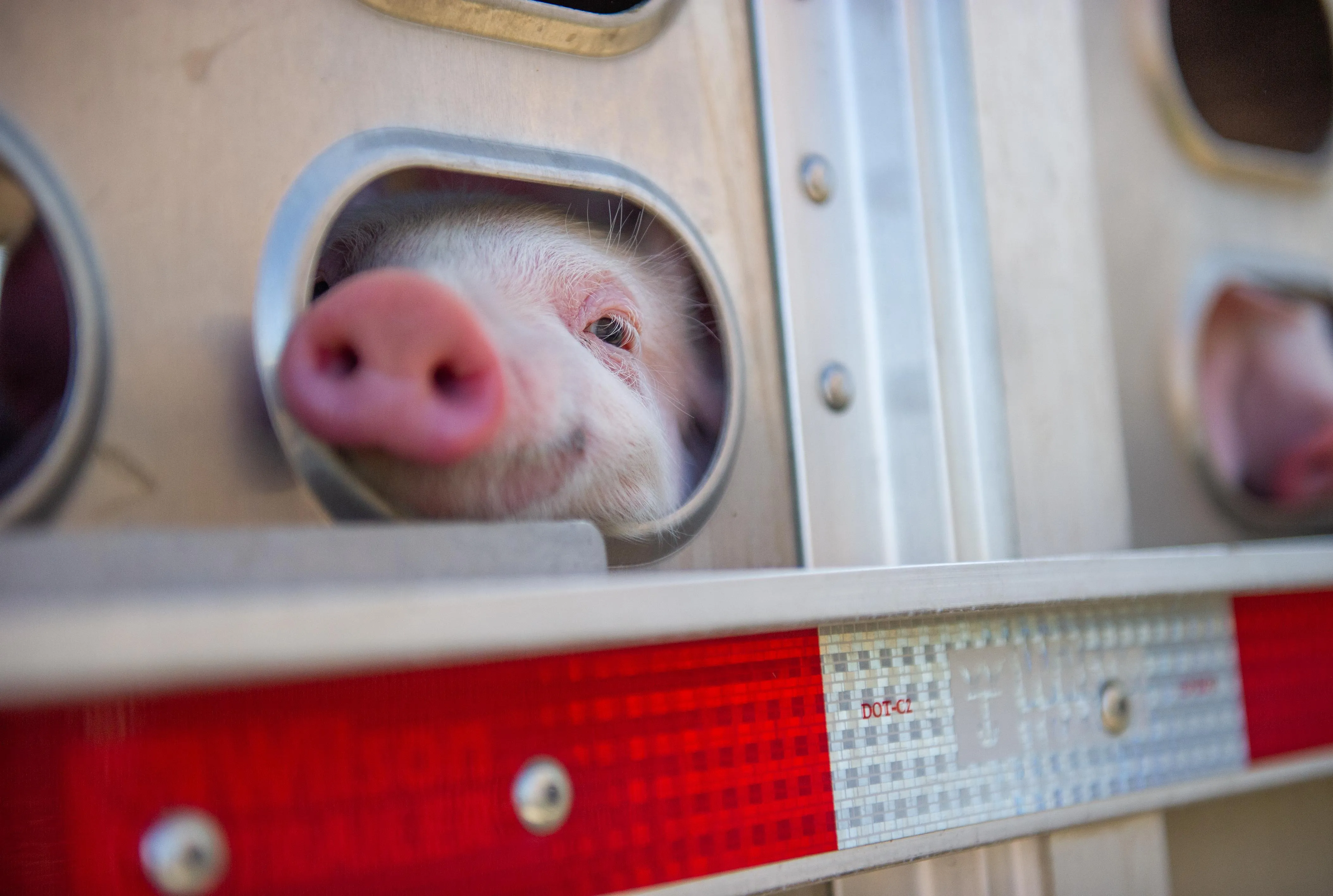
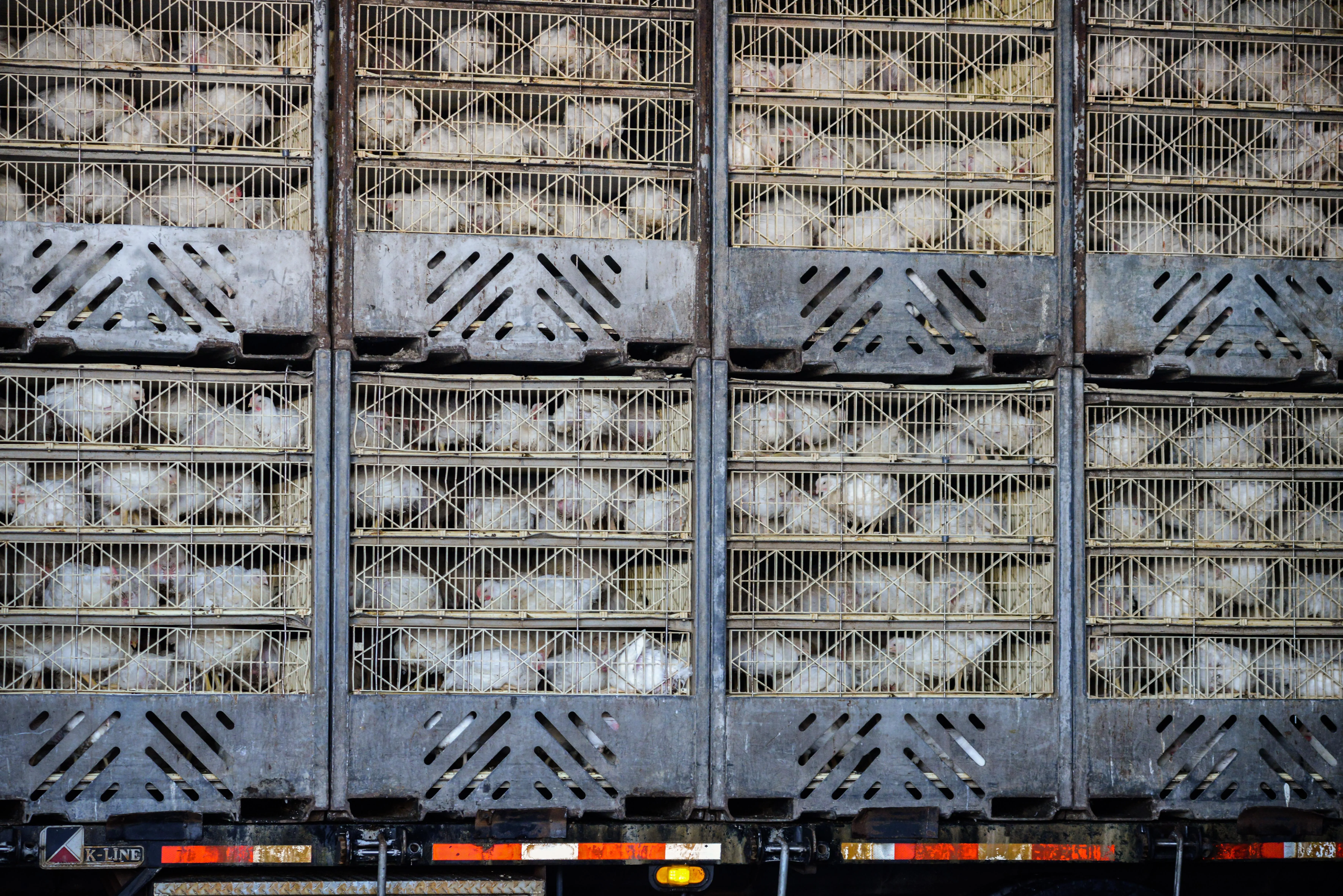
You’ve probably seen livestock trucks on the interstate, with their long, aluminum bodies and oval ventilation holes. They appear unremarkable enough from the outside. But the most important thing to understand about farm animal transportation is that these creatures are not handled like passengers, the way you or I would be treated on a long-distance trip. Rather, they are freight, loaded into metal trailers, often packed tightly together for long, very uncomfortable, sometimes dangerous stretches of highway travel. Picture yourself hurtling down the interstate in a box at 70 miles an hour, struggling to balance for many hours, without a seat, a seat belt, heating or cooling, or any of the other protections designed to keep human passengers safe and comfortable. As the hours pass, urine and manure accumulate beneath the animals’ feet, which can cause them to slip.
The trips “can span many hours and thousands of miles, potentially exposing livestock to overcrowding, extreme temperatures, limited ventilation, and lack of access to water or food, among other things,” according to a damning report on farm animal transportation released over the summer by the US Government Accountability Office (GAO). “If not managed properly, these conditions can lead to injury, illness, or death.”
Even the process by which animals are herded onto the trucks is often highly stressful, with frightened animals pushed, prodded, pulled, and otherwise handled roughly. I have reviewed, over the years, more videos than I can count of stressed farmworkers treating cows and pigs in ways that appear appalling to people not steeped in animal agriculture, simply because they’re desperate to meet the demands of their jobs and get the animals to move.
According to a 2022 investigation by The Guardian, more than 20 million animals every year “are dead on arrival, or soon after,” when they reach a slaughterhouse. Most of those are chickens, the species that makes up the overwhelming majority of land animals raised for food; about 166,000 of them, per The Guardian, were cattle.
Catastrophic crashes like what happened in Kansas City are far rarer than the more routine, mundane cruelties of livestock transportation, but they do happen regularly. On a cursory search, I was able to find 20 others that have occurred in the US so far this year. Aaron Caster, who owns the towing company that handled the recovery operation in the crash, told me that almost all of the animals were female, and estimated they were around 6 months old, not yet fully grown. They’d been shipped from Virginia, he said, and had been on their way to Nebraska.
Caster’s account of the scene of the crash is harrowing. “The cab was ripped off the truck, the trailer was on its side with the entire trailer blown apart,” he told me. “Just cows everywhere. Some alive, some were dead.” Some had “really busted legs, ripped up pretty good,” and were euthanized. Caster, who is also a rancher, said he took more than 50 surviving cows to his property in Bates City, Missouri, to recover. Two of those have since died, he told me earlier this week, including one who had been “cut up pretty bad” in the crash and was euthanized after developing an infection.
In the US, there’s one major law designed to protect the well-being of livestock animals in transit: The Twenty-Eight-Hour Law of 1873, which says that livestock in transit traveling across state lines can’t be confined for more than 28 hours without being unloaded for rest, food, and water.
That rule excludes poultry birds entirely, meaning that the vast majority of animals raised for food aren’t covered — a major oversight. But even for those species that nominally benefit from it, the law is very rarely enforced. Farmed animal advocacy groups have documented and complained about that for years, and the GAO this summer similarly reported that enforcement is extremely limited. The report paints a picture of the federal system for protecting farm animals in transit as woefully inadequate and largely toothless, dating back to the era when livestock traveled primarily by rail.
The report identified six factors that contribute to cruel conditions for animals on the road, including not just the length of the trip but also temperature extremes, unsafe and unsanitary vehicles, rough handling, and being transported when they’re too sick, injured, or vulnerable (like animals who are extremely young or heavily pregnant). Federal law fails to cover most of those dangers while offering almost no meaningful enforcement of the 28-hour duration rule that is in place.
Between 2013 and 2025, the USDA investigated just 23 suspected violations of the law, resulting in no fines and only four warning letters — and in 2022, the GAO report notes, the USDA stopped issuing even those. The GAO contrasts the US system with more modernized protections in Canada, Mexico, Australia, and the European Union, which include requirements around animals’ fitness for travel, adequate space, humane handling, and vehicle safety.
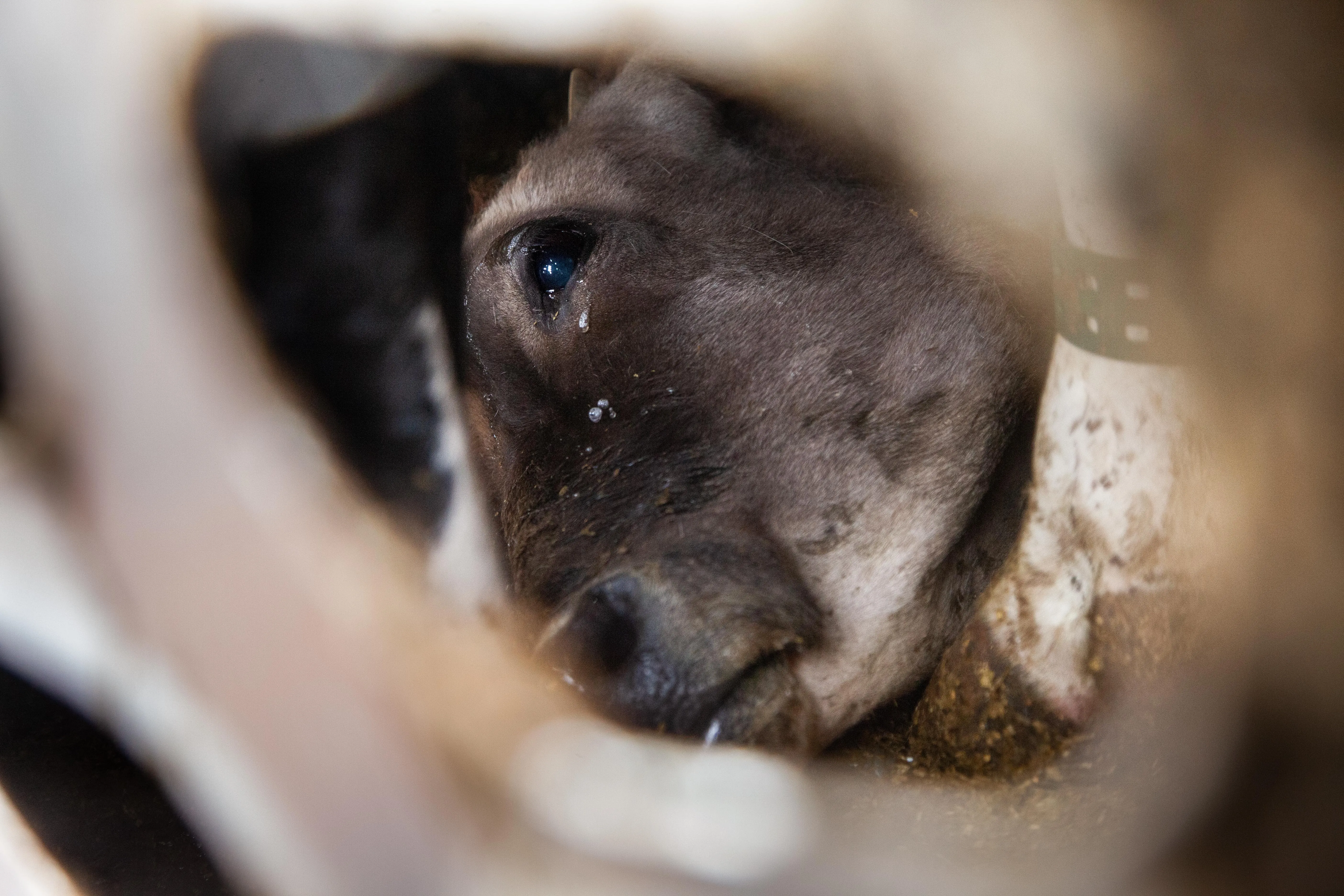
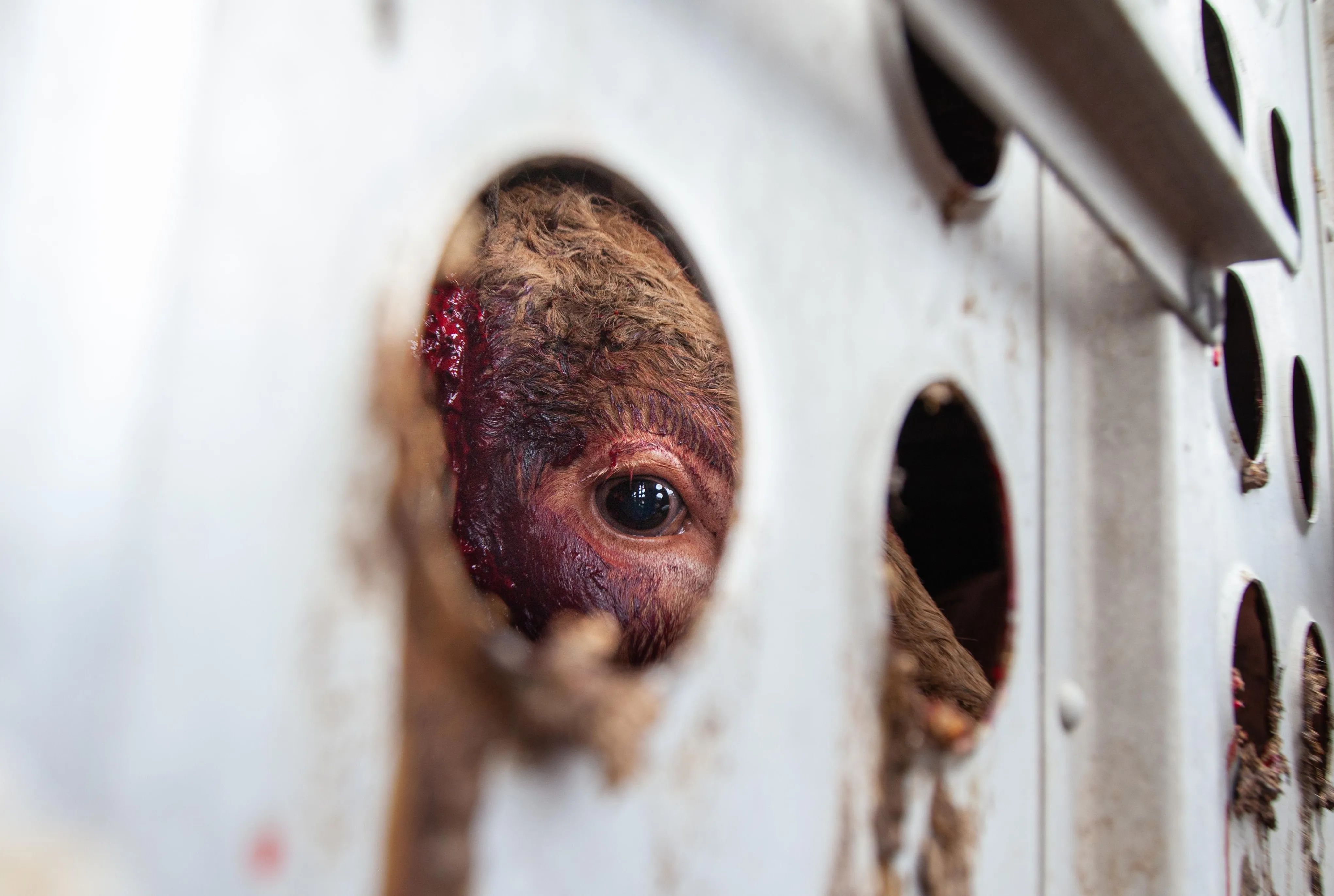
Some of the most heartbreaking livestock transportation conditions that I’ve personally covered have been in the dairy industry, where it’s common to ship fragile newborn calves, just separated from their mothers, across long distances. It’s also routine to ship dairy cows on long journeys to slaughter once they’re no longer profitable. On these trips, they’re often exhausted, pregnant, and in poor physical condition: A 2022 industry audit found that roughly one in three had impaired mobility when they arrived at the slaughterhouse.
A modern and comprehensive system overseeing farm animal transportation might prevent some cases like these, which are among the most wretched miseries found in our food system. It wouldn’t stop every horror that unfolds inside a livestock truck, nor could it eliminate the most visible disasters, like the crash in Kansas City; for that, we’d need to more fundamentally alter our relationship with animals and our prodigious appetite for meat.
The post A truck full of cows crashed in Kansas City. It reveals a bigger everyday horror. appeared first on Vox.