Within sight of a southeast Texas middle school stands a chemical plant that President Trump excused from new federal rules intended to curb its cancer-causing pollution.
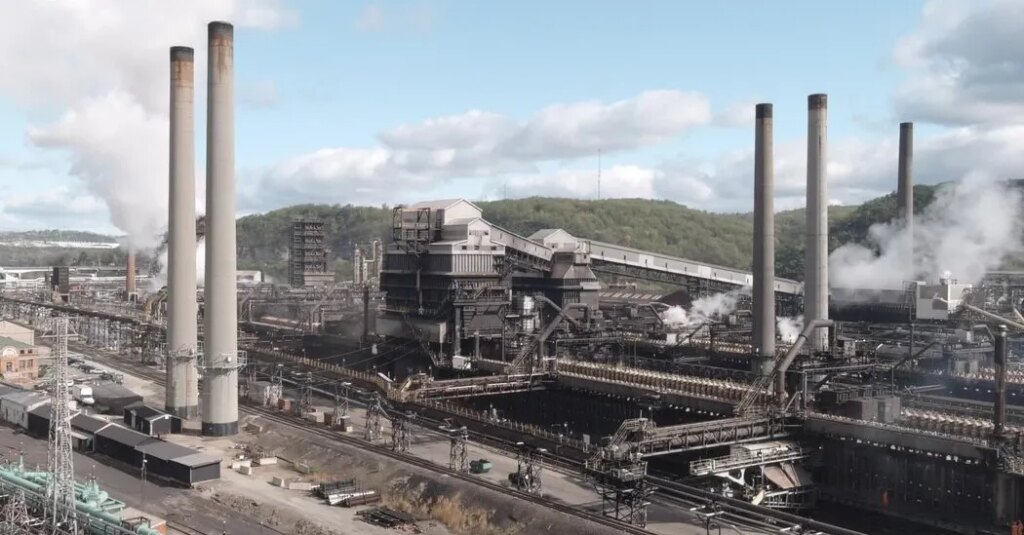
About a 30-minute drive from Pittsburgh, a steel-making facility has spewed carcinogenic chemicals near homes for years. Mr. Trump gave it a similar waiver from recent clean-air rules.
And on the outskirts of Richmond, Va., the owners of an industrial warehouse emailed the Trump administration asking for their own waiver. Their wish was granted. Nine months later, the facility accidentally released a large plume of carcinogenic gas into the community.
In total, since taking office again, Mr. Trump exempted 202 facilities in 39 states and Puerto Rico from clean-air regulations that were going into effect. Some were among the country’s worst industrial polluters, including chemical manufacturers, copper smelters and coal-burning power plants. About 3.3 million people live within three miles of at least one affected facility.
The exemptions represent the biggest presidential intervention in enforcement of the Clean Air Act in the half-century since President Richard M. Nixon signed the bedrock environmental law. And that is only one of the ways the Trump administration is dismantling a variety of federal environmental protections.
Before Mr. Trump’s return, the chemical industry was losing its fight to block or at least delay tougher E.P.A. requirements to reduce toxic emissions. It had pleaded with agency officials, filed lawsuits and appealed to Congress. But officials and the courts had largely rejected the industry’s claims of undue expense and regulatory overreach.
Now, Mr. Trump is prioritizing the economic interests of corporations and easing costs for polluting industries, and their immense clout is striking.
The president’s exemptions were good for two years, with the possibility of an extension. The reprieve for the companies gave Mr. Trump time to stock the Environmental Protection Agency with appointees who had lobbied for the industries they now regulate. Those officials then quickly went to work from the inside to gut the rules altogether.
Mr. Trump has taken an expansive view of executive power in his second term. On the environmental front, he has unilaterally shredded regulations, withheld science funding appropriated by Congress and ordered coal plants that planned to shutter to continue running.
Even so, his evisceration of the new Clean Air Act rules stands out.
Many of the details of how the Trump administration aided the chemical industry are being reported here for the first time. In one upside-down moment, industry executives provided the agenda for a meeting with E.P.A. staff and then effectively presided over it.
Mr. Trump also nominated Aaron Szabo, a former lobbyist for the Advanced Medical Technology Association, or AdvaMed, a powerful trade group, to lead the E.P.A.’s air regulation office. Once there, Mr. Szabo helped handle the waiver requests and then pushed employees to pull back on enforcement, documents show.
To understand how Mr. Trump gave a free pass to some of the worst polluters, The New York Times reviewed more than 10,000 pages of government documents and spoke to more than 70 people familiar with the efforts, including former E.P.A. officials and industry executives.
“These companies, with their campaign contributions and the revolving door of former lobbyists and executives that now work in the regulatory agencies — that is where the petrochemical industry gets its power,” said Brent Coon, a Beaumont, Texas, lawyer who has spent decades squaring off in court against petrochemical firms over environmental and health risks.
The Clean Air Act requires the E.P.A. — created in 1970 to protect public health and the environment — to periodically review the latest pollution controls and impose them broadly if they are affordable and effective. The most recent review began under the Biden administration, which in 2024 finalized new, tougher requirements.
In granting the waivers to those rules, Mr. Trump cited an obscure clause in the act that allows exemptions if complying with new rules would threaten national security and if the necessary technology is not widely available.
Yet the president approved the waivers even though the equipment was readily accessible and the industry’s national security claims had little detail to substantiate them, documents show.
The Biden administration pushed through the new pollution requirements after evidence emerged about the health threats posed by ethylene oxide, a colorless gas used to make products like plastic soda bottles and to sterilize medical devices like pacemakers.
E.P.A. researchers had concluded that ethylene oxide was 30 to 60 times as carcinogenic as previously thought, particularly for people who live near plants where the gas is made or used. The agency held meetings to warn community members about the elevated risks.
Outside Richmond, home to one of the country’s largest commercial sterilizers of medical devices, some residents left one of these briefings wondering whether recent cancer diagnoses among neighbors were tied to the plant, though it is virtually impossible to prove pollution caused a specific cancer case.
“You see these pretty buildings, and you think they’re OK,” said Wayne Powell, who lives a five-minute drive from the plant, which resembles an ordinary warehouse. “But you don’t know that they’re harboring things that are hazardous to our health.”
As recently as April, the plant, owned by Sterilization Services of Virginia, had a mishap. A faulty valve caused 580 pounds of ethylene oxide to leak from large drums and waft in a toxic plume over nearby homes, state records show. The plant’s state permit allows it to discharge no more than 400 pounds of ethylene oxide in an entire year.
Representatives for Sterilization Services of Virginia did not respond to calls seeking comment.
The new rules required not only sterilizers but also chemical plants and steel facilities to monitor for emissions of cancer-causing gases along their property lines by 2027. If certain amounts of the gases got out, the operators had to fix the leaks. Some facilities also had to build special containment systems — akin to giant breadboxes — to reduce gas releases.
Though the facilities would still have to follow pollution limits already in place, the industries fought the E.P.A.’s new mandates, calling them expensive, unnecessary and unworkable. They also challenged the Biden administration’s scientific findings.
“It is critical that regulation of our industry is based on sound science and that those regulations reflect a reasonable assessment of the risks and benefits involved,” Brendan Bradley, a spokesman for the American Chemistry Council, an industry trade group, said in a statement.
The Trump administration did not ask companies to present an exhaustive case for why they deserved a waiver from these new requirements. It was as easy as sending an email to the E.P.A. and invoking the obscure exemption language in the act, a provision that no president had ever used.
Taylor Rogers, a White House spokeswoman, said in a statement the waivers were necessary to protect American manufacturing.
“Exemptions were issued due to crushing Biden-era regulations that required large swaths of our industrial base to adopt technologies that don’t exist outside the imagination of Biden’s E.P.A. bureaucrats,” she said.
Mr. Trump’s decisions rewarded industries that backed his re-election campaign and continued to donate to his pet causes once he won.
AdvaMed boasted earlier this year in a letter to members that its lobbying efforts, which included political contributions to Mr. Trump’s causes, had paid off, saving the industry millions of dollars in upgrades.
“Membership has its privileges,” the group wrote.
‘A Sense of Urgency’
The chemical plant in Port Neches, Texas, just south of the meandering Neches River, is a vital cog in American manufacturing. It is among the country’s biggest producers of ethylene oxide.
The plant’s owner, Indorama Ventures, is a major employer in the region and supports local schools, including Groves Middle School. It provides a football training complex through which its chemical pipelines run. It also sponsors the annual Fish-O-Rama Fishing Tournament to raise money for local science and math programs.
The plant also has a long history of releasing toxic pollutants into the community, state records show.
On more than 500 occasions since 2003, it has experienced malfunctions or other failures that resulted in releases of air pollution or toxic chemicals, frequently in violation of its permit, Texas records show.
From his front yard, dotted with baseballs and children’s bikes, Cody Coburn can see the flares that burn off excess toxic gases from the plant across the street. Some nights they rattle his windows, suggesting a possible malfunction at the plant.
The incidents leave Mr. Coburn and his wife wondering if they are taking a risk living there with their young sons. “We’ve talked about moving away,” he said.
The violations continued after Indorama, based in Bangkok, purchased the facility from the Texas-based Huntsman Corporation in 2020.
A particularly alarming incident occurred in early 2022. A control valve failed, sending 57,000 pounds of pollutants into the air, including ethylene oxide, records show. The discharges continued for nearly a week.
That 2022 incident, and others like it, put Indorama on the radar of E.P.A. officials who were rewriting the rules for chemical plants.
These kinds of facilities had long used models to estimate their emissions. The problem was, no one could say if the estimates were accurate.
The E.P.A. decided to find out. The agency emailed the managers of the Indorama plant and 10 other facilities, ordering them to install temporary devices at the edges of their properties to measure toxins in the air.
Career E.P.A. employees were stunned by the results, said Brenda Shine, then the agency engineer who supervised the data collection.
Based on data provided by the plant, agency staff had estimated the tests for benzene, a gas linked to cancer, would find about 0.02 micrograms per cubic meter of air — a relatively small amount. But the actual air sampling revealed benzene levels nearly 50 times as high. It also found three times as much ethylene oxide in the air as estimated.
Similar conditions were found at other plants, but Indorama’s tests showed the worst results.
The public health implications were enormous.
An additional one in every 500 people who lived near the plant for most of their lives was likely to develop cancer from exposure to ethylene oxide, a March 2024 EPA report concluded. That risk is 20 times the 1-in-10,000 level that the E.P.A. typically considers to be the highest acceptable cancer risk when it evaluates carcinogens.
That cancer threat from the Indorama plant could be cut by 95 percent, the E.P.A. found, if better pollution controls were installed.
“There was a sense of urgency,” said Joseph Goffman, who supervised Ms. Shine’s work as the head of the agency’s air office during the Biden administration. “It really alarmed local communities.”
Indorama executives argued that the E.P.A. had gathered samples while the plant was undergoing maintenance, so the results did not reflect normal operations, records show. But when agency inspectors returned in 2024, they still found ethylene oxide leaking in multiple locations and drifting across the facility’s fence line.
A spokeswoman for Indorama declined to address detailed questions from The Times about the plant and cancer risks because they involve continuing regulatory discussions.
“Indorama Ventures recognizes the importance of protecting the health and well-being of our employees, neighbors and surrounding communities,” Patricia Sakamiti, a company spokeswoman, said in a statement.
The test results were a critical factor in the E.P.A.’s approving the new air toxics rules.
Those rules required Indorama and other facilities to limit leaks from valves and upgrade flares so that they could burn off more toxic gases before they were released. The companies also had to install monitors around a plant’s fence line. The results would be publicly posted, letting neighbors see what they were breathing.
The E.P.A. estimated that similar improvements would cost about $440 million to install and $163 million a year to maintain for all affected facilities. That would constitute less than 1 percent of the industry’s national sales.
For that price, millions of people who live near these plants would be at a lower cancer risk, the agency concluded.
Indorama said the E.P.A. had acted “beyond its statutory authority” when it required the fence line tests and that the demands were based on a “flawed risk assessment.” Executives from plants that use ethylene oxide to sterilize medical devices, including the one outside Richmond, joined the protests.
So did companies like U.S. Steel, which operates a facility in Clairton, Pa., near Pittsburgh. The plant bakes coal at up to 2,000 degrees Fahrenheit, turning it into coke, an ingredient in steel making.
U.S. Steel, in a statement at the time, said it was committed to working with the E.P.A. in supporting regulations that were “well grounded in law” and science. “Unfortunately, the 2024 coke rules do not meet these criteria,” it said.
Lobbyists Turned Regulators
Eleven days into the second Trump administration, Lee Zeldin, the newly sworn-in E.P.A. administrator, received a request from the American Chemistry Council and American Fuel and Petrochemical Manufacturers, the two biggest trade groups for the chemical industry.
They wanted Mr. Zeldin, a former Republican lawmaker, to push the president to give them relief from the Biden-era rules.
The trade associations, in their petition, laid the groundwork for the Trump administration to intervene for national security reasons, arguing that the new requirements could cause them to curb or cease production. “National security includes economic security and protection of domestic production of chemicals vital to public health,” the petition said.
The chemical and medical device industries were also busy writing a flurry of checks to Mr. Trump’s causes.
AdvaMed sent $125,000 to his inauguration fund and $1 million to MAGA Inc., one of Mr. Trump’s campaign affiliates. The latter donation was made on the same day in April 2025 that AdvaMed’s chief executive, Scott Whitaker, attended a candlelight dinner with Mr. Trump at his Mar-a-Lago resort.
“Yes, I met with President Trump and was grateful for the opportunity to introduce our lifesaving industry to him,” Mr. Whitaker said in a statement, adding that ethylene oxide did not come up.
One of the E.P.A. officials who was copied on the request for regulatory relief was Mr. Szabo, a senior adviser who was awaiting confirmation to lead the agency’s powerful Office of Air and Radiation, which oversees regulations intended to curb toxic pollution.
In Mr. Trump’s first administration, Mr. Szabo had served as a White House lawyer, helping review new regulations. But before that term ended, he moved to the lobbying world, representing oil and gas companies, chemical manufacturers and coal-burning electric utilities.
His clients included AdvaMed, and Mr. Szabo secured private meetings with the E.P.A. and the White House through 2024 to help the medical device industry fight the Biden-era changes, records show. Before Mr. Trump’s re-election, Mr. Szabo also helped draft the E.P.A. chapter in Project 2025, the conservative blueprint for a second Trump term.
From his new perch within the E.P.A., Mr. Szabo began participating in gatherings at the agency’s headquarters with former clients and working on the industry’s wish list, according to emails reviewed by The Times.
Brigit Hirsch, an E.P.A. spokeswoman, said in a statement that an ethics agreement Mr. Szabo signed last year permitted him to work on “general” matters that affected various industry players but not “particular” matters that narrowly affected his former clients until one year passed.
E.P.A. officials held at least 40 meetings with chemical industry executives in 2025, agency entrance logs show.
Mr. Szabo coordinated these efforts with two deputies who had joined the E.P.A. after stints in industry: Abigale Tardif, a former lobbyist for the oil refiner Marathon Petroleum and American Fuel and Petrochemical Manufacturers, and Alexander Dominguez, a former American Petroleum Institute lobbyist.
Mr. Szabo also reached out to Emily Underwood, a senior White House lawyer, suggesting that the president could invoke the Clean Air Act exemptions, documents show.
“Thanks Aaron! Can we just see the copy for POTUS’ proposed mention of/remarks on this?” Ms. Underwood responded.
Ms. Underwood, when reached by phone, told The Times that the agency took the lead on these efforts: “The best person to talk to on that would be Aaron Szabo at the E.P.A.”
Mr. Szabo declined to comment. Ms. Tardif did not respond to requests for comment.
The same day that he corresponded with Ms. Underwood, Mr. Szabo appeared before the Senate Environment and Public Works Committee for his confirmation hearing. It was Ash Wednesday, and Mr. Szabo, a Catholic, bore a cross of ashes on his forehead.
Mr. Szabo told senators that he had a personal stake in clean-air rules because he had cystic fibrosis, a lung disease exacerbated by air pollution.
“Growing up, I could feel the impact of poor air quality in my lungs,” he said.
A week later, the E.P.A. created a special inbox to receive requests for waivers from the rules. Companies soon flooded the agency with submissions.
Presidential Exemptions
To understand the newfound power of the chemical industry inside the E.P.A., consider a meeting in May 2025 at the agency’s satellite offices in North Carolina.
Nearly a dozen senior chemical industry executives flew in and gathered in a large conference room. Another 30 industry members joined on a video call. The participants represented some of the industry’s biggest players, including Dow, BASF and Huntsman.
The agenda was set by the chemical industry rather than its regulators.
“To provide some structure to our discussions, we prepared the attached agenda,” Leslie Bellas, a vice president for regulatory affairs at American Fuel and Petrochemical Manufacturers, wrote to the E.P.A. team.
The de facto moderator was Brendan Mascarenhas, a lobbyist for the American Chemistry Council, according to meeting minutes and participants.
Industry officials were not shy about their demands then and at follow-up gatherings with E.P.A. officials, the minutes show.
First, they wanted the E.P.A. to rescind its scientific finding that ethylene oxide was much more likely to cause cancer than previously thought. The determination had formed a legal basis for many regulations, and with it gone, the rules would fall like dominoes.
Companies also wanted to roll back requirements for fence line monitors. And in the event of a leak, they wanted to keep plants running longer before shutting down for repairs.
That same month, the chief executives of Dow, Chemours, OxyChem and the American Chemistry Council gathered with Mr. Zeldin at his office in Washington.
Chris Jahn, the head of the chemistry council, wrote on social media afterward that they discussed transforming the E.P.A. so that it focused on “pro-growth policies,” while also “protecting human health and the environment.”
By July 2025, when Mr. Trump had still not granted the waivers, executives grew anxious.
The deadline for the first of the new pollution controls was only a year away, and it would take nearly that long to install the necessary equipment. So the chief executives of Dow, BASF, Eastman Chemical and Huntsman wrote a letter directly to Mr. Trump and shared it with the E.P.A.
“We write to bring to your attention the urgent need for action on requests submitted earlier this year for Presidential Exemptions under the Clean Air Act to provide relief from unnecessary and ineffective obligations imposed by E.P.A.,” they wrote.
Three days later, on July 17, Mr. Trump began answering their pleas.
He issued his first exemptions for 50 chemical plants and 40 sterilizers. His order said that “the current compliance timeline would undermine our national security,” and that the sterilizer rule relied on “technologies that do not exist in a commercially viable form,” even though the breadbox-like enclosures were already in use in some states.
The E.P.A. pointed to Mr. Trump when asked about the exemptions. “This decision was made by the White House, as it is a presidential authority,” Mr. Szabo wrote to one Texas Republican lawmaker.
Then, two of the former lobbyists within the E.P.A. turned to weakening the underlying rules.
One was Ms. Tardif, who had represented the oil refiner Marathon Petroleum in meetings at the E.P.A. as recently as December 2024. In a June 2025 email, an official at American Fuel and Petrochemical Manufacturers thanked her for “productive discussions” about “reconsideration” of the chemical plant rules and copied an official at Marathon.
The other was Mr. Szabo, who asked his staff this spring to strike the same provisions from the sterilizer rule that he had once represented AdvaMed in opposing, including the requirement to install the enclosures.
He delivered an even bigger victory to his former clients by summer.
In a memo dated Aug. 13, E.P.A. staff members warned Mr. Szabo that removing the fence line monitoring requirement for all affected chemical plants would be “difficult to justify” in court. They also noted that the Clean Air Act required the E.P.A. to address “air toxics that pose the greatest potential health threat,” including those tied to cancer.
Despite those warnings, Mr. Szabo issued the order to kill the mandate that same day.
It would be one of Mr. Szabo’s final acts at the agency. This month he resigned and took another job at a law firm that has represented industry groups in their challenges to some of the same Clean Air Act rules.
Weighing Risks
In Clairton, smokestacks at U.S. Steel’s facility release clouds of steam and chemicals. Thanks to the Trump administration, the plant no longer has to curb some of its toxic emissions, at least for now.
Melanie Meade’s house, in her family for generations, sits on a ridge overlooking the plant. In her backyard, it often smells like rotten eggs or burning rubber, and time outdoors makes her feel lightheaded.
Ms. Meade said she knew she faced an elevated risk of cancer, which killed her older sister and several of her neighbors. But she cannot afford to buy a comparable house elsewhere. So she stays.
A spokesman for U.S. Steel, Andrew Fulton, said in an email that Clairton Coke Works had never been fined for exceeding benzene emissions standards. The company plans to invest up to $2.5 billion in its plants in southwestern Pennsylvania, but none of it will be spent on new pollution controls in Clairton, Mr. Fulton said.
“It would be premature for U.S. Steel or any other regulated company to invest in controls while the rule is under reconsideration,” he said.
In Groves, Texas, which sits adjacent to the Indorama plant, some residents were surprised to learn that Mr. Trump had waived requirements designed to protect their health. Their reactions were mixed.
Chris Borne, the mayor of Groves, appreciates Indorama.
“I have full faith in our facilities where I live,” said Mr. Borne, an electrician who has handled jobs in many of the area’s chemical plants. “Sometimes the rule makers, they go too far.”
Others were angry about the administration’s moves.
“Making things great again — I thought that meant making all things great, including our health,” said Lance Bridges, who voted for Mr. Trump in 2016.
As Mr. Bridges spoke, his 22-year-old daughter pushed a toy scooter carrying his granddaughter in front of their house.
A few weeks later, the Indorama plant had another accidental discharge. Gases started seeping into the community at 6 a.m. on Sept. 11, shortly before students began streaming into school.
State records show that the leak continued for eight hours.
Andrew Chavez and Kirsten Noyes contributed research.