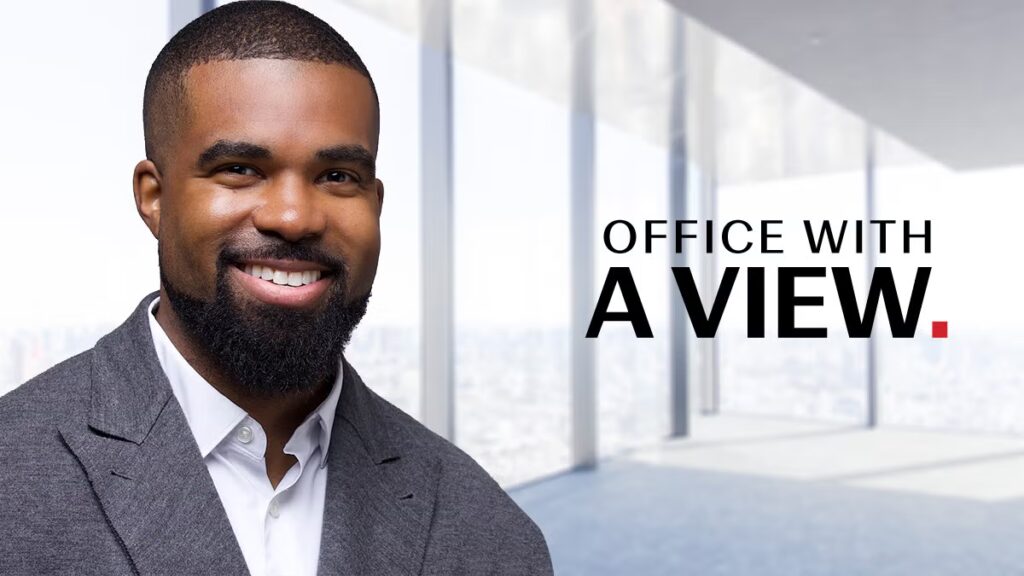
CAA’s resource guide for telling diverse stories, Full Story Initiative, relaunched with a new and improve database this April and, despite reports of diversity efforts in retreat, its key architect Dennis St. Rose said demand from creatives have only increased.
The talent agency’s community and impact executive admitted that he was nervous to bring back the guide amid the broader retreat of diversity initiatives across industries. He had friends and colleagues being fired from DEI positions at top entertainment companies as the drive to prioritize multicultural stories was being pared back.
However, after more conversations with screenwriters and showrunners, he realized that plenty of storytellers are still out there, but they need the resources and the data from Full Story Initiative to prove to Hollywood gatekeepers that the demand is there too.
“You can’t tell them what to write, but you can give them the ideas and the fuel that they need to kind of craft these rich and deep stories,” St. Rose told TheWrap’s Office With a View.
His team has conducted several research studies and commissioned reports that support the notion that diverse impact storytelling is “good for business” despite a noticeable pullback on diverse stories and characters.
A USC study found earlier this year that Latino immigrant characters on TV have dropped 27% since 2020. Another study from GLAAD, the media group which advocates for queer representation, warned that 41% of the 489 LGBTQ+ characters in the 2024-25 TV season would disappear from television the following year due to series endings, cancellations or character exits.
The Full Story Initiative has several partners that help provide diverse perspectives, including RAINN for sexual violence support, Brady United against gun violence and Define American for immigrant representation, to name a few.
St. Rose revealed exclusively to TheWrap that they have added a new slate of community partners to work with creatives Thursday, including the NAACP (Hollywood Bureau) to advance civil rights and racial equality for Black Americans; the Narrative Change & Social Impact Initiative (NCSI) for representation for youth, foster care and incarceration; the Stanford Center on Longevity to bring science and evidence to the stories that shape how people experience every stage of life; Collective Moxie for bringing depth in Latino representation and identity in media; and In Our Own Voice: National Black Women’s Reproductive Justice Agenda for Black women’s reproductive justice.
“You need to understand that people that like these cultures are not monoliths, and so you can’t hope just by having that writer in the writer’s room that you can actually cover the breadth and depth of that person’s experience,” St. Rose said.
That’s where the toolkit emerges as a resource for creatives.
The California Film Commission also includes the Full Story Initiative Digital Toolkit as a recommended resource for productions participating in the state’s DEIA Tax Credit Program.
This interview has been edited for length and clarity.
You relaunched the Full Story Initiative in April. What has the feedback been like?
Two years ago I gathered the contributing partners together for a luncheon at CAA’s office, just to kind of address what was happening in this kind of narrative change in media space. We were seeing a lot of cuts happening [in DEI at studios and networks], a refocus on the part of organizations to policy change work because they … didn’t recognize that culture change is something that is necessary alongside policy change.
I went in with a little bit of of nervousness. This is everyone just moving away and what I did hear from them was that the storytellers are still out there. They still do want to work with us; they need our help now more than ever.
Storytellers were afraid to speak on certain things because they felt that their content could polarize an audience or it wouldn’t get greenlit, or something would happen that would stop the story from getting out. The second thing was they just didn’t know where to turn and like there wasn’t a network in place that was able to provide the information that they needed.
They wanted something that was searchable that they could just get the top line information about an issue area, get the do’s and don’ts, the tropes to avoid, key stats that they could use to to back up why telling a story about a certain issue or about a certain underrepresented group was important, all in an easily accessible format.
There has been an overall decline in diverse storytelling on screen. How do you guys see this database as a way to counteract that?
I think it’s just exposing these storytellers to the possibilities to to get the story right to like to to make sure that they’re able to.
By providing a centralized database that caters to them specifically that allows them that one touch access. What we’re trying to do is just increase access to this, so it’s our hope that through Full Story, and the the socialization of it amongst the industry, this is why we want to show up at festivals. It’s why we’re planning things at South by and Sundance.
We want more and more creators to know: you’re not on an island if you want to be a responsible storyteller or a more powerful storyteller. You’re not on your own. You have this network. You have the resources you need.
Audiences are wanting that authenticity. Is that still hard to get across to people, not necessarily the filmmakers, but to these gatekeepers that are maybe not greenlighting these stories?
It is, and it isn’t. It’s something where they hear, they’ve heard it, they know there’s a business case. They know, they understand it, but at the same time, it’s the climate that we’re in and a reluctance. That self silencing that I mentioned before is happening on their level, too.
The more that we can drill into them that people show up. People do want to see underrepresented voices. They are successful. You look at like “K-Pop Demon Hunters” a few years ago — that was huge.
You need to take the leap, but you’re not taking the leap without the data and the research. It’s all out there, and we’re gonna keep driving that home. We’re gonna keep sharing that with the gatekeepers, with the green lighters, to make sure that they understand.
Part of your relaunch was making the site user friendly. What was it like curating this iteration of the site?
We want to showcase studies of these groups collaborating with creators. What was the project that you worked on? We feel like that’s important because it takes this idea of collaboration or seeking counsel from these groups, from the theoretical to this is actually something that is done, and this is what we can show from it. This was a success.
Any group that we bring on, I make sure that they are able to show case studies of what projects have you worked on already, because I feel like creators or storytellers want to see that they worked with my peers on this, so they know it can be done.
You can’t tell them what to write, but you can give them the the ideas and and the the fuel that they need to craft these these rich and deep stories
Can you tell me a little bit about the philanthropic partners side of the initiative?
If they’re missing that last bit of gap funding to get the story out of the line, or they’re seeking distribution, or whatever it is, or they need financial support, that’s where the philanthropic partners can come into play.
We know that there are philanthropic institutions, family offices out there that are interested and recognize the power we’re investing in media to change culture. So we made it our mission to start reaching out to these groups and saying we have access to these storytellers and these amazing scripts [at the agency], and they are close to seeing the light of day, but we need your help to get it over the line.
In the past year, we’ve been able to secure close to $1 million in philanthropic funding from institutions, family offices, high net worth philanthropic individuals for client projects.
If it’s something that touches on a certain issue, we’ll be able to kind of match make there and say there is a family office out there that is really focused on advancing the narrative on this issue, or there’s a philanthropic institution that has historically focused their efforts on changing culture around an issue, and this project can be used as a way to supercharge those efforts.
Their money was already going to the nonprofit, but now it’s just being supercharged by this amazing feature film or documentary that’s just going to get more eyes and more attention on their work.
The post Dennis St. Rose and CAA’s Full Story Initiative Believe Diverse Storytelling Is ‘Good for Business’ and Data Proves It appeared first on TheWrap.