It was the kind of text message that every reporter dreads receiving: An important source did not want to talk further unless I paid him for the privilege.
“if you’re willing to pay me send me an offer and I’ll think about it,” Sam Ippolito messaged me in June.
A few months prior, Mr. Ippolito had confided to me, on the record, that his deceased brother Joey had been with O.J. Simpson on the night of the 1994 murders for which Mr. Simpson had been charged and acquitted. Sam Ippolito knew this, he said, because the brothers had been staying together in the same West Hollywood, Calif., apartment at the time.
We were discussing a plan to publish his account, along with other details, when I went back to Sam to vet his story a bit more. His request for compensation, however, complicated things. I explained that the ethics rules at The New York Times prohibit reporters from paying for interviews.
“In part, the fear is that paying someone for an interview gives the world a strong reason not to trust what the person had to say,” I told him. He had not asked for compensation during our initial interview and, in fact, said at the time that he was not looking for money.
But now, Sam said he had been offered money to tell his story elsewhere, which is legal and permitted by other news organizations. When I declined to bid, he attempted to retract what he had previously told me.
“non of what i told you was true sorry,” he wrote.
Even though he had no legal right to take back what he said, the message caused us some chaos. Was he telling the truth then or now? We decided to keep hunting for information that could corroborate whether Joey Ippolito had some personal knowledge or involvement in the case.
Investigative reporting can often be frustrating. Sources can be skittish, deflecting or contradictory. Public records requests get denied. People shut doors in your face. Everything takes longer than you (and certainly your editors) expect.
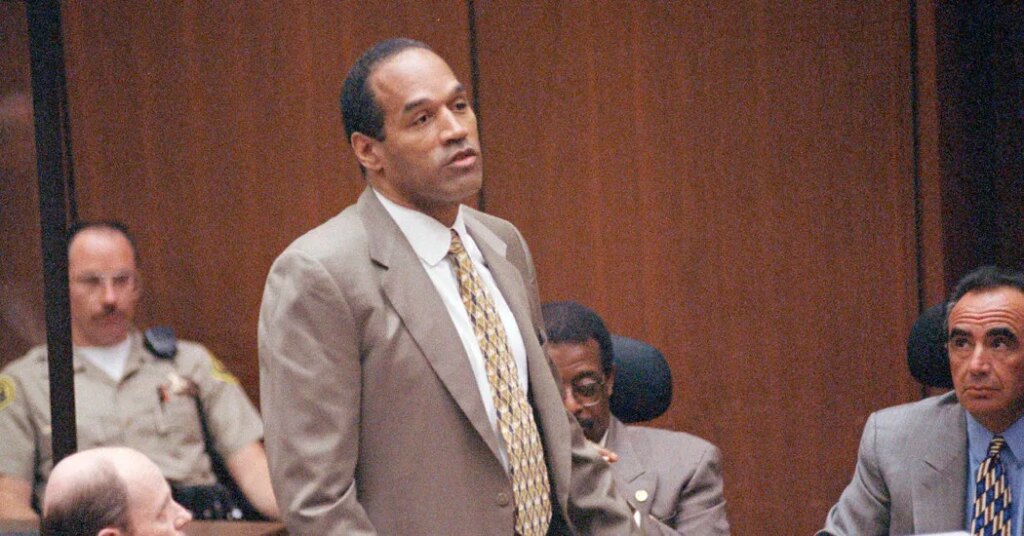
There had long been theories in Los Angeles about people who might have been with O.J. Simpson on the night of the murders of Nicole Brown Simpson and Ronald Goldman. Mr. Simpson himself had stoked that premise. In 2006, he had prepared a “hypothetical” account — later published in the book “If I Did It” — that described how a friend had joined him at the crime scene. The friend had been horrified by the bloodshed, Mr. Simpson wrote, but by the time he and the friend had returned to Mr. Simpson’s home, the friend had agreed to help him get rid of Mr. Simpson’s bloody clothes and the murder weapon.
Could that be true? A few years ago, a legal battle was brewing about a screenplay that explored that exact idea. I decided to take a closer look.
I went to Los Angeles to meet with one source who had hours of secret audiotapes of a man, Charlie Ehrlich, who had implied in the recordings that he was the one with Mr. Simpson that night. The idea had a sense of credibility: Mr. Ehrlich was in Mr. Simpson’s circle of allies; he had been charged with Mr. Simpson in a robbery case in Las Vegas in 2007. And “If I Did It” had given Mr. Simpson’s accomplice the pseudonym name of Charlie.
But nobody who we interviewed from Mr. Simpson’s 1994 orbit knew if Mr. Ehrlich was in the L.A. area at that time. When I tried to meet Mr. Ehrlich in Florida, he told me that the things he had said on the audiotapes were lies, that he had played along with the idea of being the accomplice to make money and that he had not met Mr. Simpson until years after the murders.
But another name that Mr. Ehrlich had mentioned on the tapes and in conversation, and one already on our radar, was Joey Ippolito, a former mafia associate and drug trafficker. People could place him in Los Angeles in the early 1990s, and my colleague Tim Arango was able to dig through boxes of court archives that showed he had been close friends with Al Cowlings, a confidante of Mr. Simpson who was driving the white Bronco during the case’s infamous police chase. Not to mention: A month before the murders, Mr. Ippolito had escaped from federal prison.
In the process of vetting Sam Ippolito’s story about his brother, we got archival records from when Joey Ippolito was finally caught in August 1995 and prosecuted in New York. But there was a problem: Some of the records were missing, still under seal, and so it was not clear why Joey Ippolito had received such leniency when he was sentenced in 1996.
I decided to send a note to the federal judge who had overseen the case.
“Mr. Ippolito had a lengthy and well-connected history that I believe is in the public interest, and the records can illuminate the process by which he received a plea arrangement,” I explained. “I do not believe there is any substantive need in keeping the records sealed, as Mr. Ippolito reportedly died twenty years ago.”
A couple weeks later, the judge phoned me. She agreed to make the records public.
When the records arrived, Tim and I were shocked at how much prosecutors had praised the cooperation of Mr. Ippolito. He had become a key informant on drug cases and the mafia. He was also dishing about what he knew about Mr. Simpson and the murder weapon, and Mr. Simpson’s attempts to escape justice. The prosecution deemed Mr. Ippolito an “extremely reliable” source, and the records suggested that Mr. Ippolito did, in fact, carry insights about the missing murder weapon — although in a way different than what Sam Ippolito had described.
Then there was Fat Joe.
The rapper who always seems to be in the right place at the right time did a video podcast episode in 2025 in which he spoke of Mr. Simpson and an Italian friend named “Joe.” Watching the podcast, it became clear to me that Fat Joe was talking about Joey Ippolito.
The tale he told added yet another layer of intrigue. Fat Joe said that Mr. Ippolito had once told him that when Mr. Simpson and Mr. Cowlings were in the Bronco during the infamous chase, Mr. Ippolito had been at the airport with a private jet, ready to help them escape.
So there it was, three versions of the Ippolito story: In one, he was passing along information to federal law enforcement about Mr. Simpson and the murder weapon. In another, he told a friend how he had been poised to help Mr. Simpson flee Los Angeles. In a third, as told and later retracted by his brother, he was with Mr. Simpson on the night of the murders.
We began trying to weave those stories together into a coherent tale. We knocked on the doors of former mobsters. We dug through thousands of pages of records in a storage shed in Florida. We talked to federal investigators who kept in touch with Mr. Ippolito up until his death in 2006.
All of it combined — the documents, the interviews, the timeline of events — shows that at the very least, Joey Ippolito had been a secret informant never before revealed to the public. And there was a possibility, given his brother’s account, that he was even more.
So, finally, we published.
The post He Told Us About an O.J. Accomplice. Then Said He’d Lied. What Next? appeared first on New York Times.